Bilstein B4 vs B6 vs B8: Which Shocks Should You Choose?
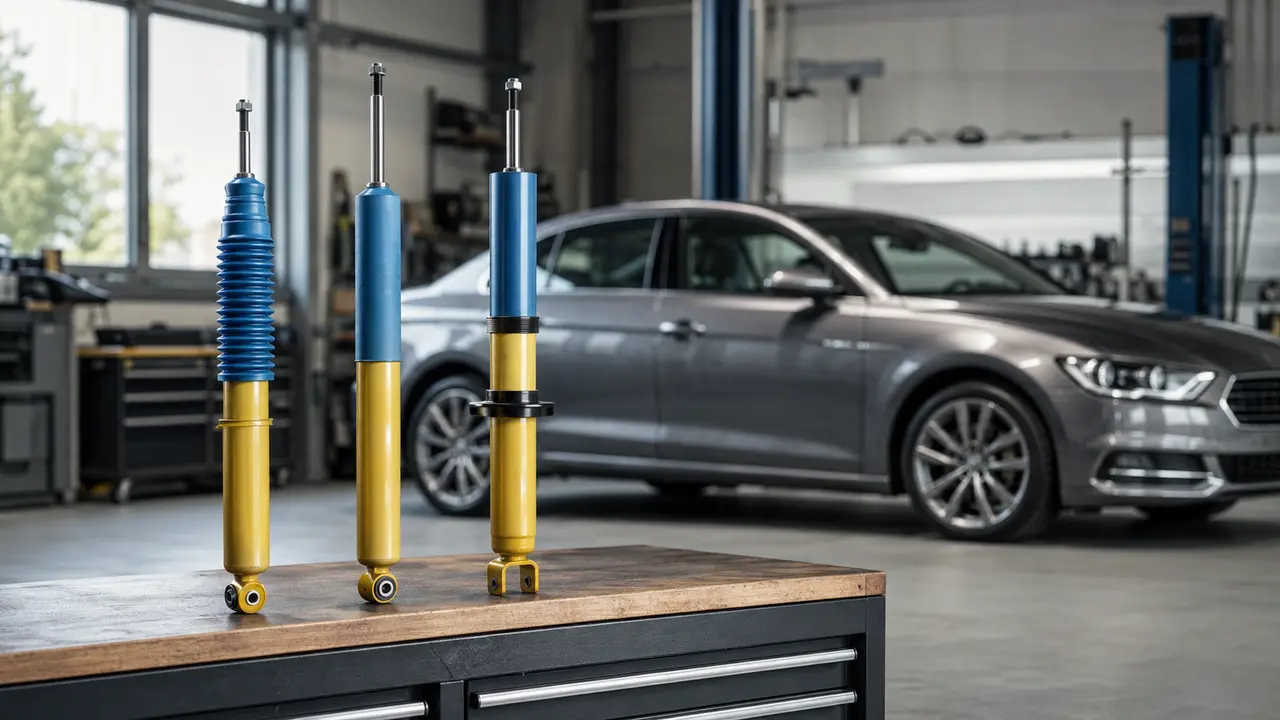
Choose Bilstein B4 if you want an OE-style replacement and factory-like behavior, B6 if you want more controlled handling while retaining stock-height springs, or B8 if the car uses compatible lowering or sport springs.
None is universally better. B4, B6 and B8 are designed for different suspension goals, and the correct choice depends primarily on ride height, spring type, vehicle application and the balance you want between comfort and body control.
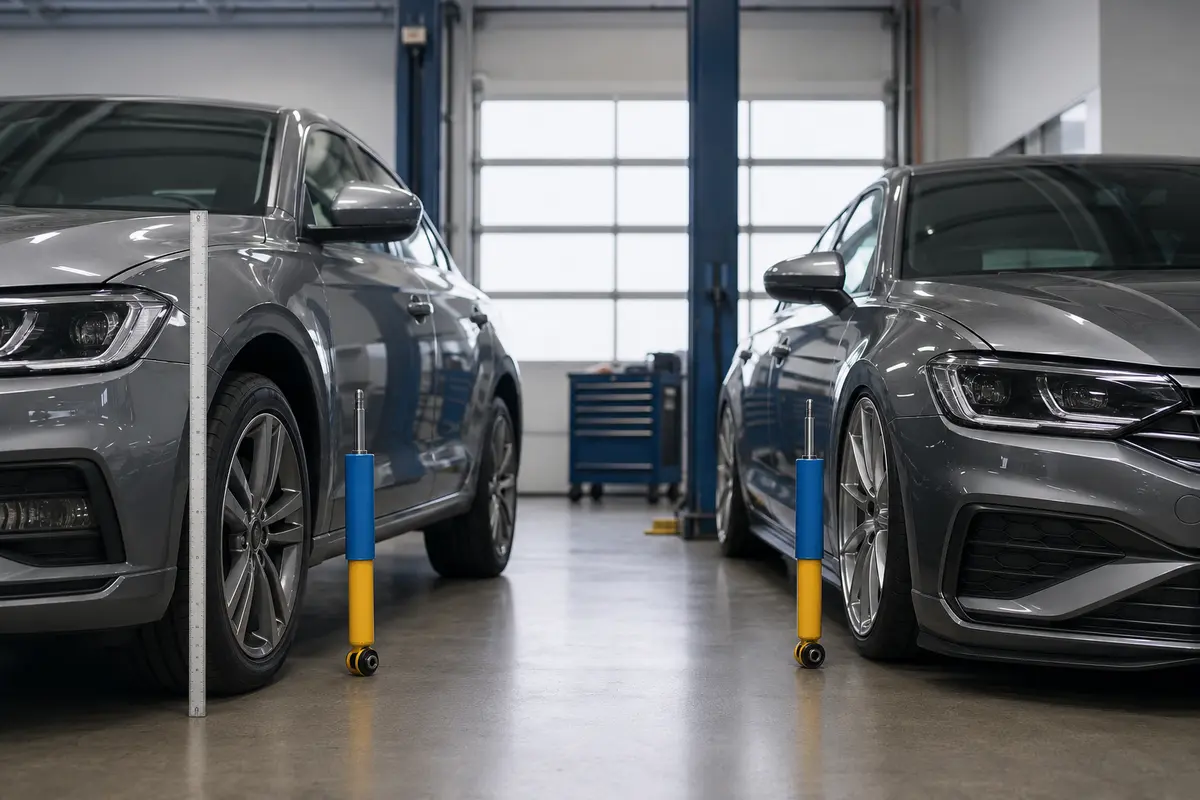
Bilstein B4 vs B6 vs B8: Quick Comparison
| Feature | Bilstein B4 | Bilstein B6 | Bilstein B8 |
|---|---|---|---|
| Primary purpose | OE-style replacement | Stock-height performance upgrade | Performance damper for lowered applications |
| Recommended springs | Factory springs | Stock-height factory springs | Compatible lowering or sport springs |
| Ride height | Factory height | Factory height | Lowered height |
| Typical ride character | Closest to original behavior | More controlled and performance-oriented | Sport-focused and matched to reduced ride height |
| Best for | Restoration, comfort and daily driving | Sharper body control without lowering | Cars already lowered or being fitted with lowering springs |
| Main limitation | Not intended as the sportiest option | Not the correct default choice for lowering springs | Not intended as a routine stock-spring replacement |
What Do Bilstein B4, B6 and B8 Mean?
For passenger cars, these names identify three different positions within Bilstein’s replacement and performance damper range:
- B4: original-equipment-style replacement.
- B6 Performance: performance upgrade for use with stock-height factory springs.
- B8 Performance Plus: performance damper intended to work with compatible aftermarket lowering springs.
This article concerns passenger-car B4, B6 and B8 applications. Bilstein also uses B6 and B8 designations within its truck and SUV ranges, including the 4600 and 5100 series. Truck owners should use our separate Bilstein 4600 and 5100 fitment comparison.
Bilstein B4: Best for an OE-Style Replacement
Bilstein B4 shocks and struts are designed to replace original equipment while retaining the vehicle’s intended ride height and general factory driving characteristics. They are the logical choice when the goal is to restore a worn suspension rather than change how the car behaves.
B4 is usually the best starting point when:
- The car still uses its original-height springs.
- You were satisfied with the ride before the original dampers wore out.
- Comfort and predictable daily driving matter more than a sportier feel.
- You want to restore the suspension without lowering the car.
- The vehicle is otherwise close to its factory configuration.
Do not assume that installing new B4 dampers will make the car unusually soft. Replacing worn shocks can make the suspension feel more controlled because the new dampers are once again managing spring movement properly.
Bilstein B6: Best for Stock-Height Performance
Bilstein B6 Performance dampers are intended for drivers who want greater body control and a more performance-oriented response without lowering the vehicle. Bilstein specifies the passenger-car B6 for use with stock-height OE factory springs.
B6 can be the better choice when:
- The car remains at factory ride height.
- You want more controlled cornering, braking and directional changes.
- You prefer a more connected driving feel than an OE-style replacement provides.
- The vehicle regularly carries additional weight within its rated limits.
- You want a performance upgrade without changing the factory springs.
B6 does not automatically make every car harsh, but it may feel firmer or more controlled than B4. The result varies with the vehicle, tire sidewall, spring rate, suspension geometry and road surface. Avoid relying on universal claims that one Bilstein series is a fixed percentage stiffer than another.
Bilstein B8: Best for Lowering Springs
Bilstein B8 Performance Plus dampers are designed for passenger cars using compatible aftermarket lowering springs. Their shortened configuration helps maintain the intended relationship between the damper, spring and available suspension travel at the reduced ride height.
B8 is normally the appropriate choice when:
- The car already has compatible lowering springs.
- You are installing a matched lowered suspension package.
- A standard-length OE-style damper is unsuitable for the intended spring setup.
- You want sportier body control combined with a lower stance.
- The exact B8 part number is approved for your vehicle and spring application.
A B8 damper does not lower the car by itself. The springs establish the static ride height; the damper controls suspension movement and must be compatible with the spring and available travel.
Lowering a car also affects ground clearance, wheel alignment, bump travel and potentially tire clearance. The complete setup matters more than the color or reputation of one component.
Bilstein B4 vs B6 Ride Quality
B4 generally aims to preserve the original character of the vehicle, while B6 targets stronger damping control and a more performance-oriented response. For a comfort-focused daily driver at stock height, B4 is often the safer choice. For a driver who accepts a potentially firmer feel in exchange for greater control, B6 may be more suitable.
However, ride quality cannot be predicted from the damper name alone. Important variables include:
- Vehicle-specific Bilstein valving.
- Factory standard, sport or adaptive suspension.
- Spring condition and spring rate.
- Tire construction, pressure and sidewall height.
- Bushings, mounts and bump-stop condition.
- Road quality and normal vehicle load.
A controlled suspension is not necessarily an uncomfortable suspension. Dampers and springs perform different jobs, as explained in our guide to compression and rebound damping.
Bilstein B6 vs B8: Stock Springs or Lowering Springs?
The most important distinction is straightforward: passenger-car B6 is intended for stock-height OE springs, while B8 is intended for compatible lowering springs.
| Your Suspension Setup | Usual Starting Choice | Why |
|---|---|---|
| Factory springs and factory ride height | B4 or B6 | Choose B4 for OE-style restoration or B6 for a performance-oriented upgrade |
| Factory sport suspension | Verify exact application | Some vehicles have different dampers, springs or option codes |
| Aftermarket lowering springs | B8 | Designed for compatible lowered passenger-car applications |
| Unknown springs or previous modifications | Inspect before ordering | Ride height and spring identification must be confirmed |
| Adjustable coilover system | Neither by default | The coilover normally uses its own matched damper and spring assembly |
If you are comparing separate dampers and springs with an adjustable assembly, first review the differences between coilovers and conventional shocks.
Are Bilstein B4 Shocks Better Than OEM?
B4 is an OE-style replacement, but it is not accurate to say that every B4 damper is universally better than every factory damper. Original equipment varies by manufacturer, model, suspension package and supplier.
The useful comparison is whether the B4 part is correctly specified for the exact vehicle and whether its intended factory-style behavior matches your goal. A new correctly fitted B4 can provide a major improvement over a worn original damper, but that does not prove it outperforms the same original component when new.
Can You Use Bilstein B6 With Lowering Springs?
Do not assume that a passenger-car B6 is suitable just because the lowering amount appears small. Bilstein positions B6 Performance for stock-height factory springs and B8 Performance Plus for aftermarket lowering springs.
Use the exact vehicle application, spring manufacturer’s requirements and approved damper part number. An unsuitable combination can reduce available travel, alter spring preload or cause frequent bump-stop contact.
Check Fitment Before Buying
B4, B6 and B8 are product families, not universal parts. Confirm the exact part number before purchasing. Two cars with the same model name may require different dampers because of engine weight, drivetrain, production date, factory suspension code or electronic damping.
- Enter the exact year, make, model and trim in the application catalog.
- Check whether the car has standard, sport or adaptive suspension.
- Confirm whether the springs are factory height or aftermarket lowering springs.
- Read position-specific notes for front, rear, left and right components.
- Match axle pairs unless the manufacturer provides a different approved procedure.
- Inspect mounts, boots, bump stops, springs and related joints before installation.
Use the official Bilstein US application catalog to verify vehicle-specific availability. Amazon’s vehicle selector can provide an additional check, but it should not replace the manufacturer’s fitment information.
Installation and Alignment Considerations
Shock and strut replacement can involve stored spring energy. A complete strut assembly may require a suitable spring compressor and safe workshop procedures. If the job exceeds your equipment or experience, use a qualified technician.
After installation:
- Torque fasteners using the correct vehicle procedure.
- Do not reuse single-use hardware where replacement is specified.
- Check brake hoses, ABS wiring and tire clearance.
- Allow the suspension to settle before evaluating final ride height.
- Obtain an alignment when strut removal or a ride-height change can affect geometry.
- Recheck the installation if there is clunking, binding or uneven ride height.
Changing from a worn factory suspension to new components can transform how the car feels even without altering ride height. Our stock versus performance suspension guide explains when restoration is more appropriate than modification.
Which Bilstein Series Should You Choose?
Choose B4 when your priority is restoring factory-height suspension with OE-style behavior. Choose B6 when the car retains stock-height springs but you want more performance-oriented damping and body control. Choose B8 when the vehicle uses compatible lowering springs and requires a damper designed for the lowered application.
The best Bilstein shock is the one designed for your exact vehicle, springs and intended ride height—not simply the most expensive or sport-focused option.