Chevy 2500HD Lift Kit: Heights, Tires & Fitment by Year
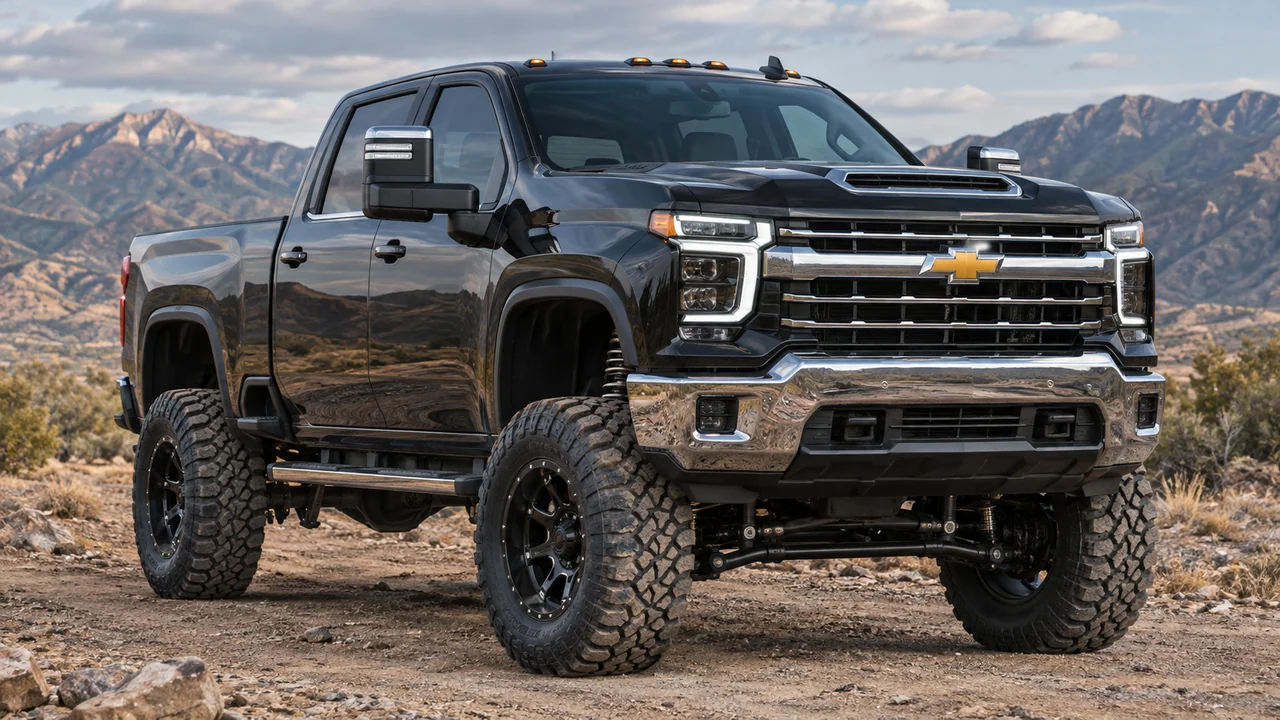
A Chevy 2500HD lift kit is worth choosing by what the truck will do and which generation it belongs to, not by the tallest number on a product card. For a Silverado 2500HD that still tows regularly, a modest front level or a well-engineered 3-inch package is usually the easier setup to live with. If the plan is 37-inch tires, shopping changes: you are looking at a substantial IFS lift with the right steering knuckles, differential positioning, wheel specs and rear suspension parts.
Here is the catch: a 2-inch torsion-key kit can fit one 2500HD and be wrong for another. A 2024-and-newer ZR2 already sits higher from the factory. A 2010 truck does not share the 2011 truck’s wheel bolt pattern. And “fits 35s” means very little until you know the tire’s actual dimensions and the wheel’s backspacing. Those are the details that prevent an expensive do-over.
Chevy 2500HD Lift Kit: What Height Should You Choose?
Start with the tires and the load the truck carries. These are practical starting points for a standard-height Silverado 2500HD, not guaranteed tire-clearance formulas. Exact results depend on model year, kit, wheel size, front fender shape, ride height, and whether the tires will be turned or compressed off-road.
| Your goal | Usually worth considering | Main condition before buying |
|---|---|---|
| Keep towing manners, modestly reduce factory rake | Stock suspension or roughly 1–2 inches of front leveling | Keep useful rear-high stance when the trailer is attached; check torsion-key adjustment and front droop |
| Daily driver on 33–34-inch tires | Mild level or a matched 2–3-inch system | Verify actual tire dimensions and wheel offset before paying for more lift |
| Run 35-inch tires with usable street manners | Engineered 2–3-inch front package with suitable upper control arms; sometimes a taller kit | Use the kit maker’s exact wheel/backspacing test combination and check rubbing at full lock |
| Build around 37-inch tires | Often a 5–7-inch geometry-corrected IFS lift | Confirm the specific kit lists 37s, whether trimming is required, and driveline/steering clearances |
| Keep factory HD ZR2 suspension character | ZR2-specific components or leave the factory setup intact | Do not assume a standard 2500HD kit fits its control arms and DSSV dampers |
If you pull a heavy trailer every weekend, the lowest lift that does the job deserves serious consideration. A taller truck may photograph better, but climbing into it, hitching a trailer, replacing tires and reaching into the bed are tasks you will repeat for years. Lift height is a purchase decision; living with it is the ownership decision.
Which brands are worth comparing?
Rough Country has a broad Silverado HD catalog, including modest levels, three-inch systems and tall kits with torsion-drop or non-torsion-drop choices on selected years. BDS and Zone Offroad sell more complete suspension packages with geometry and wheel/tire specifications worth reading closely. ICON offers 2020–2026 HD torsion keys with an advertised 2–3.5 inches of front adjustment on most standard models, but a smaller 0.5–2-inch range on the HD ZR2. That last distinction is a good reminder: compare the specific kit, not the logo on the box.
A less expensive kit can make sense when it meets your exact goal and includes the right supporting parts. A higher-priced shock package may be worth it for frequent rough-road use, but it does not eliminate trimming or make an excluded trim compatible. Pick the hardware and tire combination first; shop the shock tier second.
Why the Silverado 2500HD Needs Its Own Lift Kit
The Silverado HD is not a half-ton Silverado with heavier springs. GM uses torsion-bar independent front suspension on these HD pickups, with a leaf-spring rear axle. That dictates how ride height changes and what has to be corrected as the front suspension moves away from its original operating position.
Torsion bars do the springing—not the front shocks
On the common 2500HD setup, each front torsion bar runs back from the lower control arm to a key/anchor assembly. Adjusting the key changes the arm’s resting position and the truck’s front ride height. Shocks control movement; they do not create the main spring support. A listing that advertises “front strut spacers” for a conventional Silverado 1500 lift kit should make you stop, not click Buy.
A basic torsion-key adjustment may raise the nose, but it does not magically add front suspension travel. As static height goes up, available droop can shrink; upper ball-joint angles, shock extension and CV operation on a 4WD truck matter more. Our separate torsion bar keys guide explains the key design and adjustment tradeoffs without turning this vehicle-specific guide into a general torsion-bar tutorial.
A taller fender gap is not the same thing as better clearance everywhere
Lifting the body and chassis helps clear approach obstacles and larger tires, but the front differential and suspension crossmembers may remain low if the kit drops them to preserve driveline geometry. On the rear solid axle, differential clearance rises mainly with tire radius, not simply because you fitted taller rear blocks. Inspect the underbody design, not just the truck’s roofline.
Measure rake before trying to remove it
Park on level ground with the truck at its normal fuel level and typical load. Measure vertically from wheel center to fender edge at the front and rear, then note the difference. Repeat with your usual trailer or bed load if towing is central to the build. The factory rear-high stance has a job: it leaves room for the rear springs to settle without putting the truck nose-high under load.
Chevy Silverado 2500HD Lift Kit Fitment by Year
Manufacturers commonly divide GM HD lift kits into 2001–2010, 2011–2019 and 2020–2026 applications. Those groups are useful for shopping, but they are not permission to ignore the actual fitment notes. A 2007 transition-year truck, a truck with rear overload leaves, or one with a special factory suspension can need a different component or variant.
2001–2010: older torsion-bar HD trucks
For these trucks, you will see 2-inch leveling kits, 3-inch systems and taller 6–7-inch kits sold for selected 2WD or 4WD applications. The tall kits can use torsion-bar relocation or a no-torsion-drop approach; neither name tells you how much tire fits until you read the manufacturer’s wheel specification. Rusted hardware, aging steering links and tired control-arm pivots are just as relevant as the advertised lift height on a truck of this age.
Check the exact chassis and product listing even when a retailer groups the model years together. The old-body/new-body change around 2007, factory options and 2WD-versus-4WD differences should be settled from the vehicle identification and the specific part number. Replacing worn tie rods or bushings before alignment is often money better spent than building a lift around a loose front end.
2011–2019: a different HD chassis and different wheels
The 2011-on HD redesign changed important front-end and wheel fitments. Catalogs for this period show about 2-inch levels, 3–3.5-inch systems, 5-inch kits and taller lifts, but not every version uses the same upper control arm, differential brackets or shock length. Look for notes about steering geometry, rear overload springs, and whether the truck is 2WD or 4WD.
A less obvious problem arises when you reuse wheels from another GM HD. Silverado 2500HD models from 2001–2010 commonly use an 8×165.1 mm (8×6.5-inch) bolt pattern; 2011-and-newer models use 8×180 mm. Eight lug nuts do not mean the wheels interchange. Verify hub bore, wheel load rating, brake clearance and the actual bolt pattern, especially with a used wheel-and-tire package.
2020–2026: choose by kit family, not just model badge
These HD trucks have a broad range of current-market options: roughly 1.5–2-inch key levels, 3-inch upper-control-arm/differential-relocation packages, and 5–7-inch crossmember lifts. Some makers offer both a torsion-drop and a non-torsion-drop version at the same height. Others specify different rear blocks depending on factory overload springs or whether the truck is dual-rear-wheel.
A current manufacturer example is the BDS 3-inch GM HD kit: its listed parts include heavy-duty upper control arms, indexed torsion keys, a small front differential relocation, sway-bar relocation and rear-block options. BDS specifies a 35×12.50 tire on a 20×9 wheel with 5.75 inches of backspacing, with possible trimming. That is much more useful than a generic “up to 35 inches” claim.
2024–2026 refresh: verify the exact configuration
The updated Silverado HD bodywork and equipment can change the practical fit around bumper corners, inner liners and electronic systems even when a suspension vendor lists the broader 2020–2026 range. Check the currently applicable installation sheet rather than assuming an older truck’s photos prove clearance on yours. In particular, note any exclusions or untested compatibility for factory driver-assistance equipment such as Super Cruise.
What a 2-, 3-, 5- or 7-Inch Lift Actually Buys You
Lift sizes on a comparison page can hide very different types of systems. One kit may raise only the front, another may add two inches at the rear, and a large IFS kit may reposition most of the front suspension. Compare the front and rear lift separately, along with the parts included in the box.
1.5–2 inches: sensible leveling for a work truck
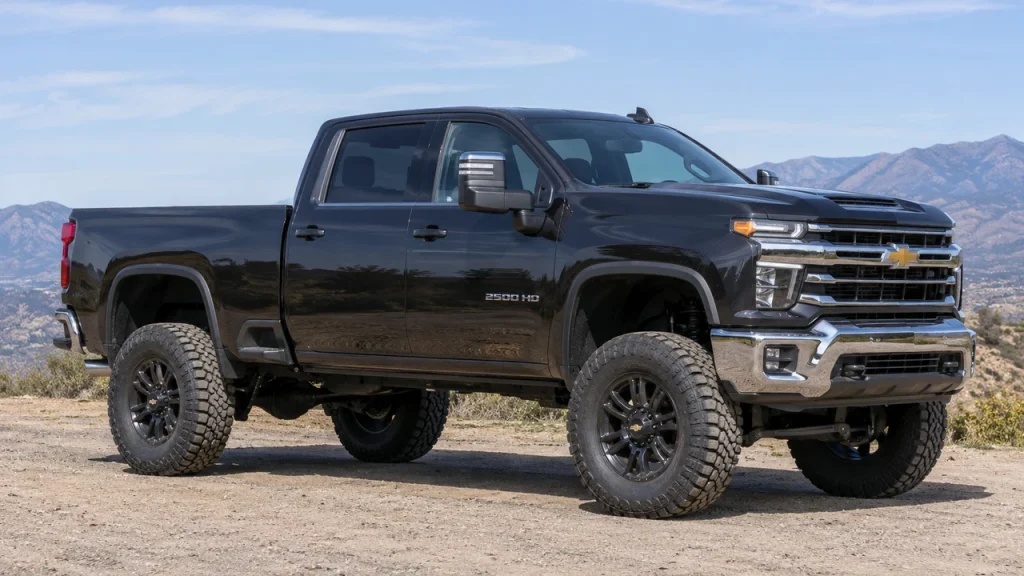
A mild torsion-key level can remove some nose-down rake and make room for a somewhat larger tire. It is relatively affordable, but the available front travel and angles still have limits. A level that looks perfect while the truck is empty may become nose-high once the bed or trailer loads are factored in. For a tow vehicle, partial leveling often makes more sense than forcing the fender heights to match exactly.
Around 3 inches: where a complete package starts to matter
This is an attractive compromise for 35-inch-tire shoppers, provided the exact kit and wheels are compatible. On 2020–2026 examples from BDS and Zone, the 3-inch system is more than a set of keys: it addresses upper ball-joint position, 4WD CV angles, sway-bar clearance, shock length and rear stance. That extra hardware is the reason a complete 3-inch system should not be judged solely against the price of a pair of forged keys.
Do not treat “3-inch lift” and “3-inch front level” as interchangeable. If one listing includes rear blocks and another leaves the rear untouched, the stance and loaded behavior will differ even when the product titles sound almost identical.
5–6.5 inches: a different job under the front bumper
These systems generally move into replacement steering knuckles, larger crossmembers, differential relocation and additional brake-line or sway-bar provisions. Some are expressly engineered for 37-inch tires on particular wheel combinations. They can be excellent when that is truly the target, but installation takes more time, some frame brackets may need modification, and stock wheels may no longer fit.
For a concrete example, Zone Offroad’s 5-inch 2020–2026 4WD kit lists 37×12.50 tires with 20×9 wheels and 5.5 inches of backspacing, with trimming possible. The same listing excludes ZR2 and has additional notes for stock wheels, driveshaft configuration and factory driver-assistance equipment. Those conditions are part of the fitment—not fine print to read later.
7 inches and above: make the tire goal justify the truck height
A 7- or 7.5-inch system can be the right answer for a deliberately tall build, but not because “more lift” guarantees a better ride or more usable suspension travel. A quality 5-inch kit with the correct wheel may already meet a 37-inch goal. Compare actual clearance, steering behavior, parking height, step-in distance and install requirements before paying for another couple of inches. The taller choice also raises the center of gravity and can make towing setup more demanding.
Will 33s, 35s or 37s Fit a Lifted Chevy 2500HD?
There is no universal tire-to-lift formula. A 35×12.50 with an aggressive shoulder on a wide, low-backspacing wheel can rub where a narrower tire of similar diameter clears. Front bumper corners, rear fender liners, the upper control arm, sway-bar area and the tire’s path through a full steering sweep all matter.
| Tire target | Reasonable starting point | What still needs checking |
|---|---|---|
| About 33 inches | Factory height or mild leveling, depending on wheel and trim | Clearance at steering lock, actual section width, mud flaps and factory rake |
| About 34–35 inches | Often 2–3 inches with carefully matched wheels; some trims or kits need more | Upper-control-arm gap, fender/bumper trimming, exact manufacturer test setup |
| About 37 inches | Typically a matched 5–7-inch full IFS lift on standard-height trucks | Knuckles, front differential location, wheel backspacing, rear axle articulation and brake lines |
| Stock HD ZR2 35s | Factory ZR2 suspension is already designed around 35-inch tires | Different ZR2 lower control arms, DSSV shock compatibility and wheel choice |
A 35-inch tire has more than one useful size
Consider 285/75R18 versus 35×12.50R18. The first is approximately 34.8 inches tall and 11.2 inches wide on paper; the second is marketed as about 35 inches tall but substantially wider. Actual dimensions vary by tire model, wheel width and manufacturer. If the goal is height without as much front-end interference, a narrower LT metric-size tire may be easier to fit than an equally tall 12.50-inch-wide tire.
A 295/70R18 is another size worth checking when tire choice and load rating permit; its nominal diameter is about 34.3 inches. The number printed on the sidewall is not a clearance test, however. Compare the manufacturer’s mounted overall diameter and section width at the specified measuring rim, and confirm the tire’s load index meets the truck’s requirements.
Wheel backspacing can make or break a claimed fit
Too much inward position can crowd the upper control arm; too little backspacing can push a wide tire outward into the bumper and fender arc. This is why a manufacturer’s “20×9, 5.75-inch backspacing” recommendation is more precise than “20-inch wheels recommended.” Offset and backspacing describe related but different measurements; if your wheel catalog supplies only offset, use the guidance in our wheel offset versus backspacing guide to compare it with the lift-kit specification.
Do not assume a spacer fixes every clearance problem. Moving the wheel outward may clear an upper arm but make outer fender rubbing worse and alter scrub radius and bearing loads. Hub fit, stud engagement, wheel rating and local legal requirements must also be considered.
Check at full lock—and through suspension movement
A tire that clears in a parked, straight-ahead photo may still contact the liner during a tight U-turn, driveway dip or off-road articulation. Have the installer check both steering directions and suspension travel without placing anyone underneath an improperly supported vehicle. If the planned build only fits with significant cutting, decide whether that tradeoff is acceptable before the tires arrive.
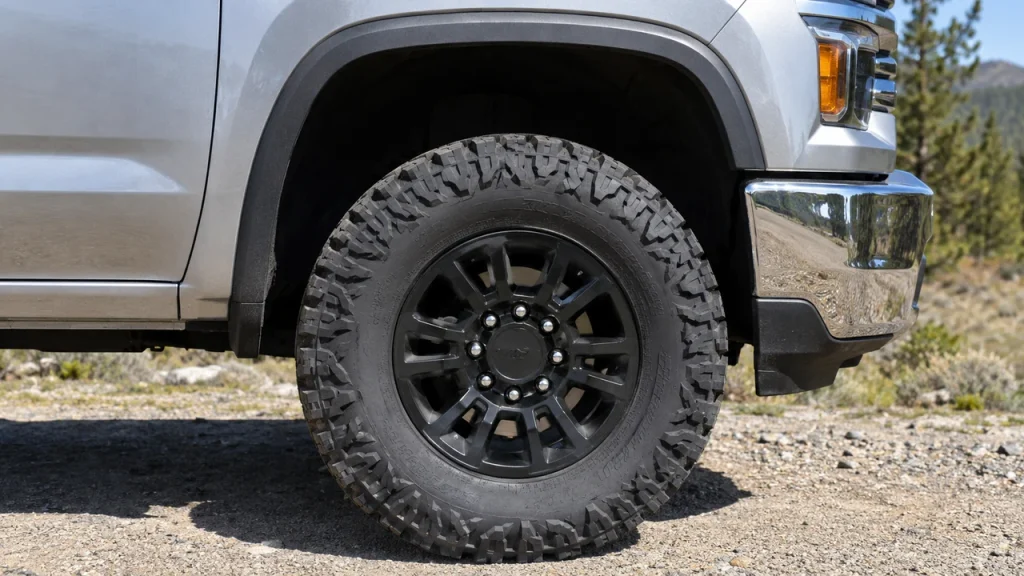
Torsion-Drop vs Non-Torsion-Drop: Which Design Is Better?
These labels show up frequently on larger GM HD kits, especially five- and seven-inch packages. They describe what happens to the torsion-bar mounting arrangement, not a simple good/bad ranking. Both types can be legitimate engineered systems; the exact parts and underbody layout decide what you gain.
Torsion-drop: relocated anchor or crossmember position
A torsion-drop system repositions the rear torsion-bar anchor/crossmember to work with the new front suspension layout. Depending on the design, that hardware may sit below the original underbody line and become a clearance consideration on uneven ground. That does not mean it is automatically weak or unsuitable for a highway/tow truck; it means the clearance picture must include the hardware beneath the chassis.
Non-torsion-drop: preserving the original anchor location
A non-torsion-drop (NTD) system aims to avoid hanging a lowered torsion-bar crossmember under the truck. Certain designs relocate the torsion bars at the lower control arms instead. That can help preserve a cleaner belly, but it still needs correct steering knuckles, crossmembers, differential and shock geometry. “NTD” by itself tells you nothing about tire rub, alignment range or installation complexity.
The front differential matters more than the label
On 4WD models, differential relocation can reduce excessive CV-shaft angles produced by a lift. But a dropped differential or crossmember may limit the clearance that the body-height number seems to promise. This is a distinct tradeoff from torsion-anchor placement, which is why it pays to examine a full kit drawing. Our differential drop guide explains the geometry and its limitations in more depth.
Special Fitment Checks: ZR2, Duramax, 2WD and Rear Springs
A product filter may say “Silverado 2500HD” while its installation notes exclude the exact configuration in your driveway. These checks are particularly important when buying an expensive kit or a used, incomplete take-off system.
2024-and-newer HD ZR2 is not a standard 2500HD
Chevrolet introduced the Silverado HD ZR2 for 2024 with a factory suspension increase of approximately 1.5 inches, unique upper and lower front control arms, Multimatic DSSV dampers and 35-inch Goodyear Wrangler Territory MT tires. Those changes are documented by Chevrolet’s own HD ZR2 announcement. It is a genuinely different starting point, not a regular truck that simply happens to have larger tires.
Major standard-height kits from BDS and Zone explicitly exclude the ZR2; some aftermarket kits are designed specifically for it. If you want to retain the factory DSSV dampers, verify that the chosen system says so. Never interpret “2024+ 2500HD” as proof of ZR2 compatibility, and do not mix Silverado 1500 ZR2 hardware into an HD build.
6.6L Duramax diesel vs 6.6L gas
On 2020-and-newer HD trucks, the Duramax places different weight over the front axle than the gas engine, so ride-height outcome and shock or coilover configurations may differ. Most conventional torsion-bar HD systems are offered for both powertrains, but specialized conversions are not always universal. For example, a BDS diesel-only coilover conversion warns that its spring/preload setup is not recommended on gas-engine trucks. Confirm engine compatibility on the exact part number instead of assuming both 6.6L trucks sit the same after installation.
2WD vs 4WD: do not order by looks
Some kits are listed for both drivetrains and others are not. The 4WD application brings front CV-shaft and differential-angle considerations that a 2WD truck does not have. Conversely, a 2WD truck may use different knuckles, spacers or hardware depending on the kit family. A photo of the right year and trim is not a substitute for the manufacturer’s 2WD/4WD fitment line.
Rear overload springs, dual-rear-wheel listings and driveline notes
The rear of an HD truck is not just “two-inch blocks included.” Certain kits require you to choose an option for factory overload leaves, and some 3500HD or dual-rear-wheel configurations are excluded outright. Even if this article focuses on the 2500HD, the shared 2500/3500 catalog pages can make that confusing. Check how the kit identifies your actual rear spring pack.
A truck with a two-piece rear driveshaft may also need carrier-bearing relocation when raised. Tall-kit notes can mention front driveshaft vibration, 4WD-specific modifications or restrictions on retaining stock wheels. Those are real additions to the project, not optional accessories in the usual sense.
Factory safety systems and replacement wheels
Super Cruise and other camera/radar-assisted systems deserve a specific compatibility check. Some kit manufacturers say their systems have not been tested with Super Cruise; that is not the same as certified compatibility. The installed tire size, ride height and attitude can also affect aiming and calibration requirements. Follow the vehicle and kit maker’s instructions, especially after alignment, and ask the installer about system recalibration.
What a Lift Does to Towing, Steering and Daily Driving
The 2500HD is often bought because it can work hard. A suspension modification should not quietly take away the practical reasons for owning it. The main changes are not all visible when the truck is parked.
Tow ratings do not increase when the truck gets taller
A lift does not raise the vehicle’s manufacturer-rated payload, axle ratings, tire ratings or trailer limits. Larger wheels and tires add weight; a heavier off-road package can reduce usable payload. You may also need a different hitch drop to return the trailer to the correct attitude, plus a closer look at bed-rail and fifth-wheel/gooseneck clearance if relevant.
Suspension blocks and overload-leaf compatibility matter when the bed is loaded. Before committing to a perfectly level empty stance, look at how the truck sits with the weight it actually carries. A small amount of preserved rake may be exactly what keeps it composed under a trailer tongue load.
Bigger tires alter more than the speedometer
Increasing tire diameter changes effective gearing and can affect launch feel, transmission behavior, braking response and speedometer/odometer accuracy unless the vehicle is calibrated appropriately. Tire mass and aggressive tread can also make a smooth highway truck noisier and less economical. For a high-mileage Duramax tow rig, the tradeoff between 35s and 37s is more than appearance.
Alignment, steering parts and shock travel
Alignment after the lift is essential, but an alignment printout does not prove the shocks have sufficient extension or that the upper ball joints operate comfortably through travel. A truck that repeatedly tops out after a high torsion-key adjustment may need a better-designed system rather than another alignment. Check tie rods, idler/pitman components where applicable, control-arm bushings and wheel bearings before spending heavily on new tires.
Shock quality matters, too, but there is no universal “best shock for a 3-inch lift.” Choose the shock for the exact suspension configuration, mounting length, vehicle load and desired ride. An expensive reservoir unit cannot cure a tire that contacts the fender or a CV joint operating outside its intended range.
Build a Complete Budget Before You Order the Kit
A bargain suspension kit can be the most expensive choice if it forces two rounds of labor. Before comparing checkout totals, get the installer to price the parts needed to finish the actual truck—not a generic stock 2500HD.
Parts that a kit price may not include
Common extras are replacement wheels, LT-rated tires, revised shocks, longer or relocated brake lines, sway-bar hardware, a steering stabilizer if specified, front-end wear repairs and an alignment. Tall installations may add carrier-bearing corrections, drivetrain work or frame-bracket modification. A simple front level and a complete five-inch crossmember system should never share the same labor estimate.
For broad U.S. labor and installed-cost ranges across different kinds of vehicles, see our lift kit installation cost breakdown. Here, the most useful number is the complete 2500HD quote with the correct tires, wheels and alignment included.
Torsion bars must be unloaded with the right equipment
Installing or removing torsion keys involves stored spring energy. Manufacturer instructions frequently specify a proper unloading tool, and the correct tool changes with the hardware being serviced. This is not a safe place for improvised clamps or guessing. If the job involves torsion-key removal, use a qualified installer or follow the service procedure with verified equipment; our torsion bar unloading tool guide explains the fitment questions to ask.
Eight questions worth answering before checkout
Use this short list while the truck is still on the ground. If a retailer cannot answer the first few, the product listing is not complete enough to purchase confidently.
- What exact model year, 2500HD chassis, engine, trim and 2WD/4WD configuration does the kit approve?
- Does the manufacturer specifically include—or exclude—the HD ZR2 and its factory DSSV suspension?
- How much front lift and rear lift does this version actually produce?
- What complete tire size, wheel width and backspacing did the manufacturer test?
- Are upper control arms, steering knuckles, differential corrections, shocks and sway-bar parts included where needed?
- Are factory rear overload leaves, stock wheels, 4WD shafts and any driver-assistance system compatible?
- Will cutting, trimming, welding, new U-bolts or a carrier-bearing kit be required?
- Does the quote include all labor, steering inspection, four-wheel alignment, headlight aiming and any necessary recalibration?
Common Chevy 2500HD Lift Kit Questions
Once you have a lift height in mind, the remaining questions are usually about tire clearance and which parts really fit your truck. These quick answers cover the most common Silverado 2500HD decisions; the installation instructions for your exact kit and model year should settle any close calls.
Can I clear 35-inch tires with only a 2-inch leveling kit?
Sometimes, particularly on newer trucks with a kit and wheel setup specifically rated for that tire, but not on every Silverado 2500HD. Width, backspacing, bumper shape and actual ride height still control rubbing. A listing promising 35s should state the tested wheel dimensions and any trimming requirement. Do not generalize that result to another model year or a deep-dish wheel.
Is a 3-inch lift enough for 35×12.50 tires?
It can be. Current 2020–2026 3-inch systems from established manufacturers list 35×12.50 tires with specified 20×9 wheels and backspacing, while warning that trimming may still be needed. Check the exact kit and tires rather than relying on the lift number alone. Some older trucks and different wheel setups need a different approach.
What size lift does a Chevy 2500HD need for 37s?
A correctly matched 5–7-inch IFS lift is a common starting point on standard-height trucks; some manufacturers explicitly list 37×12.50 fitment for their five-inch 2020–2026 kits. That does not guarantee every 37-inch tire or wheel offset will fit. Follow the tire/wheel combination and trimming notes for the specific product and generation.
Can I just crank the torsion bars instead of buying a lift kit?
The factory adjusters can change ride height within their service limits, but cranking them hard is not the same as adding properly managed suspension travel. Excessive adjustment may leave too little droop and create unfavorable angles. If the truck needs meaningful height, an engineered kit with the necessary supporting parts is a more defensible approach than using the adjuster as a substitute for design.
Does lifting a Duramax 2500HD hurt towing capacity?
A suspension lift does not change the manufacturer’s published tow rating into a new, higher number. It may change handling, hitch height, vehicle weight and wheel/tire behavior, and any added components must be compatible with the truck’s rated loads. If towing is the primary job, preserving appropriate rake, tire load capacity and trailer attitude matters more than maximizing lift height.
Will a regular Silverado 2500HD kit fit a ZR2?
Do not assume so. The 2024-and-newer HD ZR2 uses special front suspension hardware and DSSV shocks, and several popular standard-HD lift kits explicitly exclude it. Choose a kit whose manufacturer identifies HD ZR2 compatibility and lists what happens to the factory dampers and control arms.
Can I reuse my stock wheels with a five-inch lift?
It depends on the kit and the exact factory wheel. Certain larger lifts exclude stock wheels altogether; others allow only specific stock diameters or require different backspacing to clear replacement knuckles and upper arms. The manufacturer’s wheel notes should settle this question before installation, not after the truck is on a lift.
What information should I give the installer or parts seller?
Give them the model year, exact Silverado 2500HD trim, 2WD/4WD, gas or Duramax engine, current front and rear ride-height measurements, rear spring/overload configuration and desired tire size. Include the planned wheel width, offset or backspacing, plus whether you tow, have the HD ZR2/DSSV package or use factory driver-assistance features. That one complete description is more useful than saying you want “a six-inch lift for my Chevy.”