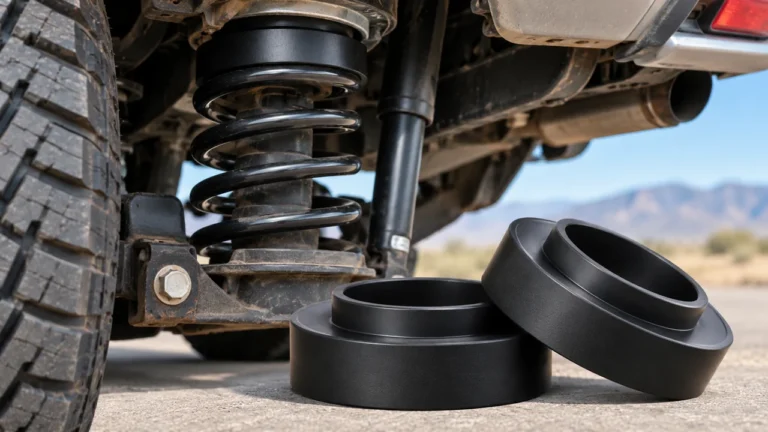
Coil Spring Compressor Tool: Types, Safety & Buying Guide
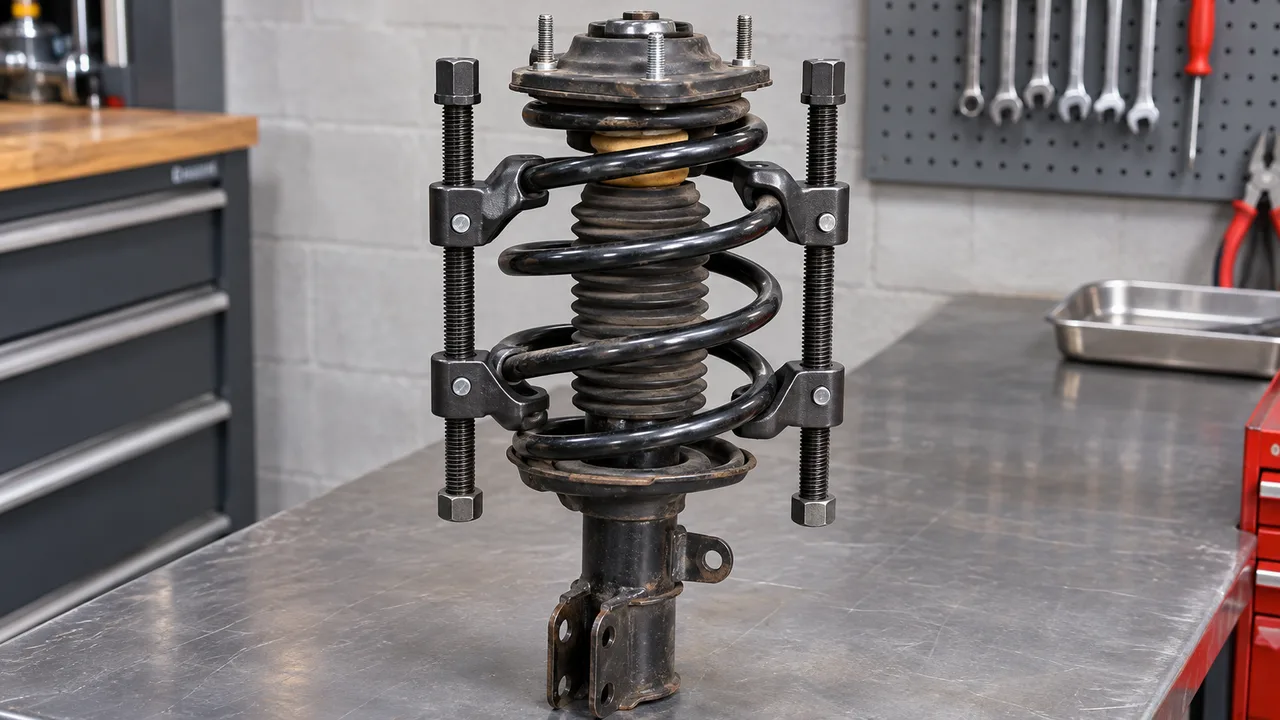
A coil spring compressor tool is not a one-size-fits-all suspension tool. If the coil wraps around a MacPherson strut, you need a compressor specifically approved for that strut and spring arrangement. If the spring sits separately between a control arm and the chassis, you may need a completely different internal or plate-style compressor. Buying the wrong style is more than an inconvenience: it can leave a heavily loaded spring poorly restrained.
Quick buying answer: identify the suspension layout first; then match the tool’s approved application, spring outside diameter, wire diameter, working range, and load rating. Look for positive jaw retention and accessible instructions. If you are rebuilding only one strut, compare a loaner tool or professional assembly service with the cost of buying equipment. If the listing cannot establish compatibility with your exact spring, do not treat its “universal” label as proof.
A compressor holds stored spring energy while a specified repair is performed. It doesn’t make an unfamiliar spring safe to dismantle, and it is not needed for every strut replacement. Here is how to choose a tool without confusing portable clamps, internal compressors, and professional strut machines.
Which Coil Spring Compressor Tool Fits Your Suspension?
Start by looking at where the spring sits, not at the name on the box. Retail catalogs often display an internal coil spring compressor alongside a MacPherson strut compressor because both shorten coil springs. Their hooks, plates, available clearance and intended load paths may be entirely different. The wrong tool might not engage enough of the spring to hold it securely.
The practical dividing line is whether a damper or strut runs through the spring and whether the spring can be reached from the inside. If you cannot identify that layout from the vehicle’s repair information, have a suspension shop identify the required tool before buying.
| Suspension or job | Tool family to investigate | Critical limitation |
|---|---|---|
| Coil surrounding a MacPherson strut | Approved external paired compressors, clamshell strut tool or professional strut machine | Jaws must fit the actual coil shape and mounting geometry |
| Separate coil between control arm and chassis | Vehicle-approved internal or spring-plate compressor; sometimes an external design | Center access, spring seats and retained components determine the choice |
| High-load independent spring with restricted access | Model-specific internal plate system or professional fixture | Generic hooks may not fit or restrain the spring correctly |
| Complete preassembled or loaded replacement strut | Usually no separate compressor for spring transfer | Confirm the new assembly truly includes the spring and mounts |
| Adjustable coilover collar or ride-height adjustment | Manufacturer’s adjustment tools; not automatically a spring compressor | An adjustment wrench cannot secure a spring for disassembly |
MacPherson Struts: The Spring Is Around the Damper
On a common front strut, the coil surrounds the strut tube and is captured between an upper seat and a lower perch. That internal obstruction is why an ordinary through-the-center compressor for separate coils usually isn’t the right choice. Many portable strut tools grip reachable coils from the outside; purpose-built clamshell and shop machines use their own jaws or fixtures.
The phrase strut spring compressor is useful in a search, but you still need to know whether the tool is approved for the particular diameter, wire thickness and coil profile. A compact passenger-car spring and a large SUV strut spring can present different challenges even when both are MacPherson assemblies.
Separate Coil Springs: Control Arms and Rear Suspension
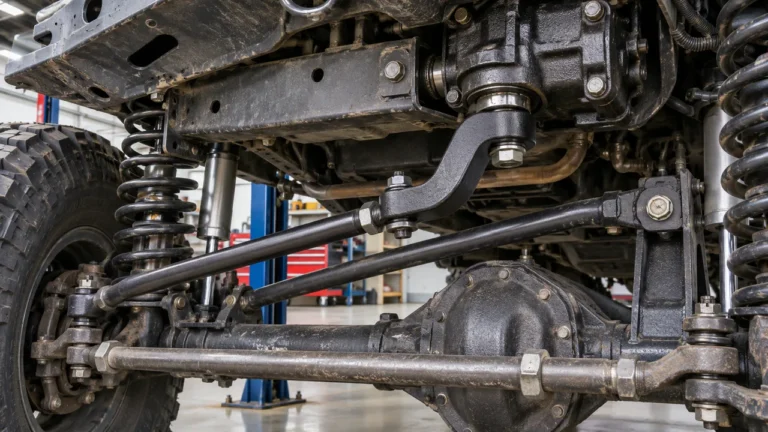
Some vehicles place the spring beside the shock absorber, often on a control arm or between the axle and body. A correctly designed internal spring compressor may pass through the spring’s center and draw on approved contact points. Other layouts use specialized compression plates rather than hooks. Rear suspension does not automatically mean “internal compressor,” however.
Access can be blocked by an axle, bump stop, spring pocket or other structure. The suspension may also be carrying spring load in an unexpected position. Check the vehicle procedure before deciding how the spring can be restrained; a tool that fits through the coils is not automatically appropriate for the job.
Can a Loaded Strut Save You From Using a Compressor?
Often, yes. A complete replacement strut assembly usually arrives with the coil spring and upper mount already assembled. That avoids transferring a loaded spring from the old strut to a bare replacement, which is the operation that typically calls for spring compression. Verify the contents rather than assuming every product advertised as a “strut” is complete.
Our guide to replacing struts explains the separate repair decision. This article is about selecting a compression tool when the specified job actually requires one, not about removing or rebuilding a strut.
Why Front, Rear, and Universal Are Not Enough
A seller may list a compressor as suitable for “front and rear” or “cars and trucks.” Those are marketing categories, not engineering specifications. One rear coil may have wide, accessible loops; another may be tapered, densely wound or partially concealed in a seat. The same tool may be suitable for one and unsuitable for the other.
Also watch the distinction between a product listed under coil spring compressors and a product explicitly approved for MacPherson struts. The wording can look interchangeable in retail navigation, even when the manufacturer’s instructions say otherwise.
Coil Spring Compressor Types: What You’re Actually Comparing
There are more than two spring compressor designs, and their advantages aren’t simply “cheap” versus “expensive.” The tool must hold the particular spring without slipping, bending into an unstable position or running out of travel. A rigid bench machine may be the right workshop choice while being completely impractical for a spring still installed in the vehicle.
Here are the common designs found in U.S. tool catalogs, with the use cases that matter more than the product photographs.
Paired External Screw Compressors
The familiar budget set uses two threaded units with hooks placed around the spring from the outside. They are compact, relatively inexpensive, and available from many tool retailers. Some models have retaining pins or additional safety clips to discourage a hook from leaving its coil. Others are built for a narrower range of wire sizes and spring diameters.
Small packaging is not an advantage if the hooks barely reach around a thick coil or cannot sit securely within the available spacing. Check the exact manufacturer’s instructions and ratings. Never assume that two generic threaded rods can safely contain any spring merely because the hooks touch it.
Clamshell and Dedicated MacPherson Compressors
A clamshell-style tool uses a coordinated frame and spring-contact jaws rather than two entirely independent threaded units. Many designs add locking pins, retainers or fitted jaw profiles. They can make sense for repeated MacPherson work when their specified working envelope matches the assemblies being serviced.
The important differences hide in the specifications. For example, OTC 6494 is expressly a MacPherson strut tool, with a published 4–9-inch spring outside-diameter range and 7/16–11/16-inch wire-diameter range. That is a useful example of how precise a real compatibility claim should be; it is not a recommendation to use that model on every strut. The official OTC clamshell compressor page also provides its operating documentation.
Internal Rod-and-Hook Coil Compressors
An internal compressor works through the spring’s open center where the design permits it. Depending on the model, a threaded shaft operates hooks or other supported contact points from inside the coil. This is a recognizable option for some separate-spring suspensions, including certain older independent front-suspension arrangements.
An internal tool cannot be assumed to fit a coil wrapped around a strut shaft. Nor does reaching the center automatically mean it is safe: the spring’s shape, seat openings and tool’s removal path still need to match. Look for an approved application and an illustrated instruction sheet, not only a minimum and maximum length.
Internal Plate and Telescoping Compressors
Some independent-spring systems, including high-load applications found on certain European vehicles, call for a central spindle with shaped support plates or an application-specific telescoping fixture. The plates bear on selected spring surfaces instead of depending on small external hooks. They may be required where the geometry leaves little safe access for other tools.
These systems can be expensive, and the discs are not universal just because they share a spindle. The plate diameter, contact profile and vehicle-specific application matter. If the service information calls for a particular fixture, a cheaper generic hook set is not an equivalent substitute.
Wall-Mounted and Bench-Mounted Strut Machines
A workshop machine supports an entire removed strut assembly within a rigid frame, using adjustable contact arms, plates or jaws. Some are screw-operated; others use pneumatic or hydraulic assistance. These machines are better suited to technicians handling different strut sizes routinely, provided the correct adapters and safety guards are fitted.
A large machine isn’t automatically safer on every spring. It must be anchored or installed as specified, inspected, and matched to the spring’s geometry and capacity. A professional shop with the correct fixtures may be a more sensible answer than buying any machine for an occasional repair.
Fitment Specifications That Matter Before You Buy
The most useful information on a tool listing is usually in the small specification table, not in the headline. A spring compressor that looks sturdy can still be incapable of gripping your coil correctly. Before checking out, compare the tool’s limits with the actual spring and the vehicle’s service instructions.
Spring Outside Diameter Is Not Wire Diameter
Outside diameter describes the overall width of the coil. Wire diameter describes the thickness of the steel rod forming the coil. A compressor may accept a generous outside diameter but only a limited wire thickness. These specifications are not interchangeable, and either one can make an otherwise promising tool unsuitable.
A listing that says “fits 8-inch springs” without clarifying whether that is outside diameter, working opening or another measurement is incomplete. Seek the manufacturer’s dimensional drawing and make the match using proper service information. Don’t remove a loaded spring just to perform an uncertain shopping measurement.
Hook Opening, Coil Pitch, and Spring Shape
Hooks need sufficient room between adjacent coils to engage the spring as designed. Closely spaced, progressive or variable-pitch coils can make that difficult, while a tapered spring can change the contact angle along its length. An oversized hook that only catches an edge is not a secure fit.
This is where a tool described as “heavy duty” may still fail the application check. The design might have excellent material strength but the wrong jaw shape. If the spring is conical, curved or has an unusual seat, look for clear compatibility information instead of counting on extra force to make a hook stay in place.
Working Length, Stroke, and Available Clearance
The tool must have enough travel to perform its specified task within the spring’s geometry, without bottoming out or exceeding its allowed working range. On-vehicle access is different from bench access. The threaded shaft or handle may foul a control arm, wheel housing or strut mount before the tool reaches its intended position.
A product photo against a bare spring proves little about access inside an installed suspension. Check whether the tool is specified for on-vehicle use, for a removed assembly only, or for both. And remember that more compression travel does not mean more force should be applied.
Load Rating and Maximum Force
Rated force is important, but it is not a stand-alone measure of suitability. A 2,000-pound or 4,000-pound advertising claim tells you nothing about whether the claws match your spring, whether the unit is within its stroke limits, or how the assembly must be supported. Some retailers also mix total system ratings with ratings for individual components.
Use documented rated capacity from the actual manufacturer, and follow the tool’s restrictions on applied drive force and operating method. The claim “for all SUVs and trucks” should not replace a genuine loading and geometry check. When the needed information is unavailable, have a qualified shop select the fixture.
The Complete Kit: Adapters, Jaws, and Retainers
Two tools can share a headline photo but ship with different jaw sizes, sleeves, safety pins or adapters. Missing an adapter can leave a perfectly good compressor unusable for a specific vehicle. Check the full parts list and whether replacement pieces are still sold.
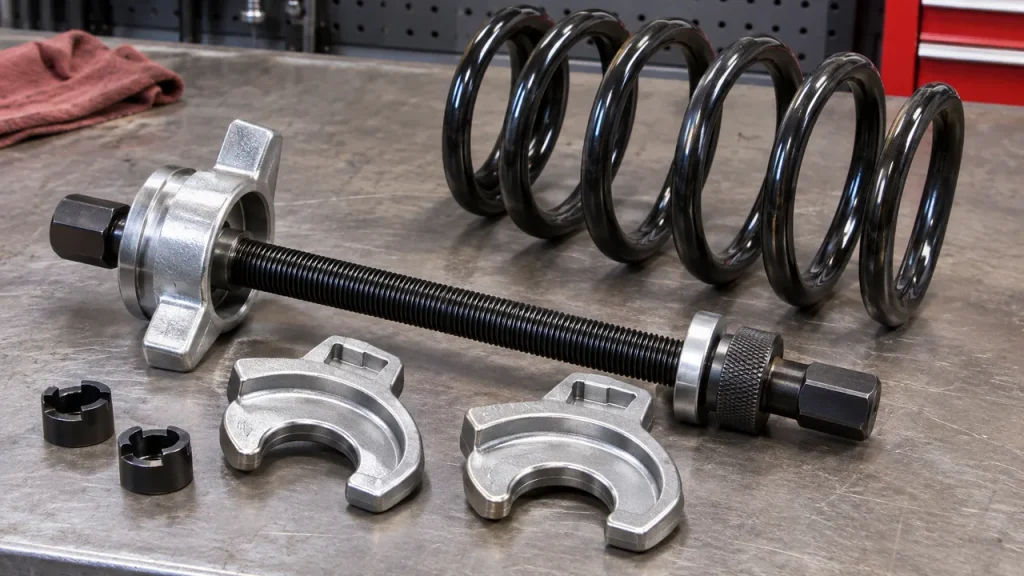
For a tool that will be used over several years, documentation and parts availability matter. A replaceable worn jaw is a practical benefit; an unexplained assortment of loose hardware without instructions is not.
What Makes a Spring Compressor Safer?
No compressor makes compressed spring energy harmless. A failure can release enough force to cause serious injury. The safer buying choice is the properly rated, correctly fitting design used by a trained operator under its instructions—not whichever listing contains the most safety-related adjectives.
Positive Retention Beats a Bare Hook
Look for model-specific features that physically help keep the tool attached to its intended coil contact points: retaining pins, locking jaws, suitable capture profiles and dedicated safety guards. Their presence does not excuse a poor fit, but their absence from a lightly documented tool should prompt closer scrutiny.
An important detail in the OTC 6494 operating documentation is that its jaws must be engaged and the retaining pins installed. That instruction belongs to that model; other compressors have different retention systems. Never copy a setup or fastener sequence from a different tool simply because the jaws look similar.
Forged Components and a Sound Forcing Screw
A forcing screw, nut and threaded contact surfaces carry much of the load in a portable compressor. Look for documented materials, manufacturing standards where provided, intact thread protection, and clear maintenance requirements. Forged hooks can be a useful construction feature, but the word forged doesn’t establish that the complete assembly is safe for your vehicle.
Avoid a tool with bent rods, damaged thread crests, cracked jaws, unexplained weld repairs, missing safety components or uncertain provenance. A tool that jams or binds before it is loaded should not be “fixed” by using a longer handle.
Impact Wrench Compatibility Is Model-Specific
Some compressors are explicitly built for an impact wrench. Others forbid impact use or specify a different drive method. OTC’s 6494, for example, is advertised as impact-compatible, but it still has operating limits; that wording is not permission to run it without regard for the instructions.
A generic claim of “1/2-inch drive compatible” can refer to the socket connection rather than approval for powered operation. Check the manual and never exceed the stated drive force or torque. It’s a tool-specific requirement, not a universal rule you can borrow from a competing brand.
Inspect, Maintain, and Store It Correctly
A spring compressor is not a set-and-forget hand tool. Before use, a trained operator should inspect the hooks, jaws, retaining devices and threads in line with the manufacturer’s instructions. Lubrication requirements differ by product; some specify grease or anti-seize on the lead screw, while others have particular service points.
Used and rental tools deserve the same attention as new ones. If a component is damaged or the correct retaining hardware is missing, reject that tool instead of substituting bolts, clamps or homemade pieces. Never leave a spring stored under compression for convenience.
Match the Tool to the Repair, Not Just the Spring
Two owners with the same vehicle can need different equipment because they are doing different jobs. Replacing a complete assembly, renewing an upper mount and removing a separate coil may involve very different spring-handling procedures. Buying first and defining the repair afterward is an expensive way to learn this.
Bare Strut Replacement or Spring Transfer
Replacing a bare damper in a MacPherson assembly often means the original spring and upper hardware must be transferred. That is spring-handling work requiring the vehicle-approved process and an appropriate compressor. If the existing coil is rusty, cracked or otherwise questionable, do not assume it should be reused merely to save the cost of a complete assembly.
The purchase decision becomes a comparison between correctly equipped service and a preassembled replacement, not simply the price of a compressor. The lowest-cost tool in a catalog may provide no benefit if it cannot properly secure that spring.
Upper Strut Mounts and Bearings
Replacing a damaged top mount or bearing can require controlled separation of parts that hold the spring. The temptation is to buy a small clamp set because the mount itself looks like a cheap part. But it is the spring load and the particular assembly design that determine the appropriate equipment.
If you’re still deciding whether the upper mount is actually faulty, read our bad strut mount symptoms guide first. Rattles, steering pops and binding can have other causes. A compressor is not a diagnostic tool, and dismantling the strut before confirming the fault increases risk and expense.
Separate Coil Spring and Spacer Work
A separate spring can remain under significant load even when the wheel is off the ground. Some spacer or coil replacement procedures require a designated internal compressor, while others use particular fixtures or supported suspension movements under the vehicle service procedure. That variation is exactly why “fits any suspension spring” is not enough.
Compare the full repair estimate as well as the tool. Our coil spring replacement cost guide covers the parts-and-labor side. This page focuses on determining whether a tool purchase is appropriate at all.
Coilovers and Threaded Spring Seats
A coilover spanner turns adjustment collars on a compatible suspension assembly. It does not serve as a substitute for a compression fixture when spring seats or retained parts must be removed. Likewise, a low-preload spring that can move slightly at full droop is not proof that every component of the assembly is unloaded.
Our coilover spanner wrench guide explains collar-tool selection separately. Don’t use its adjustment procedure to infer how to dismantle a spring-loaded assembly.
Spring Assemblies With Unusual Geometry
Short, barrel-shaped, tightly wound, progressively spaced or unusually heavy springs may need special jaws or manufacturer-specific fixtures. Adaptive or electronically controlled strut assemblies can also have different mounting and handling requirements, even if the coil looks familiar.
If an approved compressor cannot be identified from the service information and tool documentation, the sensible answer is a suitably equipped shop. An unusual spring is not the place to improvise the missing adapter.
Harbor Freight, AutoZone, O’Reilly, and Professional Tools
U.S. search results contain brand and retailer names because many buyers are deciding where to get a tool today. A shop name alone does not tell you the compressor type. Compare the exact model, its instructions and ratings—not the store’s return policy or an attractive price tag.
Harbor Freight: Check the Style Before the Price
Harbor Freight sells spring-related tools with different intended applications, including a clamshell-style MacPherson model. A listing may specify a spring diameter limit and particular operating restrictions. That is more useful than whether the item appears under a broad “automotive tools” category.
If you are considering the MADDOX clamshell design, for instance, consult its actual instructions and published spring-size limit rather than assuming it replaces an internal coil compressor. Other store-brand designs may use different hooks and methods. The store is not the specification.
AutoZone: Buying Versus Loan-A-Tool
AutoZone lists both spring and strut compressors and advertises loaner options through its Loan-A-Tool program. That is useful for a one-time job, but a loaner still needs the correct application, all original parts, working safety retainers and usable instructions. Availability, deposits and return terms can vary by location and item.
Don’t make the decision based only on whether a tool can be picked up nearby. Confirm the store’s exact part number and compare it with the suspension you have. A conventional-coil compressor on the shelf isn’t the right tool just because the vehicle has coil springs.
O’Reilly: Verify the Part Number and Tool Family
O’Reilly listings include professional-brand strut compressors and conventional spring tools. The OTC 7294, for example, is described as a MacPherson strut compressor set with forged hooks and threaded screws. That does not make the same model suitable for every separate coil spring or unusually shaped strut assembly.
Retail vehicle selectors can label tools as universal because they aren’t assigned to individual car fitment records. Treat that as a catalog classification, not as the maker’s approval for your particular spring.
OTC, Branick, and Workshop-Level Equipment
Professional tool brands sell designs for recurring shop use, including rigid strut machines and application-specific compressor systems. Their value can lie in documentation, replaceable jaws, service support and proper fixtures rather than a headline force rating alone.
For a garage that rebuilds struts frequently, a maintained, correctly mounted machine may be a rational business purchase. For one home repair, paying a qualified technician to handle the spring can be substantially more sensible than purchasing a machine the buyer cannot safely operate.
Buy, Borrow, Rent, or Use a Shop?
The decision changes once you include the value of your time, the tool’s condition and the real cost of an error. Rental and loaner programs can reduce cash outlay, but they cannot turn a poorly fitting compressor into the correct one. A workshop may already have the specific fixtures you would otherwise need to buy.
One-Time Work: Start With the Complete Repair Cost
For a single strut replacement, compare three options: a correctly matched loaner tool plus professional-level knowledge, a shop handling spring transfer, and a complete preassembled strut. If the vehicle needs more than one worn component, the preassembled unit may change the parts calculation. If you don’t have the experience or safe equipment, paid spring service is the appropriate choice.
A compressor that costs less than the labor quote can still be a bad purchase if it lacks the required jaws. The relevant figure is what it costs to complete the actual repair safely, not the compressor’s sticker price in isolation.
Tool Loan and Rental Terms
Some U.S. parts stores offer deposit-based loaner programs; independent rental shops may charge by the hour or day. Ask for the exact model, availability, deposit, return deadline and condition before collecting it. Check that its retaining pins, attachments and manual are included.
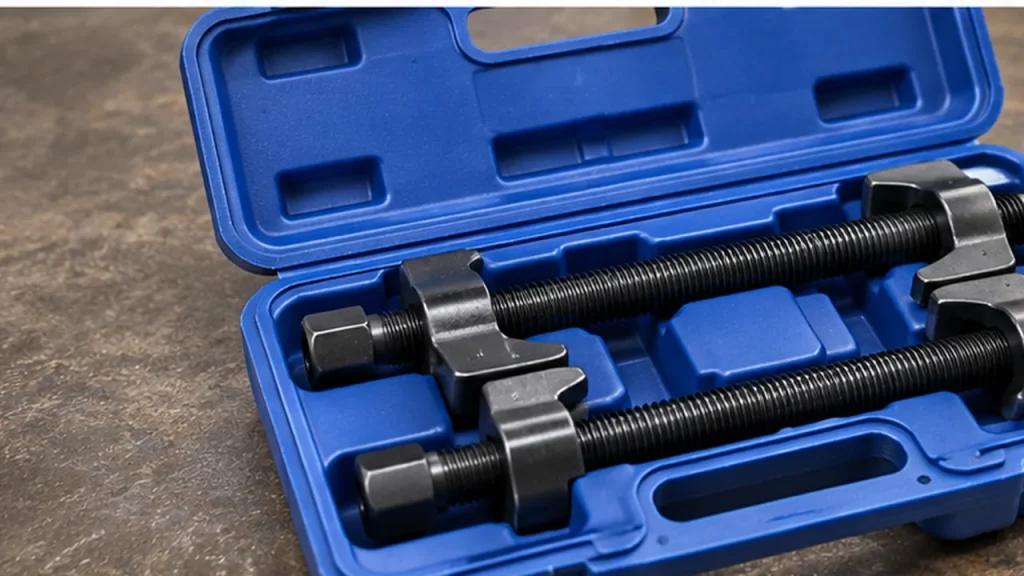
Do not accept damaged or incomplete equipment because a rental deadline is approaching. A missing part can be a reason to exchange the tool or stop the job—not to improvise a replacement.
Repeat Work and Professional Machines
If you service similar struts regularly and have the training to do so, ownership can make sense. Factor in storage, inspection, lubrication, spare parts, periodic maintenance and any required mounting hardware. The cost of a dedicated compressor is spread over several compatible jobs, not automatically over every spring you will encounter.
A professional machine is useful only when the shop has the fixtures to handle the actual range of strut assemblies. A well-maintained portable tool is not categorically inferior to a poorly supported shop machine; suitability and procedure matter more than size.
A Practical Cost Comparison
There is no universal break-even price because an external two-rod set and a wall-mounted shop machine are different products. A deposit that is returned is also not the same as a rental fee. Use this decision table as a checklist for what you are paying for, rather than a price forecast.
| Option | What you pay for | Main drawback |
|---|---|---|
| Purchase a portable compressor | The tool, correct accessories and future maintenance | Only worthwhile if it actually fits and you can use it safely |
| Borrow through a parts-store program | Deposit/loan terms, travel and equipment inspection | Available model may not be correct for your spring |
| Rent from a tool shop | Rental period, deposit or damage terms | Time pressure and limited model selection |
| Pay a shop for spring handling | Trained labor, suitable fixtures and shop overhead | Not every shop quotes spring transfer as a standalone service |
| Buy a matching loaded strut | More complete replacement assembly | Higher parts price; must match the vehicle’s specification |
Reading a Compressor Listing Without Getting Fooled
A convincing product page can still leave out the detail that determines whether you should buy. The most important evidence is a model-specific manual or drawing that identifies the permitted spring shape, size, stroke, use position and restrictions. If the seller won’t supply it, a long list of five-star reviews doesn’t fill the gap.
The Questions That Deserve Real Answers
Before you order or reserve a tool, work through these checks. They apply to online marketplaces and local tool counters alike:
- Which suspension layout is supported? MacPherson strut, separate control-arm coil, specialized internal-plate application, or a defined combination.
- What are the documented size limits? Spring outside diameter, coil wire diameter, working length, and coil shape where specified.
- How is the spring retained? Approved jaws, hooks, locking pins, guards, and any required vehicle-specific adapters.
- What capacity and operating limits apply? Rated load, stroke, permitted drive method, maintenance requirements and the correct instruction sheet.
- Where can it be used? On the vehicle, on a removed assembly, on a bench or in a mounted professional machine.
- What comes in the case? Full tool, paired components if required, safety devices, adapters, and replacement-part information.
- Who can support it? Manufacturer documentation, genuine spare parts, and a return path if the verified model is unsuitable.
If you have to guess several of those answers, the listing is not strong enough to support a safe purchase decision. A shop that knows the vehicle may be able to identify a suitable approved tool more quickly than repeated online orders.
Beware of Vague Capacity and Impact Claims
Phrases such as “2,600 lb capacity,” “heavy duty,” and “impact ready” need context. They don’t specify which spring diameter or jaw arrangement was tested, or whether a power tool may be used in every configuration. An impact wrench can make an incompatible compressor fail faster; it doesn’t compensate for poor setup.
Read the maker’s instructions for the exact model and don’t mix their limits with those of another compressor. A Harbor Freight clamshell tool, a paired screw set and a professional fixture may all operate differently even when each is advertised for MacPherson struts.
Review Photos Are Not Fitment Evidence
Customer photos are useful for seeing build quality, case contents and how a product looks in a real garage. They are not proof that a clamp is correctly engaged, that the spring is within the rated limit or that the installation shown is safe. A positive review may come from a very different vehicle.
Give more weight to a current manual and precise dimensions than to a photograph captioned “worked on my truck.” The tool is only a match if its approved working geometry and your spring agree.
Common Mistakes That Can Turn This Into a Dangerous Job
The biggest mistakes begin before the first wrench is picked up: choosing by price, assuming similar-looking coils have identical requirements, or deciding an unfamiliar tool will be made to fit. Compressed springs store energy, and the resulting hazards can be severe. This is a buying guide, not instructions for loading or dismantling a spring.
Trying an Internal Compressor on a Strut Spring
A tool meant to pass through an open coil’s center may be blocked by the damper shaft or may have nowhere for its contacts to seat correctly. It’s not appropriate to force it into a MacPherson assembly or improvise attachment points. Select a tool explicitly approved for that arrangement.
Using Hooks That Only Catch the Edge of a Coil
A shallow or misaligned hook can lose contact when the spring changes shape under load. A retaining clip is only useful in the geometry for which it was designed. If the spring’s wire, pitch or taper prevents proper engagement, stop and obtain a different approved fixture.
Confusing a Spring Retainer With a Compressor
A suspension spring retainer is designed to help locate a coil in its seat during normal suspension movement. It is not meant to hold a removed spring under the controlled load required for disassembly. These two products solve unrelated problems, despite the similar word spring in their names.
Treating the Center Strut Nut Like Ordinary Hardware
The center shaft nut can retain spring-loaded upper components in a MacPherson assembly. Loosening it before the spring is properly restrained under the correct service procedure can cause an uncontrolled release. Don’t use a compressor as justification to skip the vehicle instructions or attempt a repair beyond your training.
Improvising With Clamps, Straps, or Unrated Hardware
Ratchet straps, ordinary clamps, random bolts and homemade brackets are not substitutes for purpose-built spring-compression equipment. Damaged or modified tools are unacceptable for this work as well. If the correct tool isn’t available, the job belongs with a suitably equipped professional.
Coil Spring Compressor Tool FAQ
The same short questions appear in product searches and parts-store conversations. Their answers depend on the suspension and tool, but the distinctions below can prevent the most common wrong purchase.
What is the best coil spring compressor tool for a home mechanic?
The best match is the manufacturer-approved tool for the specific spring and repair, with suitable retention features, clear instructions and accessible spare parts. For an inexperienced owner, professional service or a compatible loaded strut may be more appropriate than using any compressor at home. There is no universal best model for every coil spring.
Can I use a coil spring compressor on MacPherson struts?
Only if the tool is expressly designed and approved for the particular MacPherson strut and spring geometry. Some paired external and clamshell tools are intended for this task; many internal compressors for separate springs are not. Check the manufacturer’s application limits before use.
Are internal and external coil spring compressors interchangeable?
No. They engage the spring differently and need different access and support points. Internal designs may be appropriate for particular separate-spring layouts, while external or dedicated strut fixtures may be required when a damper runs through the coil. A label saying “universal” does not override the service procedure.
Can I rent a coil spring compressor from AutoZone or O’Reilly?
AutoZone advertises a Loan-A-Tool option for spring and strut compressor tools. Other parts stores and local rental providers may offer comparable arrangements, but availability and terms are location-specific. Confirm the exact tool model, deposit or rental fee, condition, and accessories before relying on it for a repair.
Is a Harbor Freight spring compressor suitable for my car?
That depends on which Harbor Freight tool you mean and the vehicle’s spring. The store offers multiple styles, including a clamshell MacPherson design with its own published limits. Match the exact model’s manual to your spring dimensions and permitted use; the retail brand alone is not a fitment answer.
Do I need a spring compressor to replace shocks?
Not always. A separate shock absorber can often be replaced without disassembling a loaded coil, but the vehicle’s suspension layout and service procedure determine that. A bare MacPherson strut replacement commonly requires spring transfer, while a compatible loaded assembly avoids that transfer. Our shocks versus struts guide explains why the names shouldn’t be used interchangeably.
Is a two-piece external compressor safer than an internal tool?
Neither design is safer by definition. Safe use depends on whether the tool is approved for that spring, engages correctly, meets its capacity limits and is used according to its instructions. Comparing two different tool families without considering the suspension is not meaningful.
Can I use an impact wrench on a spring compressor?
Only when that exact model permits it, and only within its published operating restrictions. Some products advertise impact compatibility while others do not. A square drive or hex head is not proof that powered operation is allowed.
What if the spring is tapered or has closely spaced coils?
An unusual profile may prevent ordinary hooks from engaging properly. Look for a compressor with documented compatibility and any required adapter jaws or plates. If the approved equipment is not readily available, use a suspension shop with suitable fixtures.
Do I need to compress the spring to adjust coilover ride height?
Not necessarily. Many adjustable coilovers are designed for collar changes using specified spanner tools, not for removing spring-loaded components. But adjusting a collar does not make the assembly safe to dismantle. Follow the particular suspension manufacturer’s instructions and keep adjustment work distinct from spring disassembly.
When Paying a Shop Is the Better Tool Choice
There is one situation no product comparison can fix: the spring is under substantial load, but you cannot establish a safe, manufacturer-approved way to contain it. That is a reason to stop, not to look for a compressor with a bigger advertised force number. The same applies to damaged coils, missing tool attachments, uncertain suspension modifications or a repair that exceeds your experience.
For a well-understood, compatible job, the right compressor is determined by the actual spring, available access, retention design and the maker’s instructions. For everything else, a professional shop or a properly matched preassembled replacement may be the smartest purchase you make. The goal is not to own more tools; it is to complete the suspension repair without betting on an unverified fit.