Steering Shaft Replacement Cost: Parts & Labor
Steering shaft replacement typically costs about $400 to $900 in the United States. The intermediate steering shaft itself often costs around $150 to $400, while labor can add roughly $200 to $500 depending on access, vehicle design and local shop rates. Some vehicles with expensive OEM shafts can push the total above $1,000.
The good news is that a bad intermediate steering shaft is usually a much smaller repair than replacing the entire steering column or steering rack. The challenge is making sure the clunk, looseness or binding is actually coming from the shaft before parts are ordered.
Where the Intermediate Steering Shaft Fits
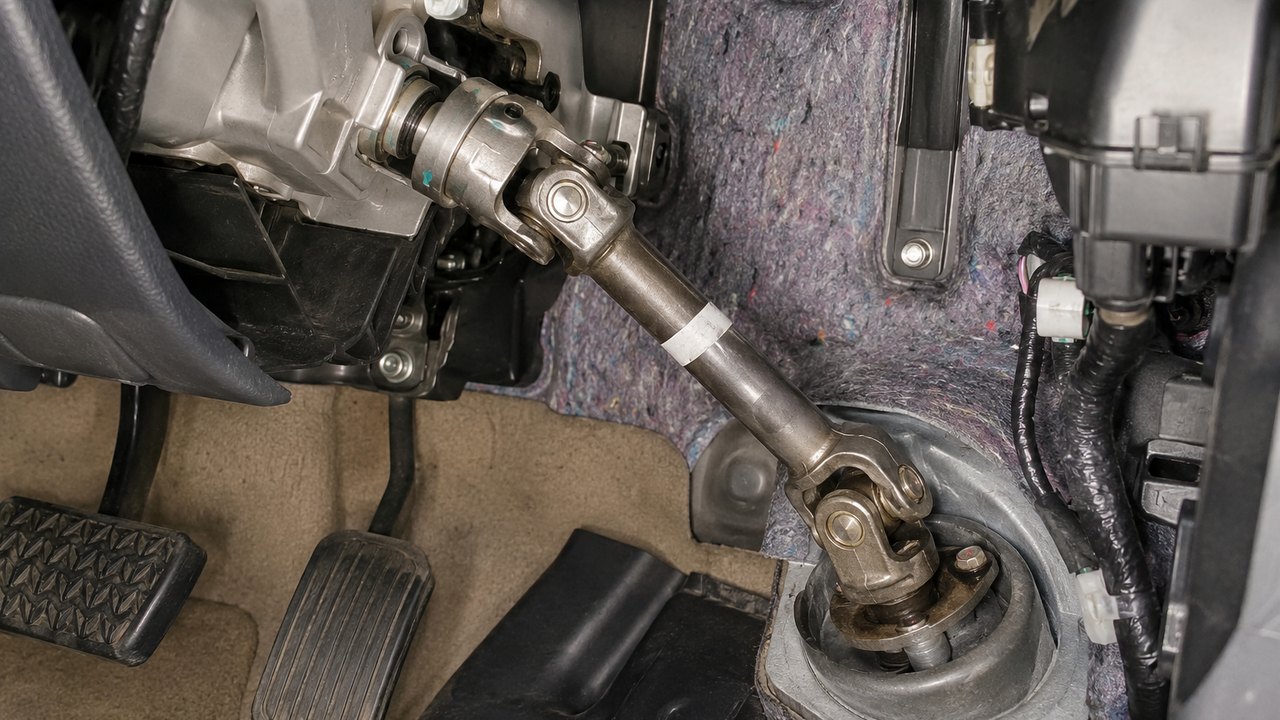
The intermediate steering shaft forms part of the mechanical connection between the steering wheel and the steering gear.
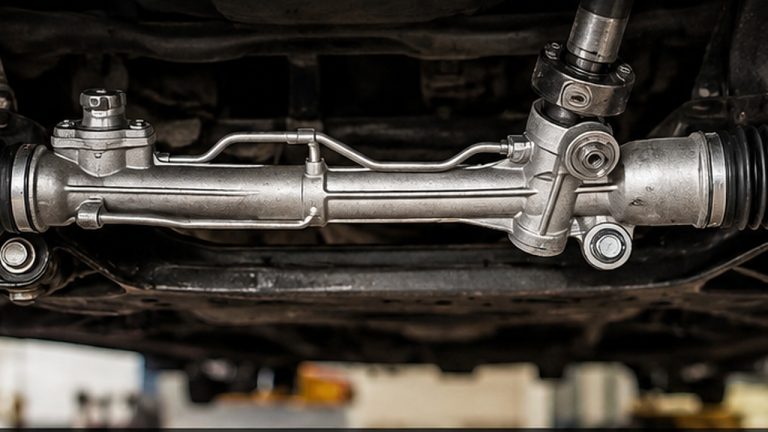
At the top is the steering column inside the cabin. At the other end is the steering rack or steering gear that ultimately moves the front wheels. The intermediate shaft bridges the space between them, usually passing through or near the firewall.
Most designs use one or more universal joints so the shaft can transfer rotation even though the column and steering gear are not perfectly aligned.
If the problem is higher up in the complete cabin-side assembly, our steering column replacement cost guide covers that substantially larger repair.
What Steering Shaft Replacement Usually Costs
| Cost Item | Typical Planning Range |
|---|---|
| Intermediate steering shaft | About $150–$400 |
| Labor | About $200–$500 |
| Typical complete repair | About $400–$900 |
| Expensive OEM application | $900–$1,000+ possible |
| Wheel alignment | Normally not required for shaft-only replacement |
That range covers the intermediate steering shaft repair itself. A quote becomes significantly different if the shop has diagnosed the steering column, rack, tie rods or another component at the same time.
Why Some Steering Shafts Cost Much More Than Others
The shaft looks relatively simple, but parts pricing varies surprisingly widely.
A common aftermarket intermediate shaft may cost only a few hundred dollars. An OEM assembly for a luxury or European vehicle can cost several hundred dollars more before any labor is added.
Access also matters. One end of the shaft is commonly reached from the driver’s footwell, while the lower connection may sit in a tight area near the firewall, steering rack or engine bay.
Corrosion can make the repair slower as well. The lower U-joint and splined connections operate in an area exposed to moisture, road contamination and temperature changes.
The Classic Symptom: A Clunk You Can Feel Through the Wheel
One of the most recognizable intermediate steering shaft complaints is a clunk or knock that seems to come through the steering wheel rather than from one corner of the suspension.
You may notice it while:
- turning the wheel at low speed
- driving over small bumps or rough pavement
- changing steering direction from left to right
- maneuvering into a parking space
- moving the steering wheel slightly while stationary
The sensation can feel surprisingly close to the driver because the shaft is mechanically connected directly to the steering column.
Binding or Notchy Steering Can Point to the U-Joints
A steering shaft does not have to be loose to fail.
The universal joints can become stiff or corroded. Instead of smooth steering-wheel movement, the driver may feel resistance at certain points in the rotation followed by a sudden release.
That can create a notchy or sticky steering sensation that may initially be mistaken for a steering rack or power-assist problem.
Binding deserves proper diagnosis because the steering system should move smoothly throughout its normal range.
Steering Shaft Play vs. Steering Column Play
This is one of the most important distinctions in the repair.
Play in the intermediate shaft may come from a worn joint, telescoping connection or splined coupling between the column and steering gear.
Play inside the steering column can involve bearings, bushings, tilt mechanisms or the column assembly itself.
A technician can inspect the connected components while the steering wheel is moved slightly back and forth. If the upper section moves but the lower shaft does not respond immediately—or movement can be seen at a joint—the source of the play becomes easier to isolate.
Could the Rack and Pinion Cause the Same Symptoms?
Yes. Steering components form one mechanical chain, so noise and looseness can travel through them.
Internal rack wear, rack mounting movement or problems at the steering gear input can sometimes feel like a shaft problem from the driver’s seat.
The financial difference is substantial. An intermediate shaft commonly costs hundreds of dollars to replace, while a complete rack can cost several thousand. If the steering gear itself is diagnosed as the failure, see our rack and pinion replacement cost guide.
Tie Rod Wear Can Also Create Loose Steering
Not every clunk or vague steering complaint originates between the steering wheel and rack.
Inner and outer tie rods sit farther downstream and connect the steering gear to the steering knuckles. Wear there can create looseness, clunking and poor steering response.
Unlike an intermediate steering shaft replacement, tie rod work normally affects toe and therefore usually requires an alignment afterward. Our tie rod replacement cost guide covers that repair separately.
Does the Whole Shaft Need Replacement if a U-Joint Is Bad?
Often, yes—but it depends on the design.
Many intermediate steering shafts are supplied and serviced as complete assemblies with the universal joints already attached. In that case, a worn or seized U-joint means replacing the shaft assembly rather than pressing in a generic joint.
Some vehicles use separately serviceable couplers or joints. If the manufacturer supplies the failed component separately and the rest of the shaft is sound, a smaller repair may be possible.
That is why “steering shaft U-joint replacement cost” may refer either to a small joint repair or to replacement of the complete intermediate shaft, depending on the vehicle.
Upper, Lower and Intermediate Steering Shafts
Terminology is not completely consistent between manufacturers.
You may see parts catalogs use names such as:
- intermediate steering shaft
- lower steering shaft
- steering intermediate shaft
- steering column intermediate shaft
- steering shaft assembly
Those names can describe the same general connection between the steering column and steering gear, although some vehicles divide the system into multiple shaft sections.
Part numbers and vehicle-specific diagrams are therefore more reliable than assuming every “lower shaft” is identical.
Do Not Confuse It With a CV Intermediate Shaft
This is an important terminology trap.
An intermediate steering shaft transfers steering-wheel rotation toward the steering gear.
An automotive drivetrain can also have an intermediate axle shaft or CV intermediate shaft that transfers engine torque toward a drive wheel.
They perform completely different jobs. A quote or parts listing that only says “intermediate shaft” should be checked carefully before comparing prices.
What the Replacement Job Involves
The exact procedure varies, but the basic objective is to disconnect the old shaft from the steering column and steering gear while keeping the steering system correctly indexed.
The technician normally has to gain access to the upper and lower connections, remove the retaining hardware, collapse or reposition the shaft as designed, and install the replacement without changing the relationship between the steering wheel and front wheels.
Tight access in the driver’s footwell and around the firewall can make an otherwise simple mechanical part awkward to replace.
Why the Steering Wheel Must Stay Centered
The steering wheel should not be allowed to rotate freely while the shaft is disconnected.
With the mechanical connection temporarily separated, the steering wheel can turn independently of the rack. Excess rotation can move the clock spring beyond its designed range and damage the electrical ribbon inside it.
A damaged clock spring can create airbag warnings and problems with steering-wheel controls, turning a relatively contained shaft repair into a much more expensive electrical and safety-system repair.
Does Steering Shaft Replacement Require an Alignment?
Normally, no. Replacing only the intermediate steering shaft does not change toe, camber or caster because the wheel-positioning components are not being adjusted.
However, the steering wheel still needs to remain correctly centered relative to the steering rack when the new shaft is installed.
If the vehicle also receives tie rod, steering rack or suspension work during the same visit, an alignment may be appropriate because of those additional repairs.
Does a New Steering Shaft Need Programming?
A conventional intermediate steering shaft is mechanical and does not normally require programming by itself.
That is another major difference from some modern steering columns and electric steering racks, which can incorporate sensors, motors and control electronics.
If a shop includes calibration or programming with a shaft-only repair, ask whether another electronic steering component is also being serviced or whether a vehicle-specific procedure requires it.
OEM vs. Aftermarket Steering Shafts
Parts choice can move the final price by several hundred dollars.
OEM shafts tend to cost more, but availability and aftermarket quality vary significantly between vehicle platforms. Some popular trucks and SUVs have several aftermarket choices, while certain newer or European models may have little beyond OEM equipment.
Because this component is part of the direct mechanical steering path, fit, joint quality and correct vehicle compatibility matter more than simply choosing the lowest-priced listing.
Can Lubricating the Steering Shaft Fix the Clunk?
Lubrication has sometimes been used to temporarily reduce noises associated with certain splines or joints, but it should not be treated as a universal repair.
A worn joint, excessive mechanical play or corroded U-joint does not regain its original mechanical condition simply because lubricant reduces the noise.
There have also been vehicle-specific service procedures and revised parts for steering-shaft complaints over the years, so the correct response depends on the exact model and failure mode.
If the shaft has measurable play, binding or a damaged joint, replacement is a more meaningful fix than repeatedly trying to mask the symptom.
Can You Drive With a Bad Intermediate Steering Shaft?
The answer depends on the type and severity of the failure, but steering-shaft problems should not be ignored.
A mild noise with no measurable play is different from a shaft with a binding U-joint, increasing free play or an obviously loose connection.
The intermediate shaft is part of the mechanical path used every time the vehicle changes direction. If steering becomes sticky, develops significant looseness or behaves unpredictably, the vehicle should be inspected rather than driven normally until the cause is known.
How Long Does Steering Shaft Replacement Take?
Many intermediate steering shaft jobs take roughly one to three labor hours.
Vehicles with accessible pinch bolts and plenty of room near the firewall may fall toward the lower end. Tight footwell access, corrosion or difficult lower connections can extend the repair.
This is still generally less involved than replacing the complete steering column, which can require steering-wheel and airbag removal, electrical disconnection and additional trim work.
Frequently Asked Questions
How much does steering shaft replacement cost?
About $400 to $900 is a useful U.S. planning range for an intermediate steering shaft replacement. Some easier applications cost less, while expensive OEM shafts can push the total above $1,000.
How much does an intermediate steering shaft cost?
The shaft itself commonly costs around $150 to $400, although OEM parts for certain vehicles can be considerably more expensive.
What are the symptoms of a bad intermediate steering shaft?
Common symptoms include clunking felt through the steering wheel, steering play, binding, notchy movement and noise when turning or driving over small bumps.
Is a steering shaft the same as a steering column?
No. The steering column is the larger assembly attached to the steering wheel inside the cabin. The intermediate shaft connects the lower end of that column to the steering rack or steering gear.
Is an intermediate steering shaft the same as an intermediate axle shaft?
No. An intermediate steering shaft is part of the steering system. A CV or axle intermediate shaft is part of the drivetrain and transfers engine torque to a drive wheel.
Does steering shaft replacement require an alignment?
Normally not when only the intermediate steering shaft is replaced. The steering wheel and rack must remain correctly centered, but the repair itself does not normally alter wheel-alignment angles.
Can a bad steering shaft make the steering wheel clunk?
Yes. Wear at a shaft joint or connection can transmit a clunk directly into the steering wheel. Steering column, rack, tie rod and suspension faults can create similar noises, so the source should still be confirmed.
A Smaller Repair Than It Often Feels Like
A clunk or sticking sensation through the steering wheel can make the entire steering system feel worn out, but an intermediate steering shaft is a relatively contained component between the column and steering gear.
If the shaft or one of its integrated joints is confirmed as the source, replacement commonly costs hundreds rather than thousands of dollars. The key is isolating the movement before replacing a steering column or rack that may still be perfectly serviceable.