Best Shocks for Lifted Trucks: Top Picks for Ride, Towing & Off-Road
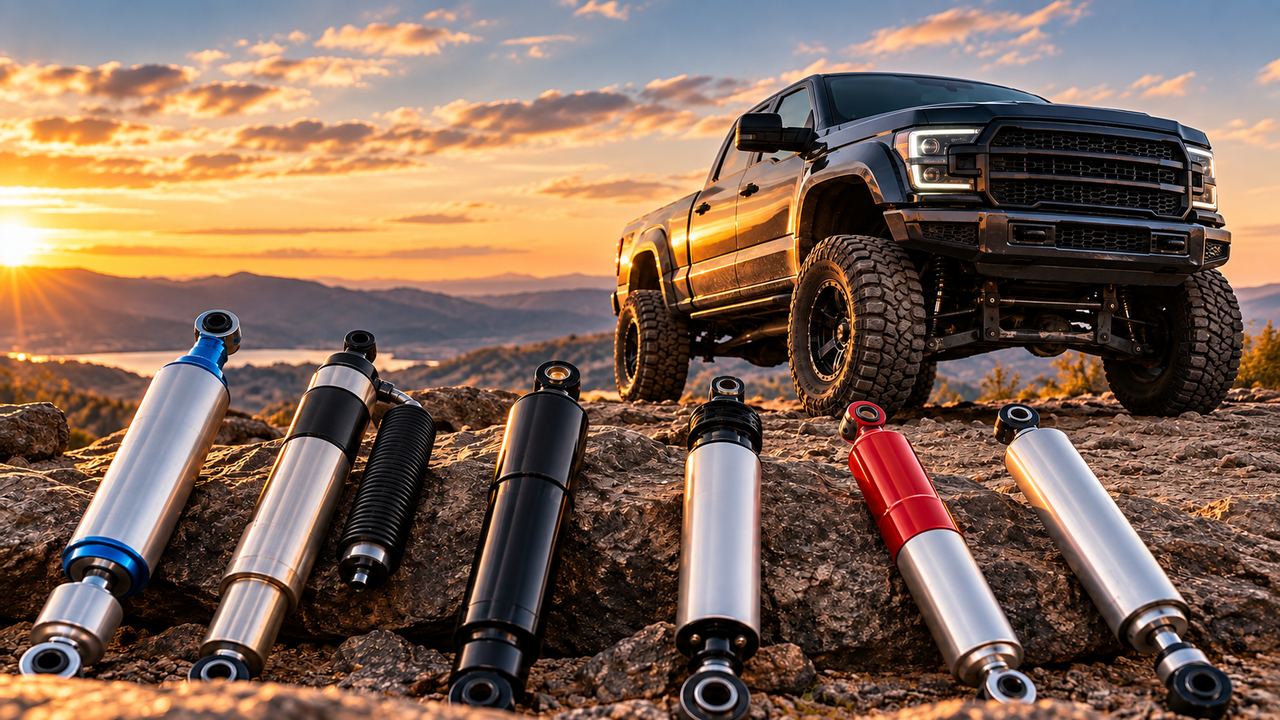
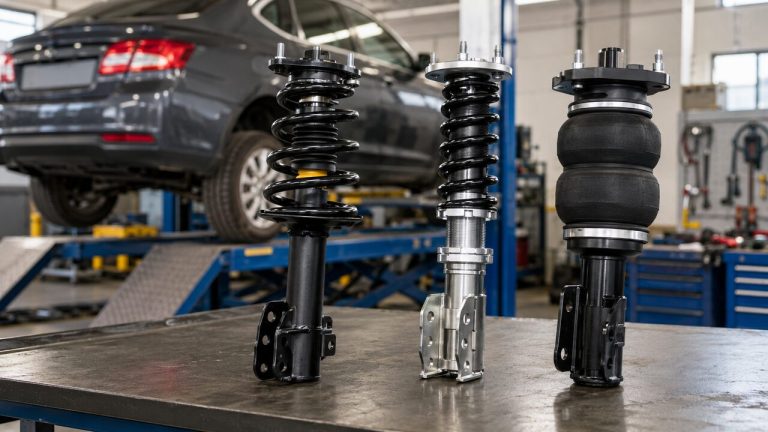
For most daily-driven lifted trucks, the BILSTEIN B8 5100 is the best place to start because it combines lift-specific fitment, vehicle-specific tuning, controlled road manners, and reasonable cost. FOX 2.0 Performance Series IFP shocks are the stronger choice for frequent rough-road and trail use, while Rancho RS9000XL shocks stand out if you regularly switch between unloaded driving and towing or hauling.
But there is no single shock that is best for every lifted truck. A 2-inch leveled F-150 used for commuting needs something very different from a 6-inch-lifted Silverado on 35-inch tires or a Ram that spends hours on washboard roads. The correct shock must fit the truck, the actual suspension lift, the available travel, and the way you use it.
Best Shocks for Lifted Trucks: Quick Picks
| Shock | Best for | Why it stands out |
|---|---|---|
| BILSTEIN B8 5100 | Best overall for most lifted daily drivers | Lift-specific applications, monotube construction, vehicle-specific tuning and strong road control |
| FOX 2.0 Performance Series IFP | Frequent trails and rough roads | Aluminum monotube body, IFP design and strong heat management |
| Rancho RS9000XL | Towing and changing loads | Nine-position manual damping adjustment lets you change firmness as use changes |
| Eibach PRO-TRUCK Sport | Street and trail balance | Monotube design with application-specific ride-height options and matched Eibach suspension choices |
| Rough Country N3 | Budget lifted-truck replacement | Wide lift-height availability and useful specifications at a lower price tier |
| ICON 2.5 V.S. Remote Reservoir | Premium hard off-road use | Large-body rebuildable shocks, remote reservoirs and vehicle-specific tuning |
Our overall pick: start with the BILSTEIN 5100 if your truck is primarily a daily driver with a mild or moderate lift. Move toward FOX 2.0 or a premium reservoir shock as rough-road speed, suspension cycling and heat become more important. Choose Rancho when the ability to change damping for different loads matters more than having a fixed tune.
These are product families, not universal part numbers. Lift range, dimensions, mounts and valving vary by vehicle and axle position, so always verify the exact application before ordering.
1. BILSTEIN B8 5100: Best Overall for Most Lifted Trucks
The BILSTEIN B8 5100 is our first choice for a typical street-driven truck with a leveling kit or suspension lift because it sits in a useful middle ground: more control than a basic replacement shock without automatically moving into expensive reservoir hardware.
BILSTEIN uses a 46 mm monotube design with application-specific digressive valving. The standard B8 5100 family includes versions intended for different lifted applications, while separate ride-height-adjustable front 5100 versions can provide front leveling on compatible OE coilover-style suspensions.
That distinction matters. Not every 5100 raises a truck, and you should never assume that buying a “5100” automatically gives you a certain amount of lift. The exact part number determines whether it is a conventional lift-compatible shock, a ride-height-adjustable front unit, and what vehicle and lift range it fits.
- Best for: daily driving, highway use, mild trails, towing and leveled or moderately lifted trucks.
- Main strength: strong balance between price, body control and real-world usability.
- Watch for: ride-height capability and supported lift range vary by application.
If you are specifically choosing between this shock and the FOX option below, our BILSTEIN 5100 vs FOX 2.0 comparison goes deeper into their construction, ride characteristics, heat management and value.
2. FOX 2.0 Performance Series IFP: Best for Frequent Trails and Rough Roads
The FOX 2.0 Performance Series IFP makes more sense when the truck regularly leaves smooth pavement and you are willing to pay more for a damper designed around repeated rough-road use.
The standard 2.0 Performance Series IFP design uses an aluminum monotube body and an internal floating piston that separates the shock oil from the high-pressure gas chamber. FOX also uses application-specific valving rather than treating one generic tune as suitable for every truck.
The important advantage is not that a FOX automatically feels softer. Its appeal is consistent damping when the shock is cycling repeatedly and generating heat. That makes the 2.0 IFP especially relevant for washboard roads, trail driving, overlanding and lifted trucks carrying larger wheel-and-tire combinations.
- Best for: frequent trail use, washboard roads, overlanding and drivers wanting a premium monotube.
- Main strength: heat management and consistent control during repeated suspension movement.
- Watch for: “FOX 2.0” covers several configurations; an IFP smooth-body shock, coilover and remote-reservoir shock are not the same product.
3. Rancho RS9000XL: Best Adjustable Shock for Towing and Mixed Use
A lifted truck that tows on weekends but runs unloaded during the week creates a difficult compromise for a fixed-valving shock. That is where the Rancho RS9000XL is unusually useful.
The RS9000XL provides nine manually selectable damping settings. Rancho positions the lower settings toward an OE-like ride, the middle range toward firmer general use, and the upper settings toward greater control for towing and heavy loads.
This does not change spring rate or increase payload capacity. What it changes is how firmly the shock controls suspension movement. You can therefore use a softer setting when the truck is unloaded and increase damping when a trailer or cargo makes additional body motion harder to control.
- Best for: trucks alternating between commuting, towing, hauling and trail use.
- Main strength: meaningful manual damping adjustment without replacing the shock.
- Watch for: you still need the correct RS9000XL part number and lift-height application.
4. Eibach PRO-TRUCK Sport: Best Balanced Street-and-Trail Alternative
The Eibach PRO-TRUCK Sport deserves consideration if you want another high-quality monotube option without automatically choosing BILSTEIN or FOX.
Eibach uses a monotube damper design and offers vehicle-specific configurations with additional travel and, on compatible front applications, clip-height adjustment. The shocks are also designed to work with Eibach PRO-LIFT-KIT springs where a matched spring-and-damper combination is available.
That makes the PRO-TRUCK Sport especially interesting for a truck that needs to remain comfortable and predictable on pavement but still sees dirt roads and moderate trails. As with the 5100, however, the available height adjustment and lift compatibility depend on the exact vehicle application.
- Best for: mixed street and moderate off-road driving.
- Main strength: balanced monotube performance with matched Eibach spring options.
- Watch for: do not assume every PRO-TRUCK Sport shock has the same adjustment range.
5. Rough Country N3: Best Budget Choice
Not every lifted daily driver needs a premium rebuildable shock. Rough Country’s N3 line is worth considering when the main goal is getting a lift-compatible replacement without spending FOX or ICON money.
Current N3 applications use nitrogen-charged construction, 10-stage variable valving, a 35 mm piston and a 54 mm shock body. More importantly for this guide, Rough Country sells specific N3 versions for different vehicles and lift ranges rather than one supposedly universal lifted-truck shock.
The N3 makes the most sense for normal road use, lighter trail driving and budget-oriented builds. If you frequently run fast across rough terrain, the additional oil capacity, serviceability and thermal management available from premium large-body reservoir dampers become more meaningful.
- Best for: budget-conscious daily drivers and moderate trail use.
- Main strength: broad lift-specific availability at a lower price tier.
- Watch for: choose by exact lift range and vehicle, not simply by the N3 name.
6. ICON 2.5 V.S. Remote Reservoir: Best Premium Option for Hard Off-Road Use
If the truck regularly sees sustained rough-road use, larger impacts or higher off-road speeds, moving beyond a conventional smooth-body shock can make sense. ICON’s 2.5-inch Vehicle Specific remote-reservoir shocks represent that next level.
ICON uses vehicle-specific length and damping calibration, a nitrogen-charged monotube architecture and an external reservoir that increases fluid capacity and helps manage heat during prolonged use. Current 2.5 V.S. reservoir shocks are also rebuildable and revalveable, with adjustable compression options available on selected versions.
Those features are valuable when the shock is actually being worked hard. They are much less compelling for a truck whose most difficult task is commuting on pavement. Buying premium reservoir shocks solely because they look more serious under the truck is an expensive way to solve a problem you may not have.
- Best for: frequent hard off-road use, long rough-road sections and high-end builds.
- Main strength: thermal capacity, serviceability and application-specific performance.
- Watch for: substantially more cost and complexity than most daily drivers need.
The Most Important Rule: Match the Shock to the Lift
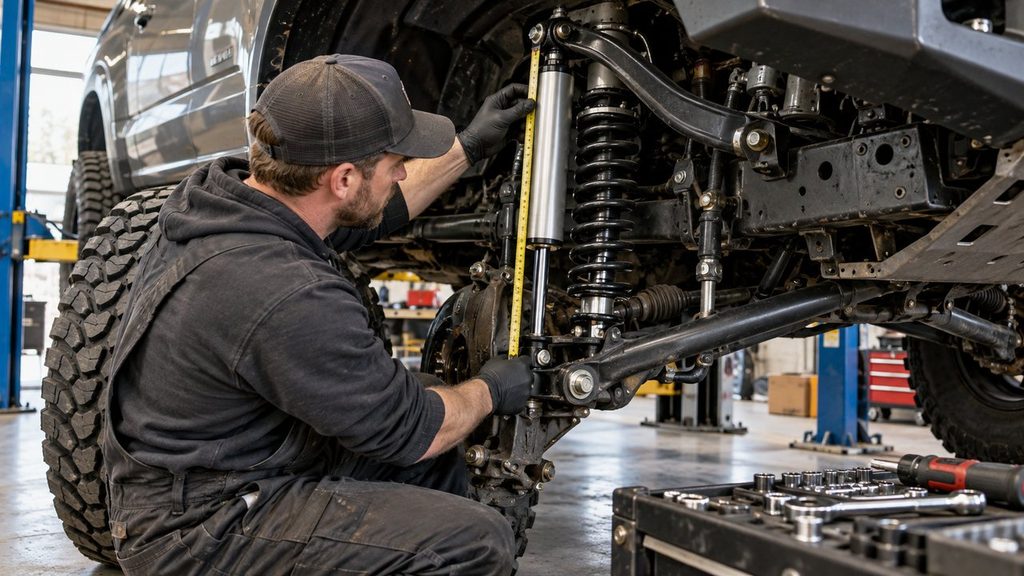
The best shock brand will still perform badly if the shock is the wrong length for the suspension. This is where many lifted-truck buying guides oversimplify the decision.
A suspension lift changes where the suspension operates within its available travel. Depending on the design, a shock that is too short can reach full extension before the suspension has used its available droop. A shock that is too long can run out of compression stroke before the suspension reaches its bump stop.
Neither condition is desirable. The shock should control suspension motion; it should not act as the mechanical limit that violently stops the axle or control arm at full compression or extension.
Extended Length Matters
Extended length determines how far the shock can reach as the suspension moves into droop. If the shock tops out first, it can restrict articulation and place unnecessary loads on the shock and its mounts.
Compressed Length Matters Just as Much
A longer shock is not automatically safer. At full suspension compression, the shock still needs enough remaining stroke that the vehicle’s intended bump-stop system—not the shock’s internal limit—controls the end of travel.
That is why choosing shocks by saying “I have a 4-inch lift” is not always enough. Lift design, mounting points, axle position, control-arm geometry and the components supplied with the kit can all affect the required shock dimensions.
Do You Need Longer Shocks for a 2-Inch Lift?
Sometimes, but not automatically. A 2-inch suspension lift can change the shock’s operating position and available droop, but the correct answer depends on how that specific lift achieves its height and what shock range the vehicle manufacturer or lift-kit manufacturer specifies.
Some leveling systems are designed to retain factory-length dampers. Other 2-inch suspension lifts use or recommend longer shocks. There are also ride-height-adjustable front shocks that create lift through the spring perch while remaining engineered around the resulting travel.
Do not use a generic rule such as “add two inches to the shock length.” Check the application catalog or the lift-kit instructions. On a custom suspension, compressed and extended mount-to-mount dimensions should be verified through the suspension’s usable travel.
What About a 4-Inch or 6-Inch Lift?
As lift height increases, correct shock fitment becomes even more important. Many 4-inch and 6-inch suspension kits reposition mounting points or include shocks specifically designed around the kit’s geometry, so the required shock does not necessarily equal “stock length plus lift height.”
For a 4- to 6-inch lifted truck, shop for a shock explicitly listed for the exact vehicle and suspension configuration. If the truck is custom-built, measure the real suspension travel rather than relying on the advertised lift number.
A taller lift also raises the vehicle’s center of gravity and often accompanies heavier wheels and tires. That can make damping quality more noticeable, but it does not mean every 6-inch truck requires a race-level reservoir shock. A pavement-focused show or daily-driven truck and a 6-inch trail build can still need very different valving.
Body Lift vs Suspension Lift: Do Both Need Different Shocks?
This is an important distinction. A body lift raises the body relative to the frame without directly changing the suspension’s normal mounting geometry. In a conventional body-lift installation, the original shock length can therefore remain appropriate unless another suspension modification has also been made.
A suspension lift changes the relationship between the frame and suspension components. That can alter the shock’s operating position, required length and usable travel, which is why suspension-lift applications commonly specify different shocks.
If a previous owner says a truck “has a 3-inch lift,” identify what was actually changed before ordering shocks. Body spacers, strut spacers, lift springs, torsion adjustment and complete suspension systems do not all affect the damper in the same way.
Which Shocks Give the Smoothest Ride on a Lifted Truck?
The best riding shocks for a lifted truck are not necessarily the softest ones. A shock that is too lightly damped can let the truck bounce, float and take several motions to settle after a bump. One that is excessively firm can transmit more harshness into the cab.
Ride quality depends on the whole setup: shock valving, spring rate, lift method, tire construction, tire pressure, wheel weight, payload and even how much travel remains around normal ride height.
For a mostly street-driven mild lift, the BILSTEIN 5100 and Eibach PRO-TRUCK Sport are sensible starting points because they are offered as vehicle-specific systems rather than generic off-road dampers. Rancho’s adjustability can be even more useful when the preferred ride changes between unloaded commuting and towing.
Do not buy a FOX or ICON simply because you expect a more expensive shock to make every pothole disappear. Performance-oriented damping is designed to improve wheel and body control; it is not the same thing as making the suspension universally softer.
Monotube vs Twin-Tube Shocks on a Lifted Truck
Monotube shocks are common among performance-oriented lifted-truck options because their architecture can provide strong heat dissipation and consistent damping during repeated use. Twin-tube and multi-tube designs remain valid choices for street use, comfort-focused setups and adjustable products such as the Rancho RS9000XL.
Tube count alone does not tell you which shock will ride better on your truck. For the full explanation of internal construction, gas separation, heat, aeration and ride tradeoffs, see our monotube vs twin-tube shocks guide.
Do Larger Tires Change Which Shocks You Need?
They can. Lifted trucks commonly move to larger, heavier wheel-and-tire packages, increasing unsprung mass—the mass the suspension has to control on the wheel side of the springs.
More unsprung mass can make it harder for the damper to control rapid wheel movement, particularly on broken pavement and rough trails. The effect depends on how much weight was added, tire construction, wheel size and the original suspension tune, so there is no universal tire diameter at which a specific shock suddenly becomes mandatory.
What matters is that you evaluate the finished truck rather than choosing shocks as if it were still stock. A lifted vehicle on heavy 35-inch tires, steel bumpers and permanent cargo may need a different calibration than the same model with a mild level and near-stock weight.
Best Shocks for Towing With a Lifted Truck
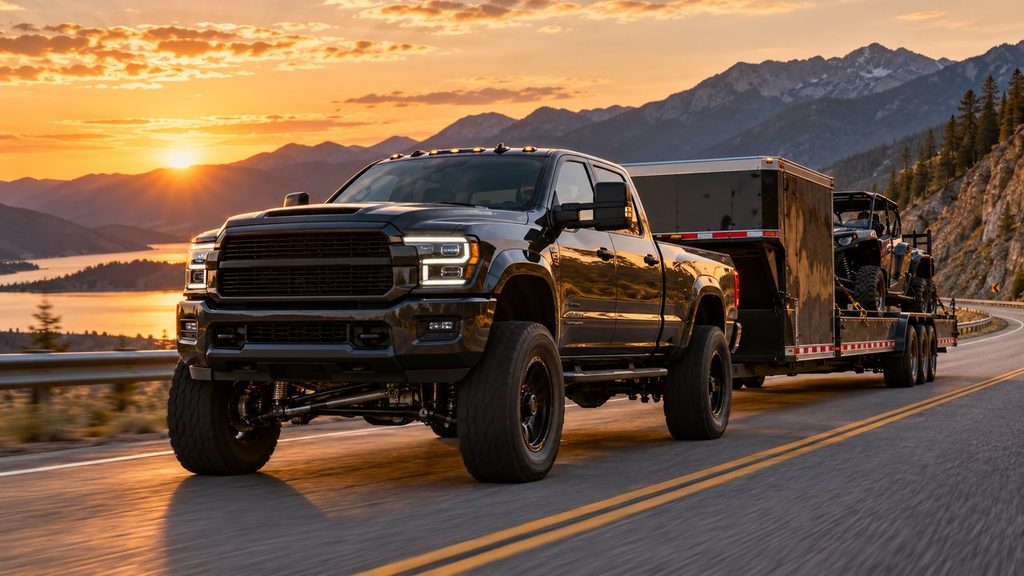
For a lifted truck that tows regularly, our first priorities are correct lift fitment, sufficient damping for the loaded vehicle and predictable highway control. The Rancho RS9000XL is especially attractive when the truck switches frequently between unloaded and towing conditions because damping can be increased manually for the heavier use case.
The BILSTEIN 5100 is also a strong fixed-valving choice when an appropriate lifted application exists. A premium reservoir shock can provide additional thermal capacity, but towing alone does not automatically justify one.
Most importantly, shocks do not increase the truck’s GVWR, GAWR, payload or tow rating, and they do not hold the rear of the truck at ride height like a spring. If the rear suspension sags excessively under tongue weight or payload, address loading, spring support and weight distribution rather than expecting a firmer shock to carry the load.
When Remote-Reservoir Shocks Are Worth the Money
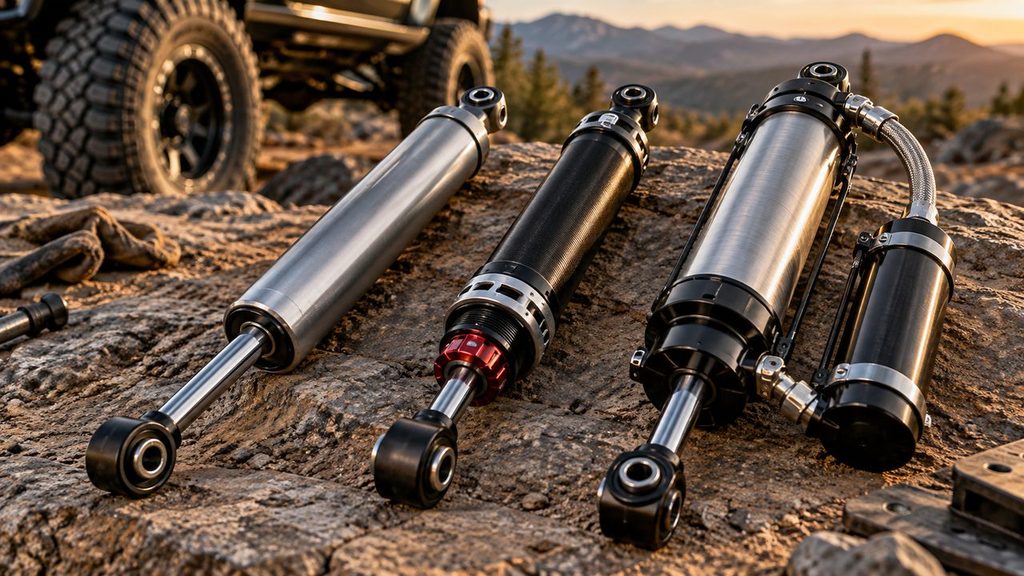
A remote reservoir increases fluid and gas capacity and gives the system more surface area and volume to manage heat. That becomes useful when shocks cycle hard for long periods, such as fast desert running, extended washboard roads or demanding trail use.
For ordinary commuting, highway driving and occasional slow trails, the truck may never create enough sustained heat to exploit that advantage. In those cases, a quality conventional monotube can deliver the control you need with less cost and complexity.
If you are upgrading springs, control arms and other components at the same time rather than simply replacing dampers, our guide to the best off-road suspension kits covers complete systems separately.
Common Mistakes When Buying Shocks for a Lifted Truck
Buying Only by Lift Height
“For a 3-inch lift” is not enough information. Verify year, model, drivetrain, front or rear position, suspension design, actual lift and any manufacturer exclusions.
Assuming a More Expensive Shock Must Ride Smoother
Premium shocks can add thermal capacity, serviceability and control, but ride comfort still depends on the tune and the rest of the suspension. A high-end shock selected for aggressive off-road use may feel firmer than a street-oriented alternative.
Using Shocks to Fix the Wrong Spring Setup
A shock controls movement; it does not replace the spring’s job of supporting static vehicle weight. Sag, insufficient load capacity or an inappropriate spring rate should be addressed at the spring or load-management level.
Ignoring Full Compression
Buyers often focus only on getting a longer shock for droop. A shock must also be short enough at full compression that it does not become the bump stop and damage itself or its mounts.
Mixing Front and Rear Parts Without Checking the System
Front and rear suspensions do different jobs and may use different spring rates, leverage ratios and shock mounting positions. Matching names or colors does not guarantee the resulting damping balance is appropriate.
How to Choose the Right Shocks for Your Lifted Truck
- Identify the exact truck. Record year, make, model, trim, drivetrain and any factory suspension package.
- Determine what kind of lift it has. Separate body lifts, leveling systems, lift springs, spacers and complete suspension lifts.
- Confirm the actual front and rear lift. Do not assume both axles gained the same amount of height.
- Check manufacturer fitment. Use the shock maker’s application catalog and the lift-kit manufacturer’s recommendations wherever available.
- Verify travel on custom setups. Compressed and extended lengths must work with the suspension’s bump and droop limits.
- Account for tires and permanent weight. Larger wheels, bumpers, winches, campers and other accessories change what the damper must control.
- Choose for your hardest regular use. Commuting, towing, slow trails and high-speed rough-road driving create different damping demands.
- Pay for features you will actually use. Adjustability, rebuildability and reservoirs are valuable only when they solve a real requirement.
Which Lifted-Truck Shock Should You Buy?
| If your truck… | Start with… |
|---|---|
| Is a daily driver with a mild lift | BILSTEIN B8 5100 |
| Regularly drives washboard roads or trails | FOX 2.0 Performance Series IFP |
| Alternates between unloaded driving and towing | Rancho RS9000XL |
| Needs a balanced street/trail setup | Eibach PRO-TRUCK Sport |
| Needs an affordable lift-compatible replacement | Rough Country N3 |
| Sees sustained, demanding off-road use | ICON 2.5 V.S. Remote Reservoir or similar premium reservoir damper |
The table is a starting point. Exact fitment overrides every general recommendation on this page. A correctly sized and tuned budget shock is a better choice than a premium shock that does not match the truck’s lift or suspension travel.
Frequently Asked Questions
What are the best shocks for lifted trucks?
For most daily-driven mildly lifted trucks, the BILSTEIN B8 5100 is our best overall starting point. FOX 2.0 IFP shocks suit more frequent rough-road and trail use, Rancho RS9000XL shocks are useful when towing and load conditions change, and premium reservoir shocks such as ICON 2.5 V.S. models make more sense for sustained hard off-road use.
Do lifted trucks need special shocks?
A suspension-lifted truck often needs shocks matched to its new ride height and travel, but the requirement depends on the lift design. A body lift normally does not change shock length by itself because the suspension remains attached to the frame in its original geometry.
Can I use stock shocks with a 2-inch lift?
Only if the lift or vehicle manufacturer confirms that the factory-length shock remains compatible. Some mild leveling systems retain stock-length dampers, while other 2-inch suspension lifts require or benefit from a different shock. Check the exact system rather than applying one rule to every truck.
What shocks are best for a 4-inch lifted truck?
Choose a shock specifically listed for that vehicle and 4-inch suspension configuration. Depending on the truck and use, suitable families may include lift-specific BILSTEIN 5100, FOX, Rancho, Rough Country or premium reservoir products. The advertised lift number alone is not enough to determine the correct shock length.
What are the best shocks for a 6-inch lifted truck?
For a 6-inch lift, exact kit compatibility becomes especially important. A street-driven truck may still work well with conventional lift-specific dampers, while a truck used aggressively off road can justify larger monotube or remote-reservoir shocks. Use shocks specified for the actual suspension kit or verify compressed and extended lengths on a custom setup.
Will better shocks make my lifted truck ride smoother?
They can improve control and reduce bouncing if the current shocks are worn, incorrectly sized or poorly matched. They cannot correct every harsh ride. Lift springs, preload, tire pressure, heavy wheels, limited suspension travel and incorrect geometry can all make a lifted truck uncomfortable even with expensive shocks.
Are FOX shocks better than BILSTEIN 5100s for a lifted truck?
Not universally. FOX 2.0 IFP shocks make more sense when frequent rough-road use and heat management justify their premium construction. BILSTEIN 5100s are usually the stronger value for daily-driven, leveled and mildly lifted trucks that still need good road control and occasional trail capability.
Do shocks increase towing or payload capacity?
No. Shocks control suspension movement but do not raise the manufacturer’s GVWR, axle ratings, payload or towing limits. They can improve damping and stability under load, but the springs, tires, axles, brakes, hitch system and vehicle ratings still determine what the truck can safely carry or tow.
Final Verdict
The BILSTEIN B8 5100 is the best all-around starting point for most daily-driven lifted trucks, while FOX 2.0 IFP shocks are better suited to frequent rough-road use and Rancho RS9000XL shocks offer the most useful flexibility for changing towing and load conditions.
For a budget build, the Rough Country N3 can make sense when an exact lift-specific application exists. For trucks that repeatedly generate serious shock heat off road, large-body rebuildable reservoir dampers such as ICON’s 2.5 V.S. series justify their extra cost far more easily.
Most importantly, do not choose by brand reputation alone. The best shocks for a lifted truck are the ones that match its exact vehicle configuration, actual lift, compressed and extended travel, wheel-and-tire weight and real driving conditions. Correct fitment comes first; the logo on the shock comes second.