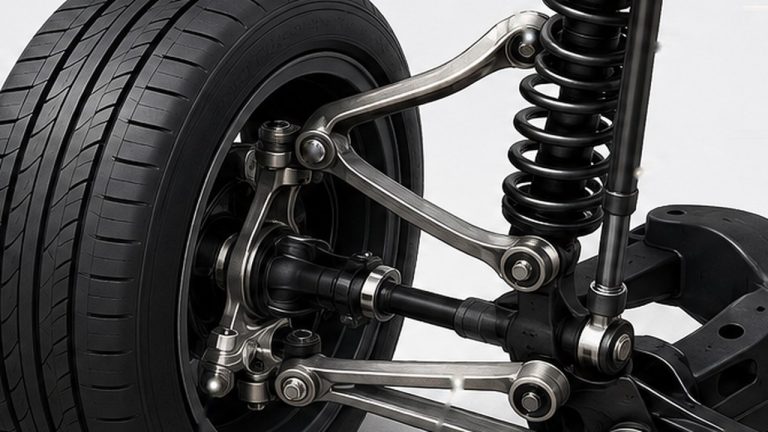
Monotube vs Twin-Tube Shocks: Which Is Better?
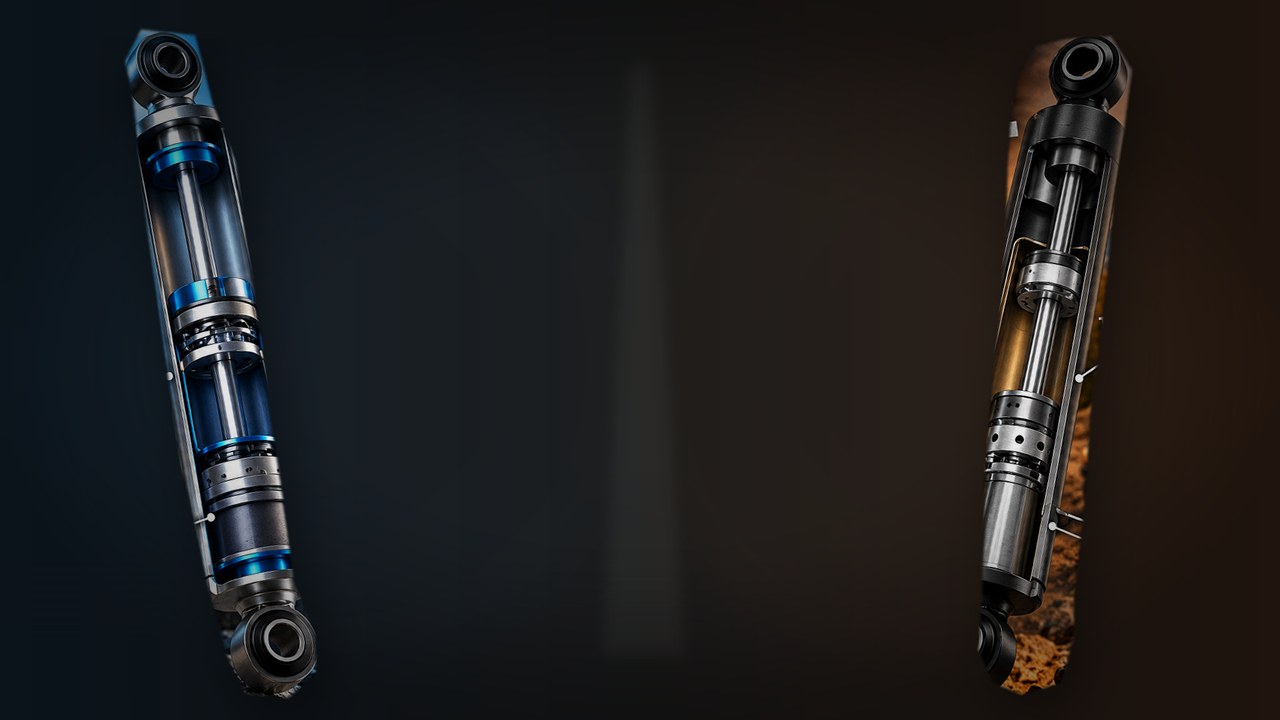
Monotube shocks are usually the better choice for repeated hard use, towing, performance driving, and demanding off-road conditions because they manage heat well and keep the oil and gas separated. Twin-tube shocks are often the better value for normal street driving, where comfort, compact packaging, and lower cost matter more than sustained high-temperature performance.
That does not mean every monotube shock rides firmer or every twin-tube shock is softer. The internal valving, spring rate, tire setup, vehicle weight, suspension travel, and the exact shock calibration can matter more to ride quality than the number of tubes alone.
Monotube vs Twin-Tube Shocks at a Glance
| Feature | Monotube Shock | Twin-Tube Shock |
|---|---|---|
| Basic design | One main pressure tube | Inner working tube plus outer reserve tube |
| Oil and gas | Normally separated by a floating piston | Oil moves between working and reserve chambers |
| Heat dissipation | Usually better | Usually slower |
| Resistance to fade | Usually better during repeated hard use | Adequate for normal use but more susceptible under sustained heat |
| Piston size | Can use a larger working piston for a similar outside diameter | Working piston must fit inside the inner tube |
| Ride feel | Often controlled and responsive | Often compliant and comfort-focused |
| External impact protection | A dent in the working tube can be serious | Outer tube can help protect the inner working cylinder |
| Mounting orientation | Some designs can operate inverted | Normally more restricted |
| Typical cost | Higher | Lower |
| Common applications | Performance, towing, off-road, heavy-duty use | OEM replacement, commuting, comfort-focused street use |
Quick decision: choose a properly matched twin-tube shock if you mainly want an affordable, comfortable replacement for normal road use. Choose a properly matched monotube when the shock will repeatedly work hard enough for heat control and damping consistency to matter.
How Monotube and Twin-Tube Shocks Actually Differ
Both designs do the same basic job. A shock absorber controls spring and wheel movement by forcing hydraulic oil through calibrated valves. That resistance converts suspension movement into heat and prevents the vehicle from continuing to bounce after every bump.
If you want the fundamentals before comparing the two layouts, our guide to how suspension damping works explains compression, rebound, piston speed, and why more damping is not automatically better.
Inside a Monotube Shock
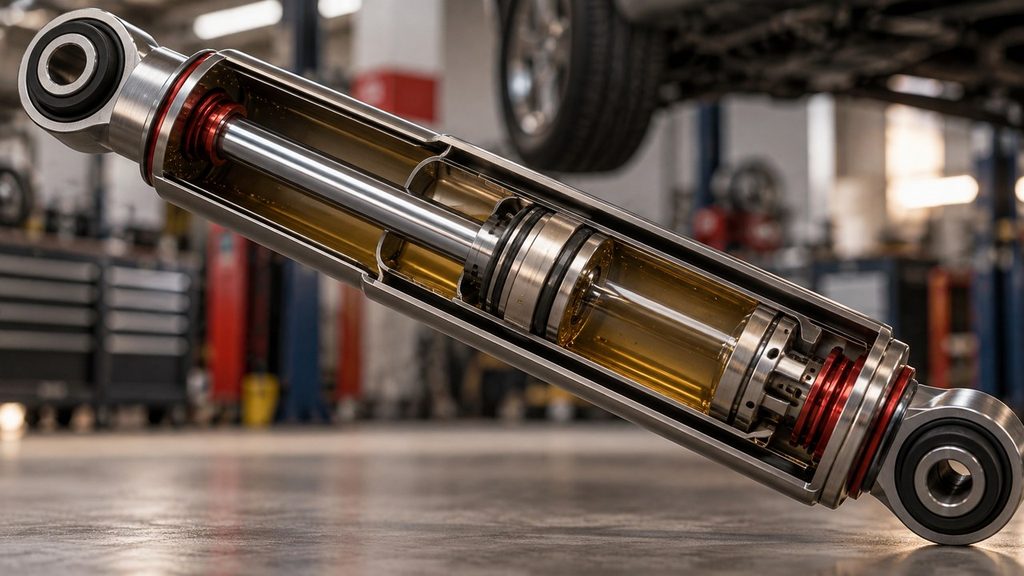
A monotube uses the shock body itself as the main working cylinder. The damping piston moves through hydraulic oil in this single tube, while a separate gas chamber is normally located below a floating dividing piston.
The floating piston keeps the pressurized gas physically separated from the hydraulic oil. That separation helps prevent gas bubbles from mixing into the oil when the shock cycles rapidly and allows the damper to maintain more consistent behavior as temperatures rise.
Because there is no smaller inner working tube, a monotube can also use a relatively large piston for a given outside diameter. The exact damping response still comes from the valve design, but the larger working area gives manufacturers useful control when tuning the shock.
Inside a Twin-Tube Shock
A twin-tube shock places one cylinder inside another. The piston moves inside the inner working tube, while the space between the inner and outer tubes acts as a reserve chamber for displaced fluid and the gas charge.
As the piston rod enters the shock during compression, it displaces oil. A base valve controls flow between the working cylinder and the reserve chamber. During rebound, the piston and valves control the return movement as the shock extends.
This architecture packages a useful amount of suspension travel into a compact damper and is inexpensive to manufacture at scale, which is one reason twin-tube designs are common on original-equipment passenger cars, SUVs, and light trucks.
Why Monotube Shocks Handle Heat Better
Every shock produces heat because damping converts suspension movement into thermal energy. A few bumps during a normal commute are not a difficult thermal problem. Hundreds of rapid movements across washboard, repeated high-speed cornering, towing on a rough mountain road, or long off-road sections are different.
A monotube has only one wall between the hot hydraulic oil and the outside air, so heat can escape through the shock body efficiently. In a twin-tube design, heat from the inner working cylinder must also transfer through the surrounding reservoir before reaching the outside surface.
This difference becomes important when the damper has little time to cool between suspension movements. As temperature rises, oil viscosity changes and gas can become mixed with the fluid more easily in designs that do not completely separate the two.
What Shock Fade Feels Like
Shock fade is a reduction in effective damping after the damper becomes hot or the fluid becomes aerated. A vehicle that felt controlled at the start of a rough section may begin to bounce, float, wallow, or take longer to settle after bumps.
For a commuter driving on normal pavement, this difference may never become noticeable. For a truck crossing miles of corrugations or a car completing repeated track laps, the extra thermal margin of a monotube becomes much more useful.
Aeration, Foaming and Cavitation Explained
Hydraulic damping works best when the valves are controlling liquid rather than a mixture full of compressible gas bubbles. If gas becomes dispersed through the shock oil, the effective damping force can become less predictable.
In a typical monotube, the floating piston keeps the nitrogen charge separate from the oil while pressure helps suppress bubble formation. A conventional gas-charged twin-tube can also control aeration well in normal driving, but its reservoir arrangement generally gives it less protection from foaming during sustained severe use.
Cavitation is related but not identical. It occurs when local pressure in the fluid drops enough for vapor bubbles to form. Higher internal pressure can help reduce that tendency. This is one reason performance dampers use pressurized gas, but the gas charge itself is not what creates most of the damping force—the valves controlling oil flow do that.
Do Monotube Shocks Ride Stiffer Than Twin-Tube Shocks?
Not necessarily. It is common for a performance-oriented monotube to feel firmer than an OE-style twin-tube, but that does not prove that the monotube architecture itself causes a harsh ride.
Manufacturers can give either design soft, firm, digressive, progressive, or application-specific valving. Ride quality also changes with spring rate, tire sidewall, tire pressure, unsprung weight, suspension travel, bump stops, vehicle load, and even the road surface.
A well-valved monotube can be comfortable while controlling body movement very well. A poorly matched twin-tube can feel harsh, floaty, or underdamped. Comparing two shocks by construction alone ignores the tuning that determines how much force each damper produces at different shaft speeds.
Monotube vs Twin-Tube for Daily Driving
For a normal daily driver that spends nearly all its time on paved roads, a quality twin-tube is often the sensible choice. It can restore factory-like control, usually costs less, and may be packaged specifically to match the vehicle’s original suspension.
You do not need a racing-style damper simply because a monotube has better theoretical heat performance. If the shock never reaches temperatures where fade becomes relevant, paying extra for thermal capacity may produce little practical benefit.
However, do not avoid a monotube simply because the car or truck is a daily driver. If a reputable manufacturer has tuned a monotube specifically for that vehicle and your goal is sharper body control, it can still be an excellent street choice.
Monotube vs Twin-Tube for Towing and Heavy Loads
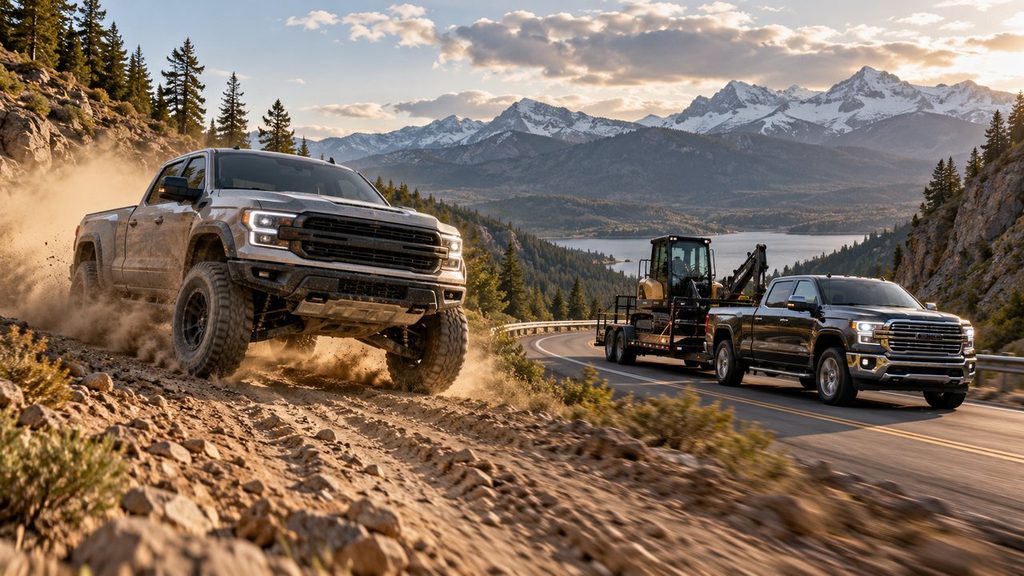
Monotube shocks usually have the advantage when towing regularly or controlling a heavily loaded truck because repeated suspension movement generates heat and demands consistent damping. This becomes especially relevant on uneven highways, long grades, expansion joints, or rough access roads.
A shock absorber does not increase payload, axle, hitch, or trailer-weight ratings. It controls motion; the springs support the static load. If a truck sags under tongue weight, changing from twin-tube to monotube shocks is not a substitute for correcting the load, spring support, or weight distribution.
For occasional light towing on pavement, a vehicle-specific twin-tube may be completely adequate. For frequent towing, high vehicle weight, or rough-road travel, the additional heat resistance of a monotube becomes more valuable.
Which Is Better for Off-Road Driving?
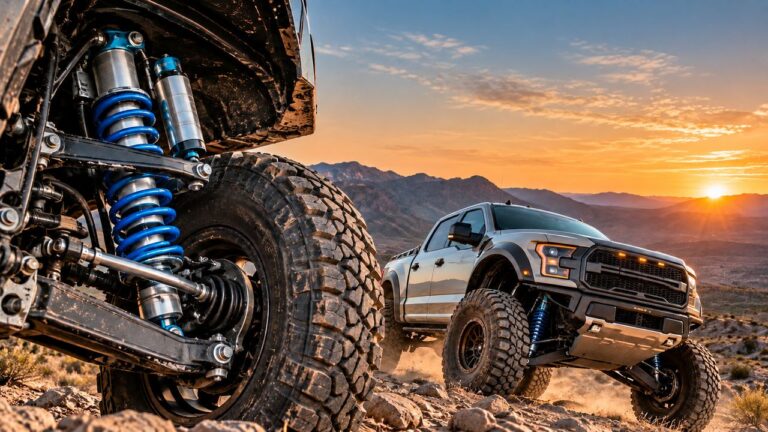
For repeated medium- or high-speed off-road impacts, monotube is usually the stronger choice. Washboard roads, desert terrain, fast gravel, and long rough sections can cycle a shock continuously, so cooling and resistance to fade matter.
Slow rock crawling is different. At low speeds, a shock may not generate the same sustained heat, and physical protection can matter more. Because the outer body of a monotube is also its working cylinder, a significant dent from a rock can interfere with piston movement. A twin-tube’s outer shell gives its inner working cylinder another layer of protection.
The right choice therefore depends on what “off-road” means for the vehicle. Crawling slowly across rocks, driving washboard for hours, and running desert trails at speed place very different demands on a damper.
For a real-world example of how two premium truck shocks can both use monotube construction yet still differ in body material, size, valving, price, and intended use, see our BILSTEIN 5100 vs FOX 2.0 comparison.
Which Is Better for Performance and Track Driving?
Monotube shocks are generally preferred for sustained performance driving because they combine strong heat dissipation, separation of oil and gas, consistent damping under repeated use, and a large working piston.
Some performance monotubes are also rebuildable, revalvable, or adjustable, although those features are not guaranteed simply because a shock is monotube. Likewise, high-quality racing and performance twin-tube dampers exist and can work extremely well when designed for a specific application.
The faster car is not automatically the one with monotubes. Spring rates, geometry, tires, alignment, damping curves, travel, and driver inputs still have to work as a system.
Twin-Tube Shocks Have Advantages Too
Twin-tube should not be treated as an inferior or outdated design. It remains widely used because it solves several practical problems very well.
- Lower cost: high production volume and simpler construction generally make replacement units more affordable.
- Compact packaging: the design can provide useful stroke for its overall length.
- Comfort-focused calibration: many OE twin-tubes are tuned specifically for quiet, compliant street driving.
- Protection from dents: the outer shell is not normally the precision surface where the working piston travels.
- Wide availability: direct-fit twin-tube replacements exist for a huge range of passenger vehicles.
For millions of vehicles that never experience sustained high-temperature damping loads, those advantages can matter more than the extra performance margin of a monotube.
Monotube Shocks Have Important Trade-Offs
The more performance-oriented design is not automatically the best purchase for every driver.
- Higher price: quality monotubes generally cost more than basic OE-style twin-tubes.
- Damage sensitivity: a serious dent in the main body can damage the working cylinder itself.
- Potentially firmer applications: many monotubes are intentionally valved for stronger control, which some drivers may interpret as harshness.
- No substitute for correct fitment: the wrong shock length or calibration is still wrong even if the shock uses premium monotube construction.
Can Monotube Shocks Be Mounted Upside Down?
Some monotube shocks can operate in multiple orientations because the floating piston keeps the oil and gas separated regardless of which end is higher. This can also allow an inverted installation in certain performance applications.
That does not mean every monotube should be flipped upside down. Mounts, seals, bushings, dust protection, manufacturer instructions, and vehicle clearance still determine the correct orientation. Most conventional twin-tube shocks are more sensitive to orientation and should be installed only as specified.
Where Remote-Reservoir Shocks Fit In
A remote reservoir is not simply a third answer to “monotube vs twin-tube.” Many reservoir shocks build on a monotube-style architecture and move additional oil and gas volume into a separate reservoir connected to the main body.
The extra volume can improve thermal capacity, packaging, and performance during sustained severe use. That can be valuable for racing and demanding off-road applications, but it adds cost and complexity that a normal road vehicle may never use.
What Most Monotube vs Twin-Tube Comparisons Get Wrong
“Monotube Always Means a Harsh Ride”
False. Gas pressure and performance-oriented calibration can contribute to a firmer feel, but valving and the rest of the suspension determine the final ride. A properly tuned monotube does not have to be uncomfortable.
“Twin-Tube Shocks Always Fade”
Also false. A quality twin-tube can perform consistently for years in the street conditions it was designed for. Fade becomes a bigger concern when repeated suspension movement generates more heat than the damper can manage.
“More Gas Pressure Means More Damping”
Not directly. Pressurized gas helps control the hydraulic fluid and suppress aeration or cavitation. The damping force is created primarily by oil moving through the piston and valve system.
“Any Monotube Is Better Than Any Twin-Tube”
Construction type does not rescue poor valving, incorrect dimensions, weak materials, or bad application matching. A high-quality twin-tube designed for your vehicle can perform better than a poorly matched monotube chosen only because the specification sounds more advanced.
How to Choose Between Monotube and Twin-Tube Shocks
Start with the vehicle and the job the shock must perform rather than choosing the construction first.
- Confirm exact fitment. Check year, model, trim, drivetrain, suspension package, axle position, and current ride height.
- Define how the vehicle is really used. Daily commuting, heavy towing, slow trails, washboard roads, performance street driving, and track use create different demands.
- Check the spring and load setup. Shocks control movement; they do not correct an overloaded vehicle or an unsuitable spring rate.
- Consider heat exposure. The more frequently and rapidly the suspension cycles, the more valuable monotube heat management becomes.
- Compare valving, not just tube count. Vehicle-specific tuning can matter more to ride quality than the architecture itself.
- Look at serviceability and cost. Decide whether rebuildability, adjustability, or premium construction provides value for your actual use.
- Follow the manufacturer’s application catalog. Never buy a shock simply because its mounts appear to fit.
If you have a lifted pickup and are ready to move from shock design to specific products, see our guide to shock options for lifted trucks, where we compare choices for different lift heights, towing, daily driving and off-road use.
Which Shock Type Should You Choose?
| Your Main Use | Usually the Better Starting Point | Why |
|---|---|---|
| Normal daily driving | Twin-tube | Cost, comfort, OE-style calibration |
| Performance street driving | Monotube | Response and consistent control |
| Regular towing | Monotube | Better heat management under repeated load |
| Occasional light towing | Either | Correct vehicle-specific tuning matters more |
| High-speed or sustained off-road use | Monotube | Heat dissipation and fade resistance |
| Slow rocky terrain | Either | Travel, valving, protection, and fitment matter heavily |
| Track use | Monotube | Repeatability under sustained hard use |
| Budget OE replacement | Twin-tube | Lower cost and wide availability |
This table is a starting point, not a substitute for the manufacturer’s vehicle-specific recommendation. A correctly valved twin-tube is better than an incorrectly matched monotube every time.
Frequently Asked Questions
Are monotube shocks better than twin-tube shocks?
Monotube shocks are generally better for sustained performance, repeated rough-road use, towing, and applications where heat and shock fade matter. Twin-tube shocks are often better value for everyday driving and comfort-focused OE replacement. Neither design is universally better.
Which rides smoother, monotube or twin-tube shocks?
Twin-tube shocks are commonly tuned for a softer factory-like ride, but tube design alone does not determine comfort. Valving, springs, tires, pressure, vehicle weight, suspension travel, and road conditions can make a larger difference than monotube versus twin-tube construction.
Are monotube shocks better for towing?
They are often a good choice for regular towing because their heat management can keep damping more consistent during repeated suspension movement. They do not increase payload or towing capacity and cannot replace correct springs, load distribution, or trailer setup.
Can twin-tube shocks be used off-road?
Yes. A quality twin-tube can work well for slow trails, occasional off-road driving, and moderate rough-road use. Monotubes become more attractive as speed, duration, vehicle weight, or repeated impacts increase the thermal load on the shock.
Which design lasts longer?
There is no universal mileage winner. Shock life depends on seal quality, road contamination, corrosion, temperature, impact damage, vehicle weight, suspension travel, and how hard the damper is used. A monotube may resist fade better, while a twin-tube may better tolerate a minor dent to its outer casing.
Do monotube shocks raise ride height?
A gas-pressurized monotube can exert some extension force, so a small measured height change may occur in certain light applications when replacing worn dampers. A conventional shock is not a lift device, however. Normal static ride height is primarily determined by the springs, torsion bars, air springs, and suspension geometry.
Should I replace factory twin-tube shocks with monotubes?
Only if a reputable manufacturer lists the monotube as a correct application and its tuning matches what you want from the vehicle. Staying with an OE-style twin-tube is often sensible for a comfort-focused daily driver, while a vehicle-specific monotube can be worthwhile when you want more control or regularly work the suspension harder.
The Bottom Line
Choose monotube shocks when consistent damping under heat, repeated hard use, off-road control, towing stability, or performance matters most. Choose twin-tube shocks when you prioritize normal-road comfort, replacement cost, compact packaging, and factory-like behavior.
The construction is only part of the decision. The best shock is the one with the correct dimensions and valving for your vehicle, spring rate, load, ride height, and actual driving conditions. A well-matched twin-tube will outperform the wrong monotube, and a properly tuned monotube does not have to sacrifice comfort to deliver better control.