Power Steering Hose Replacement Cost: Pressure & Return Lines
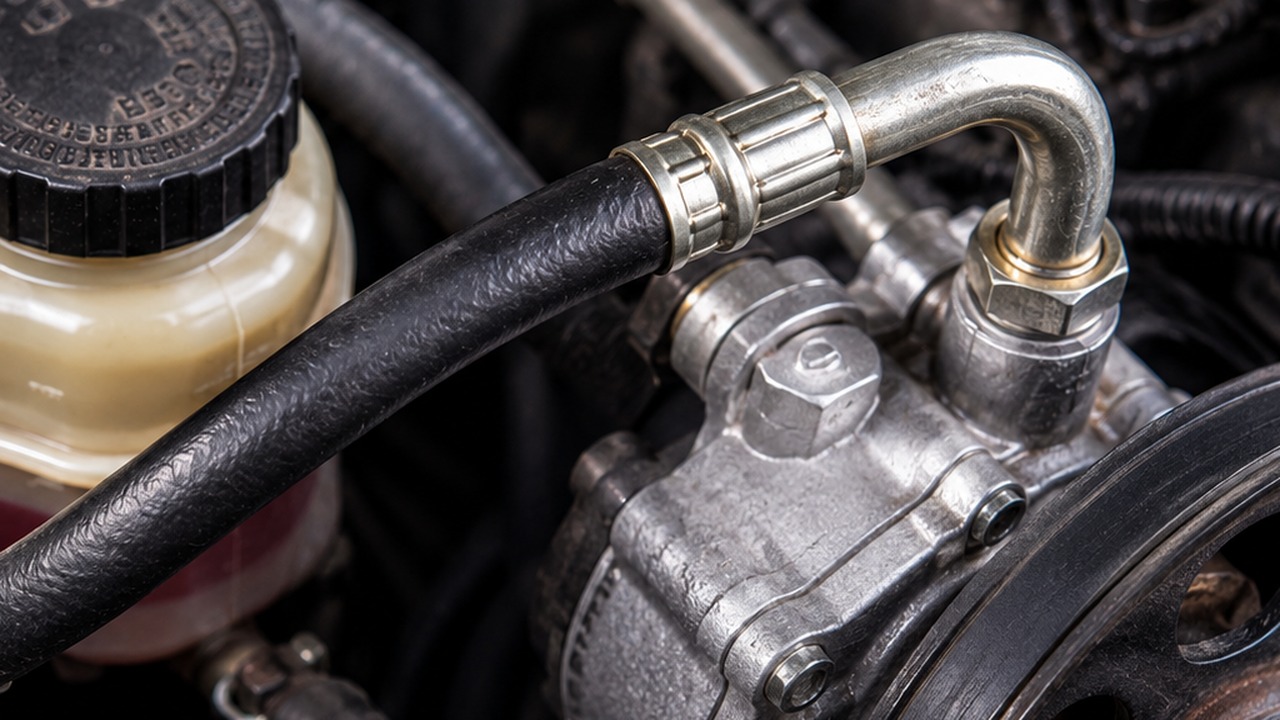
Power steering hose replacement commonly costs about $300 to $900 in the United States, although difficult vehicles can exceed $1,000. Current national estimates are around $710 to $790, but the real price depends heavily on whether the leaking part is the high-pressure hose, the return line, a longer multi-section assembly or a hose buried behind other engine components.
The important part is identifying the actual leak before replacing anything. A failed power steering hose can make the reservoir run low and cause whining or heavy steering, which can easily make a perfectly usable pump look like the problem.
Pressure Hose vs. Return Hose: Which One Is Leaking?
A conventional hydraulic power steering system normally has at least two fluid paths between the pump and steering gear.
- High-pressure hose: carries pressurized fluid from the power steering pump toward the steering rack or steering gear.
- Return hose: carries lower-pressure fluid back toward the reservoir and pump after it has passed through the steering gear.
Both can leak, but they are not built the same way. The pressure side has to tolerate substantially greater hydraulic pressure and normally uses reinforced hose sections, crimped fittings and vehicle-specific metal tubing.
The return side works at much lower pressure and can sometimes use a simpler hose and clamp arrangement. That often makes a straightforward return-hose repair cheaper, although routing and vehicle design can erase that advantage quickly.
What Power Steering Hose Replacement Can Cost
| Repair | Useful U.S. Planning Range |
|---|---|
| Typical power steering hose or line replacement | About $300–$900 |
| Simple return hose | Often about $150–$500 |
| High-pressure hose or line assembly | Often about $300–$800+ |
| Difficult routing or expensive OEM assembly | $800–$1,000+ possible |
| Fluid, seals and small hardware | Usually a smaller part of the total |
| Wheel alignment | Normally not required for hose-only replacement |
These are planning ranges rather than fixed menu prices. Some vehicles use relatively inexpensive flexible hoses, while others use long formed assemblies combining rubber hose, metal tubing, brackets and specialized fittings.
Why a Power Steering Line Can Cost Hundreds of Dollars
The phrase “replace a hose” can make the repair sound simpler than it really is.
On some vehicles, the technician can reach both fittings easily, remove the old line and install the replacement without disturbing much else. On others, the hose snakes around the engine, subframe, exhaust, accessories or steering gear.
A molded power steering line may also include:
- high-pressure crimped fittings
- formed steel or aluminum tubing
- mounting brackets
- O-rings or sealing washers
- heat shielding
- vehicle-specific bends and connection points
That is why the part itself can sometimes account for more of the bill than expected.
Do Not Blame the Power Steering Pump Just Because It Whines
A leaking hose allows the fluid level to drop. Once the pump begins drawing air along with fluid, the steering system can become noisy and the fluid may foam.
The driver may hear whining or groaning while turning and notice that steering assistance becomes weaker, particularly at low speed.
Those symptoms overlap with actual pump failure, but the repair is very different. If testing shows that the pump itself has failed rather than simply running low because of a leak, see our power steering pump replacement cost guide.
How to Tell Whether the Hose Is Actually Leaking
Power steering fluid can travel across engine components and collect far away from the original leak, so tracing the wettest point is more useful than looking only at where the vehicle leaves a puddle.
Possible hose or line failure clues include:
- visible wetness along a hose or metal steering line
- fluid around a crimped hose fitting
- a cracked or deteriorated rubber section
- corroded metal tubing
- fluid spraying from the pressure side while the system is operating
- repeatedly falling reservoir level
- whining that appeared after the fluid level dropped
The pump, reservoir, hose connections and steering rack should still be inspected because all of them can leak hydraulic fluid.
Pressure Hose Leaks Can Look Different From Return Hose Leaks
A high-pressure hose is exposed to the pump’s pressurized output. A serious failure can therefore produce a more obvious pressurized leak rather than a slow drip.
The low-pressure return side is more likely to seep or drip, although deterioration, clamps, fittings and corrosion can still produce substantial fluid loss.
Do not use the size of the puddle alone to decide which hose has failed. A small leak that occurs whenever the steering system is operating can empty the reservoir surprisingly quickly.
Could the Leak Be Coming From the Rack Instead?
Yes. Hydraulic steering racks contain internal seals and connections that can also leak.
If fluid is found around the steering gear or accumulating inside the rack boots, the hose may not be the actual source. A rack failure is a much larger repair, covered separately in our rack and pinion replacement cost guide.
This distinction matters because replacing a relatively inexpensive leaking line will not stop a rack seal leak, while replacing an entire steering rack for a damaged hose would be an unnecessary expense.
Why the Pressure Hose Usually Costs More
The high-pressure side normally requires stronger construction and specialized fittings because it carries fluid directly from the pump under hydraulic pressure.
Pressure hoses are frequently sold as complete assemblies rather than generic lengths of rubber hose. A replacement may include long sections of shaped metal tubing and multiple mounting points specific to one engine and chassis combination.
The return line is generally under much less pressure and may be structurally simpler. On some older systems, part of the return circuit can resemble conventional reinforced fluid hose.
That does not make every return-line job cheap. A hard-to-reach return assembly can still require significant labor.
Can a Shop Repair the Old Power Steering Hose?
Sometimes a hydraulic specialist can rebuild or recreate certain hose assemblies, particularly when an original part is discontinued or extremely expensive.
But simply patching a deteriorated high-pressure hose is not the same thing as professionally rebuilding an automotive hydraulic line. The hose, crimps and fittings have to withstand the temperature, pressure and movement of the steering system.
For commonly available vehicles, installing the correct replacement assembly is normally the straightforward repair.
What Happens After the New Hose Is Installed?
Opening a hydraulic steering line allows fluid to escape and air to enter. The repair is therefore not finished when the final fitting is tightened.
The technician normally needs to:
- refill the system with the correct specified fluid
- bleed trapped air from the hydraulic circuit
- operate the steering through the appropriate procedure
- inspect the new connections for leaks
- confirm that steering assistance and pump noise are normal
An incorrectly bled system can leave the fluid foamy and the pump noisy even though the leaking hose has already been repaired.
Should the Power Steering Fluid Be Replaced Too?
Some fluid will normally be lost when a steering hose is disconnected, so the system must at least be restored to the correct level with compatible fluid.
A larger fluid exchange may make sense if the existing fluid is badly contaminated or if the system has been run low enough to introduce substantial air or debris.
Use the specification required by the vehicle rather than choosing fluid by color alone. Hydraulic steering systems do not all use the same product.
Does Power Steering Hose Replacement Require an Alignment?
Normally, no. Replacing a hydraulic hose or line does not change toe, camber or caster by itself.
This differs from replacing tie rods or the steering rack, where steering geometry is directly disturbed.
If a shop recommends an alignment after a hose-only repair, there may be another reason for it, but replacing the hose itself does not normally create an alignment requirement.
Can You Drive With a Leaking Power Steering Hose?
A minor seep and a hose that is rapidly losing fluid are very different situations.
As fluid disappears, hydraulic assistance can decrease and the pump may begin sucking air. Steering effort can become much heavier at low speed, while continuing to run the pump with inadequate lubrication can contribute to pump damage.
A pressure-side leak may also worsen suddenly. If fluid is dropping quickly, steering assistance is changing, or the leak is spraying onto other components, the vehicle should be inspected rather than simply topped off repeatedly.
Avoid Using Stop-Leak as a Substitute for Repair
A bottle marketed as a quick power steering leak fix may sound attractive when the alternative is several hundred dollars of repair work.
But a damaged hose, corroded line or failed crimp is a physical defect. Additives do not replace the strength of the hose or restore a deteriorated fitting.
They can also complicate diagnosis or contaminate components that rely on clean hydraulic fluid. Finding and repairing the actual leak is the safer long-term approach.
How Long Does Power Steering Hose Replacement Take?
A straightforward hose can take roughly one to two labor hours, while difficult line routing can require considerably more time.
The labor estimate increases when technicians have to remove brackets, shields, intake components or other accessories just to reach the hose fittings.
Rust and seized hydraulic connections can also turn a simple-looking job into a much slower repair.
Can You Replace a Power Steering Hose Yourself?
Some return-hose repairs are manageable for an experienced DIYer, but pressure-line replacement can be more demanding than it first appears.
The correct line must be routed without twisting, rubbing against moving parts or touching excessively hot components. Hydraulic fittings and seals also have to be installed correctly to prevent new leaks.
You also need a safe way to collect the fluid and a vehicle-specific procedure for refilling and bleeding the steering system.
If access requires substantial disassembly or the leak source is uncertain, diagnosis and replacement are better left to a repair shop.
When a Hose Quote Is Higher Than Expected
If the estimate seems surprisingly high for “just a hose,” check what is actually included.
- a complete OEM pressure-line assembly instead of a short hose
- multiple power steering lines
- difficult access around the engine or steering gear
- corroded or seized fittings
- new brackets, seals or O-rings
- fluid replacement or flushing
- a leaking pump or rack discovered during diagnosis
If several unrelated steering or suspension repairs appear on the same estimate, our car suspension repair cost guide can help put the individual line items into context.
Questions to Ask Before Approving the Repair
A detailed estimate should make it clear which part is actually being replaced. Before authorizing the work, ask:
- Is the leaking part the pressure hose or the return line?
- Is the quote for one hose or a complete multi-line assembly?
- Is the replacement OEM or aftermarket?
- Are new O-rings, seals or fittings included?
- Does the price include the correct replacement fluid?
- Will the system be bled and leak-tested afterward?
- Has the shop confirmed that the pump and steering rack are not the source of the leak?
Frequently Asked Questions
How much does power steering hose replacement cost?
About $300 to $900 is a useful planning range, although current national estimates are around $710 to $790. Simple return hoses can cost less, while expensive pressure-line assemblies or difficult vehicles can exceed $1,000.
How much does a power steering pressure hose replacement cost?
A high-pressure hose commonly costs more than a basic return hose because it requires reinforced construction and specialized fittings. Several hundred dollars for parts and labor is typical, while difficult or expensive OEM assemblies can push the total substantially higher.
How much does a power steering return hose replacement cost?
A simple low-pressure return hose can sometimes be replaced for roughly $150 to $500. The price rises when the vehicle uses a long formed return-line assembly or access requires additional disassembly.
Are power steering hose and power steering line the same thing?
The terms are often used interchangeably in repair estimates and searches. A complete power steering line assembly may contain flexible rubber hose, rigid metal tubing or a combination of both.
Can a leaking power steering hose make the pump whine?
Yes. A leak can lower the fluid level and allow air into the hydraulic system. The pump may then whine or groan even if it was not the original failed component.
Does a power steering hose replacement require an alignment?
Normally not. Hose replacement does not usually disturb the steering geometry that controls wheel alignment.
Does the power steering system need to be bled after replacing a hose?
Yes. Disconnecting a hydraulic line lets air enter the system, so the correct fluid must be added and trapped air removed according to the vehicle’s service procedure.
Should both power steering hoses be replaced at the same time?
Not automatically. If only one hose has failed and the other lines are dry and in good condition, replacing every hose may not be necessary. However, other hoses of similar age should be inspected for cracking, corrosion, damaged crimps and seepage while the system is being repaired.
Fix the Leak Before It Becomes a Pump Repair
A leaking power steering hose can begin as a relatively contained hydraulic repair and become more expensive if the system repeatedly runs low on fluid.
The best estimate identifies the exact leaking pressure or return line, explains whether the replacement is a simple hose or a complete formed assembly, includes the correct fluid and bleeding procedure, and confirms that the pump and steering rack are not being replaced unnecessarily.