Wheel Bearing Replacement Cost: Parts & Labor
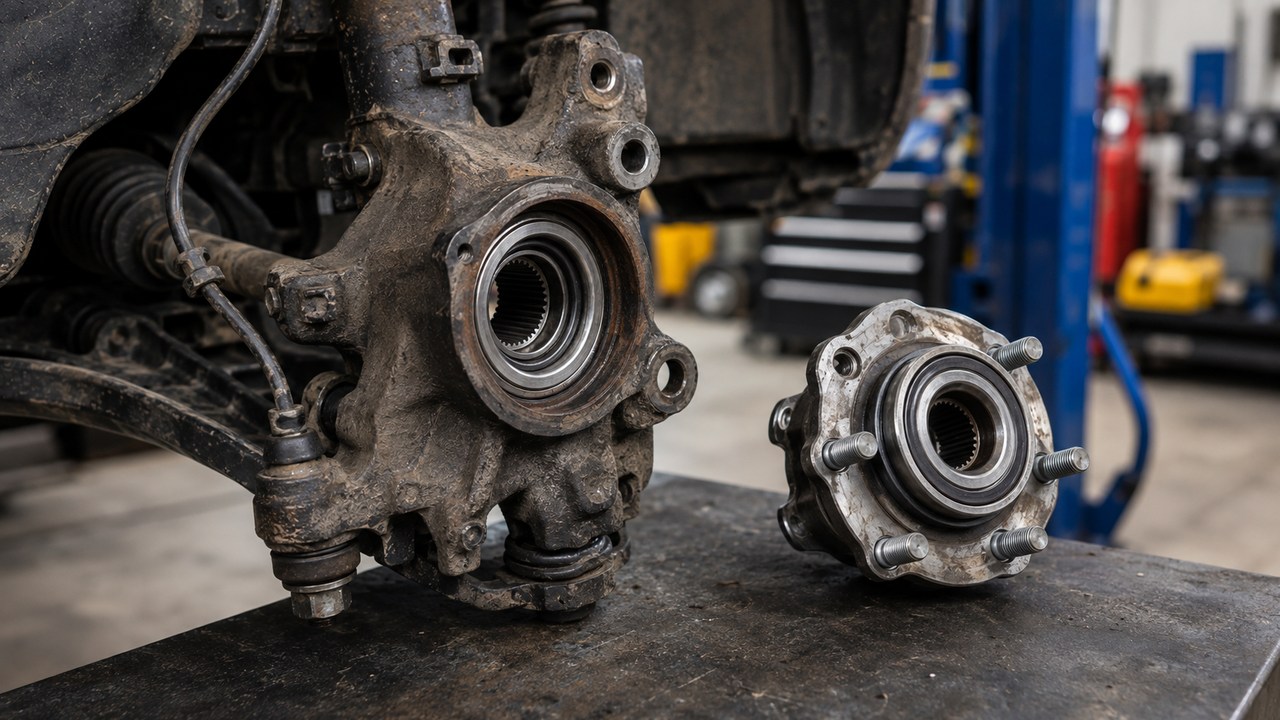
Wheel bearing replacement typically costs about $300 to $600 per wheel on many vehicles in the United States. Current national estimates sit near the middle of that range, but the design of the bearing matters enormously: a bolt-on bearing assembly can be relatively straightforward, while a bearing pressed into the steering knuckle may require considerably more labor and shop equipment.
That is why two cars with similarly priced bearings can receive very different repair quotes. Before comparing prices, find out whether your vehicle uses a removable hub-and-bearing unit or a press-fit bearing that has to be extracted from the knuckle.
The Bearing Design Usually Explains the Price
Modern vehicles generally use one of two common service arrangements.
Bolt-On Bearing or Hub Assembly
On some vehicles, the wheel bearing is sealed inside an assembly that bolts directly to the steering knuckle. After the brakes and any axle hardware are moved out of the way, the technician can unbolt the assembly and install the replacement.
This design avoids pressing the bearing in and out of the knuckle, although corrosion can still make removal difficult.
Pressed-In Wheel Bearing
Other vehicles use a bearing pressed directly into the steering knuckle. The hub may need to be pressed out first, followed by a retaining ring and the bearing itself.
The replacement bearing then has to be pressed in squarely and supported at the correct race so it is not damaged during installation. In many cases, the knuckle must come off the vehicle before this work can be done.
That additional disassembly is one of the main reasons a pressed-bearing job can cost substantially more than the part price suggests.
| Repair Situation | Useful U.S. Planning Range |
|---|---|
| One wheel bearing, typical vehicle | About $300–$600 |
| Easy-access bolt-on design | About $250–$500 |
| Pressed-in bearing | About $350–$700+ |
| Two bearings on the same axle | About $600–$1,100+ |
| Premium, heavy-duty or badly corroded application | $700+ per wheel possible |
These figures are planning ranges, not fixed prices for every model. Parts availability, drivetrain layout, labor rates and corrosion can move an individual vehicle well outside them.
What Does a Wheel Bearing Actually Do?
The wheel bearing supports the rotating hub while allowing the wheel to spin with very little friction.
It carries substantial radial and axial loads from vehicle weight, cornering, braking and road impacts. Modern passenger cars commonly use sealed bearing units that are not designed for routine lubrication or adjustment.
Once the internal races or rolling elements become damaged, the normal repair is replacement rather than rebuilding the bearing.
How Much Are the Parts?
A conventional replacement wheel bearing may cost roughly $75 to $200 or more, but that number can be misleading because some vehicles do not service the bearing as a standalone part.
A sealed bearing may be supplied as part of a larger assembly containing the hub, wheel studs, ABS encoder or sensor-related components. Premium OEM assemblies and heavy-duty truck parts can cost several hundred dollars before labor begins.
When comparing estimates, check the exact part number rather than comparing a bare bearing online with a complete assembly quoted by a shop.
Why Labor Can Cost More Than the Bearing
Replacing a wheel bearing normally begins with removing the wheel, brake caliper and brake rotor. On a driven wheel, the axle nut and CV axle may also have to be separated from the hub.
From there, the procedure depends on design.
A bolt-on assembly may be held to the knuckle by several bolts. A pressed bearing can require removal of much more of the surrounding suspension so the knuckle can be taken to a hydraulic press.
Rust can turn either design into a difficult job. Bearings and hubs often remain in place for many years, giving corrosion plenty of time to seize mating surfaces together.
Wheel Bearing vs. Wheel Hub: They Are Related, but Not Always the Same Repair
The terms “wheel bearing” and “wheel hub” are frequently used together because some vehicles combine both into one sealed unit.
On other vehicles, the hub and bearing are separate pieces. The hub rotates inside the bearing, and each component can have its own service procedure.
This guide targets wheel bearing replacement cost. If your shop specifically quotes a complete wheel hub or hub assembly, do not assume the pricing and labor are identical just because the bearing is part of that assembly. For that repair, see our wheel hub assembly replacement cost guide.
The Steering Knuckle Matters Too
The bearing is mounted in or to the steering knuckle on many front suspension designs.
If a pressed bearing has seized badly, the bearing bore is damaged, or collision damage has bent the surrounding casting, the repair can grow beyond a normal bearing replacement.
If the knuckle itself is damaged rather than simply supporting a worn bearing, see our steering knuckle replacement cost guide for that separate repair.
Front Wheel Bearing Replacement Cost
Front wheel bearing replacement commonly costs around $300 to $600 per wheel on mainstream cars and SUVs.
The front can involve additional work because driven wheels may require axle removal, and front knuckles also connect to steering components.
However, front does not automatically mean expensive. A vehicle with an accessible bolt-on front bearing can be easier to service than another vehicle’s pressed rear bearing.
Rear Wheel Bearing Replacement Cost
Rear wheel bearing prices vary widely depending on drivetrain and suspension design.
An accessible non-driven rear hub can be relatively simple. An AWD vehicle, independently suspended rear axle or pressed-bearing arrangement may involve much more work.
For budgeting, roughly $250 to $600 per rear wheel is a reasonable broad range, with difficult designs capable of exceeding it.
Do You Have to Replace Wheel Bearings in Pairs?
No. Wheel bearings do not normally have to be replaced in pairs.
A bearing on one side can fail while the opposite side remains quiet and within specification. Replacement should be based on diagnosis rather than automatically doubling the repair bill.
The other side is still worth checking, especially on a high-mileage vehicle. Both bearings have seen similar mileage and road conditions even though their remaining life may not be identical.
What Does a Bad Wheel Bearing Sound Like?
The classic complaint is a humming, growling or rumbling noise that increases with road speed.
Unlike an engine-related noise, bearing noise generally follows vehicle speed rather than engine rpm. It may become louder or quieter when the vehicle changes direction and cornering load shifts from one side to the other.
A badly worn bearing can also produce grinding or roughness, but waiting for a bearing to become extremely noisy is not a useful diagnostic strategy.
Wheel Bearing Noise vs. Tire Noise
Tire noise is one of the most common things mistaken for a bad wheel bearing.
Cupped, feathered or unevenly worn tires can produce a humming or roaring sound that changes with road surface and vehicle speed. Rotating the tires can sometimes move or change that noise, while a bearing noise remains associated with the same corner of the vehicle.
If the tires show irregular wear, our guide to suspension-related tire wear explains other problems that should be checked before blaming the bearing.
Can a Bad Wheel Bearing Make the Car Feel Wobbly?
A severely worn bearing can develop looseness, but a car that feels unstable or wobbly has many other possible causes.
Tires, wheel damage, ball joints, control arm bushings, tie rods and alignment problems can all create similar complaints.
If instability rather than noise is your main symptom, our car feels wobbly when driving guide covers the broader diagnosis.
Does a Bad Wheel Bearing Always Have Play?
No. A bearing can become noisy before obvious looseness develops.
Checking for wheel play is useful, but the absence of noticeable movement does not prove the bearing is healthy.
A technician may combine a road test with rotating the wheel by hand, listening for roughness and checking surrounding steering and suspension joints before deciding which component is responsible.
Can a Bad Wheel Bearing Trigger an ABS Light?
It can on some vehicles.
Modern wheel bearings or hub assemblies may incorporate a magnetic encoder ring or work directly with the wheel-speed sensor. Bearing looseness, physical damage or contamination around that system can produce an implausible wheel-speed signal.
However, an ABS warning light does not prove the bearing is bad. Wiring, connectors, sensors and tone rings can fail independently, so fault codes and live wheel-speed data should be checked before replacing mechanical parts.
Do You Need an Alignment After Wheel Bearing Replacement?
Not every wheel bearing replacement automatically requires an alignment. The answer depends on how the bearing is serviced.
If a bolt-on hub assembly can be replaced without disturbing alignment-related suspension mounting points, wheel geometry may remain unchanged.
A pressed-bearing repair can be different. If the steering knuckle has to be removed from the strut, control arms or other components that influence wheel geometry, checking the alignment afterward is sensible.
Our alignment after suspension replacement guide explains why the actual disassembly procedure matters more than the name of the replacement part.
How Long Does Wheel Bearing Replacement Take?
A cooperative bolt-on bearing assembly can sometimes be replaced in roughly one to two labor hours.
A pressed bearing can take longer because the knuckle may need to be removed and taken to a hydraulic press. Corroded axle splines, seized bearing housings or damaged retaining rings can extend the repair considerably.
That is why a generic labor estimate should always be checked against the exact vehicle.
How Urgent Is a Noisy Wheel Bearing?
A confirmed failing wheel bearing should not be treated as an indefinitely deferrable noise.
Wear generates additional heat and clearance inside a component that supports the rotating wheel assembly. Continued operation can damage nearby hub or knuckle components and allow the bearing condition to worsen.
The urgency depends on severity. A faint newly diagnosed hum is different from severe grinding, obvious wheel play, heat at the hub or a wheel that no longer rotates smoothly.
If you are unsure whether the suspension and wheel assembly are safe to continue using, our basic suspension inspection guide provides broader checks, but a suspected bearing still needs a proper mechanical diagnosis.
Can You Replace a Wheel Bearing Yourself?
A bolt-on bearing assembly can be a realistic intermediate DIY repair for someone already experienced with brakes, axle hardware and safe vehicle lifting.
A pressed bearing is substantially more demanding. Correct removal and installation require suitable press tools and careful support of the bearing races.
Pressing through the wrong race can damage a brand-new bearing before the vehicle is reassembled.
Axle-nut torque is also critical on many designs because improper preload can shorten bearing life. Always use the correct manufacturer procedure rather than treating the axle nut as a generic “tight enough” fastener.
Why a Wheel Bearing Quote Can Be Much Higher Than Expected
If the quote seems high, one of these factors is often responsible:
- the bearing is pressed into the steering knuckle
- the knuckle must be removed from the vehicle
- the hub is damaged or cannot be reused
- axle splines or the bearing are badly corroded
- the vehicle uses an expensive OEM bearing assembly
- ABS-related components are integrated into the assembly
- additional suspension damage is present
- alignment is included because suspension mounting points were disturbed
If several unrelated suspension components appear on the same estimate, use our car suspension repair cost guide to compare the overall bill rather than judging the bearing line item alone.
Before Comparing Two Wheel Bearing Quotes
Ask each shop to identify exactly what is being replaced. Four details usually explain most price differences:
- Which wheel is affected? Confirm front or rear and left or right.
- Is the bearing pressed in or part of a bolt-on assembly?
- Does the quoted part include the hub, studs or ABS-related components?
- Does the labor require removal of the steering knuckle or use of a hydraulic press?
Then compare parts brand, warranty, labor and any alignment charge. Once the repair scope is the same, the two prices become much easier to judge fairly.
Frequently Asked Questions
How much does wheel bearing replacement cost?
About $300 to $600 per wheel is a useful budget for many U.S. vehicles. Current national averages are around $350 to $500, while pressed bearings, expensive assemblies and corrosion can raise the total.
How much does a front wheel bearing cost to replace?
Roughly $300 to $600 per front wheel is common, although a simple bolt-on design can cost less and a difficult pressed-bearing job can exceed that range.
How much does a rear wheel bearing cost to replace?
A broad planning range is about $250 to $600 per rear wheel. Drivetrain layout, bearing design and accessibility determine the actual labor.
Do wheel bearings need to be replaced in pairs?
No. The opposite bearing should be inspected, but a good bearing does not normally need replacement simply because the bearing on the other side failed.
What does a bad wheel bearing sound like?
A failing bearing commonly produces humming, rumbling or growling that increases with road speed. The sound may change when cornering loads shift from one side of the vehicle to the other.
Do you need an alignment after replacing a wheel bearing?
Not always. A bolt-on bearing may be replaced without changing alignment settings. If the steering knuckle or other geometry-related suspension points have to be removed for a pressed bearing, an alignment check is more appropriate.
Can you drive with a bad wheel bearing?
A confirmed failing bearing should be repaired rather than ignored. Severe grinding, wheel play, heat or rough rotation indicate a more advanced problem than a faint newly diagnosed hum.
How long does wheel bearing replacement take?
A straightforward bolt-on bearing may take around one to two labor hours. Pressed bearings, corrosion and knuckle removal can make the job substantially longer.
Find Out Which Bearing Design You Have Before Judging the Price
The national average is useful, but bearing design explains more about your actual bill. A bearing that unbolts from the steering knuckle and a bearing that requires knuckle removal and a hydraulic press are fundamentally different jobs.
Before deciding that a wheel bearing quote is too high, confirm which wheel has failed, whether the bearing is pressed or bolt-on, what comes with the replacement part and whether the knuckle has to be removed. Those answers usually tell you more than the price of the bearing itself.