1992–1997 Ford F-350 Suspension Upgrades: OBS Guide
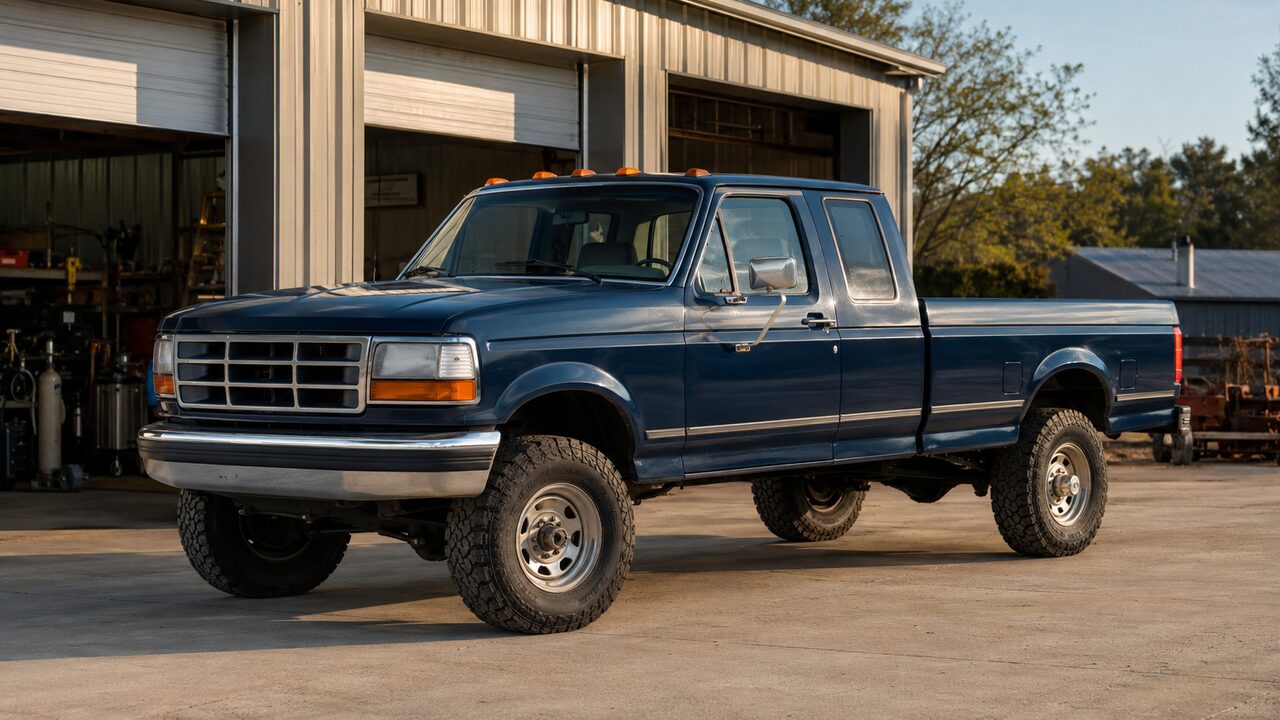
A 1992–1997 Ford F-350 does not need the same suspension upgrades as a 1999-and-newer Super Duty. These OBS trucks use older spring, axle and steering designs, so the right upgrade depends on whether the goal is restoring worn components, improving ride quality, carrying a camper, correcting steering wander or adding lift.
For most OBS F-350 owners, the best starting point is not a lift kit. Inspect the springs, bushings, shackles, shocks, steering linkage, axle locating components and alignment first. New parts cannot compensate for loose steering joints, cracked bushings or sagging leaf springs.
Important fitment distinction: this guide focuses primarily on 1992–1997 F-350 4WD trucks with a solid front axle and leaf springs. Two-wheel-drive trucks and modified axle-swap trucks may use different components. Confirm the drivetrain, axle, single- or dual-rear-wheel configuration, ride height and existing modifications before ordering anything.
Best OBS F-350 Suspension Upgrade by Goal
| What you want to improve | Best place to start | What it will not fix |
|---|---|---|
| Harsh or bouncy ride | Correctly matched shocks, fresh bushings and replacement springs if the originals are worn or overloaded | Excessive tire pressure, seized shackles or badly chosen heavy-duty springs |
| Rear sag with a trailer or camper | Restore the rear leaf pack first, then consider helper springs or load-support air bags | Exceeding the truck’s GVWR, GAWR, tire or hitch ratings |
| Steering wander | Inspect steering linkage, steering gear, wheel bearings, alignment and axle-location hardware | Loose or damaged steering components |
| More front clearance | A complete OBS-specific lift or reverse-shackle system with compatible shocks and geometry corrections | Poor steering geometry or driveline vibration caused by an incomplete lift |
| Modernized suspension | A properly engineered spring or axle conversion planned as a complete system | Fitment problems created by mixing unrelated OBS and Super Duty parts |
Inspect the Truck Before Buying Upgrades
Suspension problems on a truck that is nearly three decades old are often caused by accumulated wear rather than one weak factory component. Before choosing an upgrade, inspect the truck at normal ride height and again while it is safely supported by the frame.
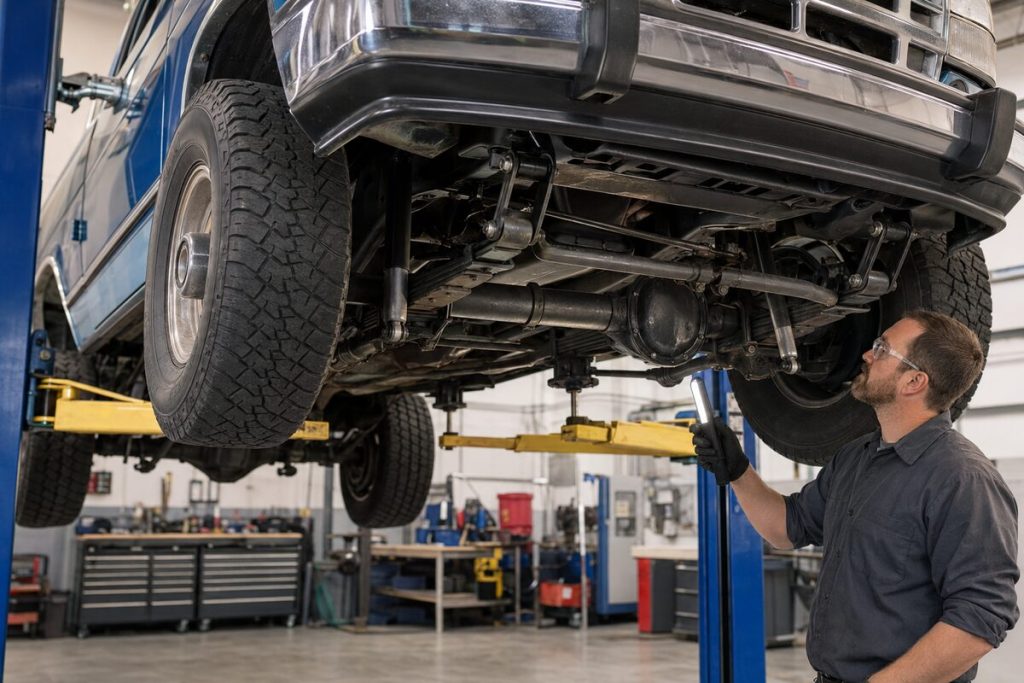
Check the following areas before changing ride height or spring rate:
- Cracked, separated or permanently compressed leaf-spring bushings
- Bent, cracked, heavily corroded or visibly sagging leaf springs
- Loose spring hangers, shackles and U-bolts
- Leaking, dented or poorly matched shock absorbers
- Play in tie-rod ends, drag-link joints, wheel bearings and the steering gear
- Damaged track-bar hardware where the truck’s configuration uses one
- Uneven tire wear, mismatched tire pressures or alignment problems
- Cracked frame or mounting areas around suspension and steering brackets
If the truck wanders, pulls or wears its tires unevenly, repair all looseness before alignment. Our guide to alignment after replacing suspension components explains which repairs normally require the angles to be checked again.
1. Replace Worn Shocks for Better Motion Control
Quality shocks are the most straightforward upgrade for a mechanically sound OBS F-350. A shock controls spring movement; it does not support the truck’s static weight or restore lost ride height. New shocks can reduce repeated bouncing, uncontrolled body motion and harsh rebound, but they cannot repair sagging springs.
Choose shocks according to the truck’s actual ride height and use:
- Stock-height truck: use an OE-length shock matched to the correct 2WD or 4WD application.
- Lifted truck: choose shocks for the measured extended and compressed travel, not merely the advertised lift height.
- Heavy towing or camper use: prioritize heat control and stable damping under sustained load.
- Mostly unloaded driving: avoid choosing an excessively firm shock solely because it is marketed as heavy-duty.
You can compare current 1992–1997 Ford F-350 shock options, but verify the axle, drivetrain, ride height and mounting style in the manufacturer’s catalog before purchasing.
2. Restore the Leaf Springs and Bushings
If the truck sits unevenly when unloaded, bottoms out easily or has a visibly flattened spring pack, replacing the tired springs is usually more effective than installing firmer shocks. Bushings and shackles also matter: deteriorated rubber can allow unwanted axle movement, create clunks and make steering feel imprecise.
Replacement springs should match the truck’s front or rear axle application, 2WD or 4WD layout, single- or dual-rear-wheel configuration and expected load. A spring with a higher capacity is not automatically more comfortable. Installing a much stiffer pack than the truck needs can make the unloaded ride worse.
When replacing leaf springs, inspect the hangers and shackles and use new hardware where required. U-bolts should generally be treated as application-specific clamping hardware rather than casually reused after removal. Follow the spring or suspension manufacturer’s installation and torque instructions.
3. Consider a Reverse-Shackle System for an OBS F-350 4WD
A front reverse-shackle system relocates the fixed and moving ends of the front leaf spring. On a suitable solid-axle OBS F-350, this can let the axle move rearward as the spring compresses instead of forcing it forward into an obstacle. A correctly engineered system may improve bump response and can add some front ride height.
This is a structural suspension modification, not a bolt-on cure for every rough-riding truck. Depending on the system and lift amount, installation may affect steering geometry, track-bar position, brake-hose length, shock travel, driveshaft slip and caster. Some kits require drilling, bracket removal or welding.
Use instructions written for the exact truck and spring combination. For example, the manufacturer’s OBS shackle-reversal installation instructions separate the 1992–1997 solid-axle application from other Ford configurations. Have the alignment and all fasteners checked after installation and again after the specified settling or retorque interval.
4. Correct Steering Problems Before Adding a Stabilizer
A steering stabilizer can reduce kickback and help control rapid movement through the steering linkage. It should not be used to hide loose tie-rod ends, a worn steering gear, damaged wheel bearings, incorrect caster or axle movement caused by bad bushings.
If the truck wanders, inspect it in this order:
- Set all tires to an appropriate pressure for the actual load and verify that their size and wear are consistent.
- Check wheel bearings and every steering joint for measurable play.
- Inspect the steering gear, mounting area and steering shaft.
- Check spring bushings, shackles and axle-locating hardware.
- Measure alignment only after worn components have been repaired.
- Add a correctly fitted stabilizer only if additional kickback control is still desirable.
For a broader diagnostic process, see what to check when a truck feels loose or wanders while driving.
5. Use Helper Springs or Air Bags for Variable Loads
Rear helper springs or air helper bags can be useful when an OBS F-350 carries loads that change frequently, such as a slide-in camper, trailer tongue weight or tools. They supplement the existing suspension and help restore a level attitude under load.
They do not increase the truck’s legal or manufacturer-rated payload. The GVWR, front and rear GAWR, tire ratings, wheel ratings and hitch limits still apply. If the rear springs sag when the truck is empty, repair or replace the leaf pack before relying on air pressure to hold the truck at normal height.
Air pressure must remain within the kit manufacturer’s limits. Firestone’s Ride-Rite application and operating guidance also states that helper springs supplement the existing suspension and must not be used to exceed the vehicle’s GVWR.
6. Plan a Super Duty Spring or Axle Swap as a Complete System
Some owners adapt later Super Duty springs, axles or steering components to an OBS chassis. This can provide access to newer components or change ride and axle characteristics, but it is far more involved than installing replacement shocks.
A safe conversion may require coordinated changes to:
- Spring hangers, shackles and frame brackets
- Axle position and wheelbase alignment
- Steering linkage and track-bar geometry
- Brake calipers, hoses, master-cylinder compatibility and parking-brake connections
- Wheel bolt pattern, offset and tire clearance
- Driveshaft length, slip travel and operating angles
- Shock length, bump stops and suspension travel
Do not assume that a part fits merely because both vehicles are called F-350. The OBS and Super Duty chassis are different platforms. If your truck is a 1999-or-newer model, use our separate guide to F-350 Super Duty upgrades for towing and comfort.
7. Choose Lift Height Conservatively
A modest, complete lift is usually easier to make reliable than a collection of unrelated brackets and add-a-leaves. Added height changes more than tire clearance. It can alter caster, steering angles, brake-hose travel, driveshaft angles and the relationship between the axle and bump stops.
Before ordering a lift, record the truck’s current configuration and measure ride height at consistent frame or body reference points. An old truck may already have replacement springs, blocks or a previous shackle modification, so catalog assumptions may not match what is underneath it.
Avoid stacking lift blocks or improvising steering corrections. Use a complete system designed for the exact axle and have the finished truck inspected and aligned by a shop familiar with solid-axle leaf-spring vehicles.
Recommended Upgrade Order
For a typical 1992–1997 F-350 that still sees road use, this order prevents new parts from masking old problems:
- Establish a baseline: inspect the frame, tires, wheel bearings, steering, springs, bushings, shackles and shocks.
- Repair safety-related wear: correct loose steering joints, damaged mounts, failed bearings and cracked springs first.
- Restore normal ride height: replace sagging springs and deteriorated bushings with configuration-correct parts.
- Improve damping: install shocks matched to the truck’s actual height, axle and intended use.
- Add load support if needed: use helper springs or air bags for variable loads without exceeding any vehicle rating.
- Modify geometry only for a clear reason: choose an engineered reverse-shackle, lift or axle-conversion system when restoration alone cannot meet the goal.
- Align and recheck: inspect clearance and travel, align the truck and retorque components according to the manufacturer’s instructions.
How Much Do OBS F-350 Suspension Upgrades Cost?
Prices vary widely because a shock replacement and a fabricated axle conversion are fundamentally different projects. These broad planning ranges are more useful than quoting one universal total:
| Upgrade | Typical parts budget | Installation complexity |
|---|---|---|
| Four replacement shocks | $250–$600 | Low to moderate |
| Bushings, shackles and related hardware | $150–$600 | Moderate; seized hardware is common |
| Replacement leaf springs | $600–$1,800+ | Moderate to high |
| Rear load-support system | $350–$1,200+ | Moderate |
| Reverse-shackle or complete lift system | $1,000–$3,500+ | High; alignment and supporting parts may be required |
| Super Duty spring or axle conversion | $3,000–$10,000+ | Fabrication-level project |
Labor, corrosion, fabrication, brake work, alignment, tires and unexpected steering repairs can substantially increase the final price. Obtain a configuration-specific estimate before dismantling the truck.
Frequently Asked Questions
What is the best suspension upgrade for a 1997 Ford F-350?
For most 1997 F-350s, the best first upgrade is restoring worn springs, bushings, shackles and steering components, followed by shocks matched to the truck’s actual ride height. A reverse-shackle system or lift makes sense only when the owner needs additional clearance or a specific change in front-suspension behavior.
Will new shocks make an OBS F-350 ride smoother?
They can improve motion control if the existing shocks are worn or incorrectly valved. They will not soften an excessively stiff spring pack, repair seized bushings or correct overinflated tires. Our guide on making a stiff truck ride more smoothly covers those additional factors.
Do air bags increase an F-350’s payload capacity?
No. Air helper springs can level the truck and improve stability under an allowable load, but they do not increase the ratings assigned to the vehicle, axles, tires, wheels or hitch.
Does a steering stabilizer fix wandering?
No. A stabilizer can reduce steering kickback, but wandering must first be diagnosed for worn joints, steering-gear play, wheel-bearing movement, damaged bushings, incorrect tire pressure and alignment problems.
Can Super Duty suspension parts bolt onto a 1992–1997 F-350?
Not as a universal direct replacement. Some companies offer engineered conversion systems, but a swap can affect spring mounts, axle location, steering, brakes, wheels, driveshafts, shocks and track-bar geometry. Match every component to a documented conversion plan.
Final Recommendation
The best OBS F-350 suspension upgrade is the one that solves a measured problem without creating a new geometry or fitment issue. Restore worn components first, select shocks and springs for the truck’s real configuration, and use helper springs only for loads that remain within the vehicle’s ratings.
For a lifted, reverse-shackle or axle-converted truck, treat the suspension, steering, brakes and driveline as one system. That approach costs more initially, but it is safer and more reliable than combining parts intended for different F-350 generations.