Idler Arm Replacement Cost: Parts, Labor & What You’ll Pay
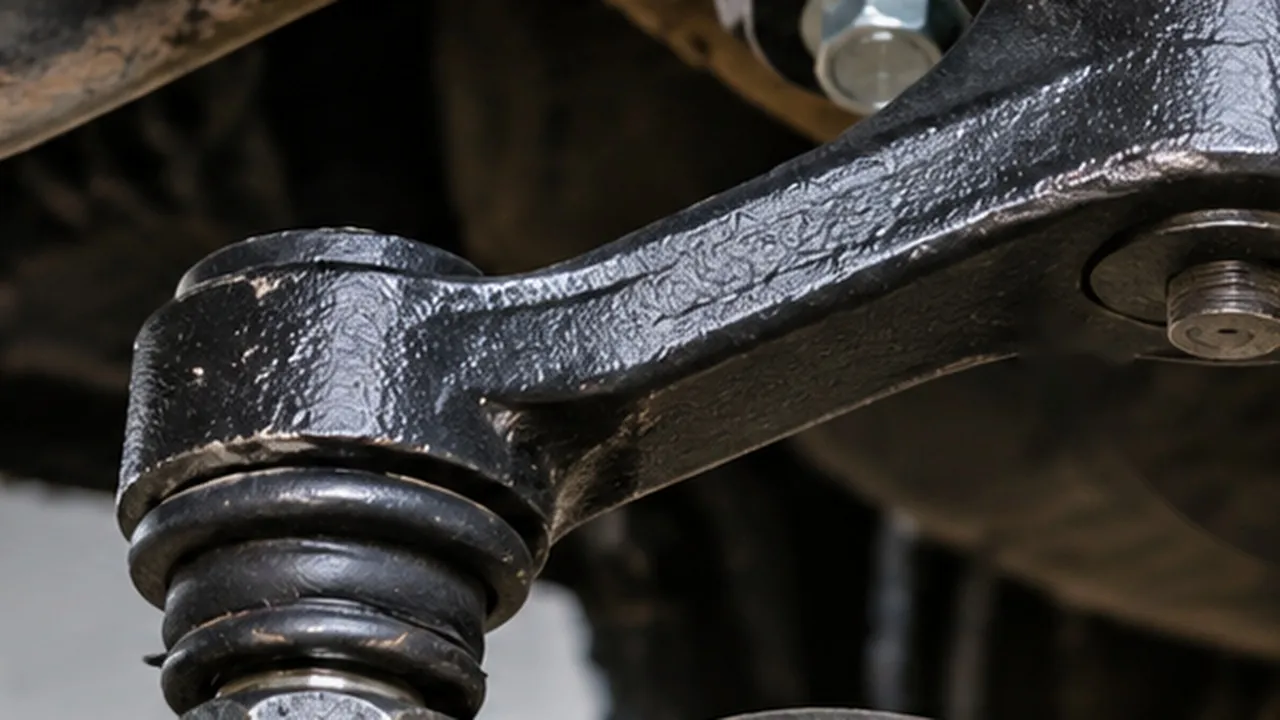
Idler arm replacement costs about $225–$376 in the United States, including parts and labor. RepairPal’s current national estimate breaks that down into approximately $125–$228 for the replacement part and $101–$148 for labor. Taxes, shop fees, alignment, and other worn steering components can increase the final bill.
That’s a useful starting point if you’re pricing a repair on a Chevrolet Silverado, GMC Sierra, Tahoe, Yukon, or another vehicle with a conventional steering linkage. But there’s a catch: some quotes cover only the idler arm, while others include its mounting bracket, pivot assembly, or additional steering work. Those aren’t necessarily the same repair.
Idler Arm Replacement Cost: Parts, Labor, and Total
Start with the installed price, not the cheapest part you can find online. RepairPal’s estimate provides a nationwide benchmark for a normal idler arm replacement, before any additional work.
| Cost Item | U.S. Estimate |
|---|---|
| Replacement idler arm | $125–$228 |
| Installation labor | $101–$148 |
| Total parts and labor | $225–$376 |
| Alignment, if required | Additional charge |
| Bracket or other steering repairs | Additional charge |
Source: RepairPal, national Idler Arm Replacement Cost Estimate, checked October 2026. Its published ranges are rounded estimates and should not be treated as exact component totals. Taxes, location-specific charges, and related repairs are excluded.
AutoZone publishes a broader parts-only range of about $30–$200, with labor commonly adding $100–$250. The differences aren’t surprising. A retail replacement arm for an older pickup may be inexpensive, while a premium assembly for a heavy-duty truck can cost considerably more.
For a straightforward replacement, a quote around $300 can be perfectly reasonable. A $500 or $600 invoice deserves a closer look at what’s included, but it isn’t automatically excessive if the job also requires a new support bracket, difficult removal, or another confirmed steering repair.
Why Can Idler Arm Replacement Cost Much More Than Expected?
The idler arm is a relatively small part. It supports one end of the center link on steering systems that use a Pitman arm and conventional parallelogram linkage. Its size makes the repair look simple, but the surrounding hardware can change the amount of work involved.
These are the main reasons one estimate can be substantially higher than another:
- Arm versus complete assembly: The quote may include an idler arm, a pivot support, a mounting bracket, or more than one component.
- OEM or aftermarket parts: Factory replacement components, economy aftermarket arms, and upgraded heavy-duty parts have different prices.
- Vehicle fitment: A Silverado 1500, Silverado 2500HD, and older Tahoe may require different steering parts despite sharing the Chevrolet name.
- Rusted fasteners: Corrosion around the frame mounting bolts or tapered steering joint can make removal more difficult.
- Other worn joints: A loose Pitman arm connection, tie rod, or center-link joint may require a separate repair.
- Alignment and shop charges: Inspection, alignment, taxes, and supplies may not be included in the initial advertised estimate.
When you ask for an itemized quote, the most important detail is the exact part description. “Replace idler arm” and “replace idler arm and bracket assembly” should not be assumed to mean the same thing.
Real Idler Arm Parts Prices for Chevrolet and GMC Trucks
Many searches for idler arm replacement cost involve Chevrolet and GMC pickups. That’s understandable: conventional steering linkages have been used extensively on these vehicles, including certain heavy-duty models still on the road today.
Retail catalog listings help show how widely parts prices vary. The examples below are for specific applications or products, not nationwide installed repair estimates. Always confirm fitment using the vehicle’s VIN, drivetrain, and steering configuration.
| Vehicle / Application | Listed Component | Retail Example |
|---|---|---|
| 2005 Chevrolet Silverado 1500 4WD | MOOG K6534 idler arm | $121.82 |
| 2005 Chevrolet Silverado 1500 4WD | MOOG K6723 idler bracket assembly | $114.67 |
| 2005 Chevrolet Tahoe | MOOG K6534 idler arm | $138.99 |
| 2011–2026 Chevrolet/GMC 2500HD–3500HD applications | Kryptonite 11KDG018 premium idler arm | $299.99 |
Sources: MOOG suspension parts catalog retailers, Advance Auto Parts, and Kryptonite Products, checked October 2026. These are advertised parts-only prices, not labor-inclusive quotes. The premium HD example is an aftermarket upgrade rather than a standard OEM replacement. Prices, availability, and applicable configurations can change.
Notice the first two Silverado entries. The arm and the bracket are listed separately. If both are worn, the parts expense is already much higher than replacing the arm alone, even before adding labor. That distinction is one of the biggest reasons online estimates don’t always match an actual repair invoice.
Chevy Silverado 1500 and GMC Sierra 1500
Older Silverado and Sierra applications are common examples of vehicles that may use an idler arm and a separate support bracket. On a compatible 2005 Silverado 1500, for instance, catalog listings distinguish the steering idler arm from the bracket pivot assembly.
Don’t order a component based only on the truck’s model name. Steering systems vary by generation and configuration, and some versions use rack-and-pinion steering rather than the traditional center-link arrangement. The correct part must match the actual steering hardware fitted to the truck.
If your shop quotes a replacement for an older Silverado, ask whether the worn movement is in the arm’s center-link joint, the frame-mounted pivot, or the mounting hardware. That tells you whether one component or the complete idler-side assembly needs attention.
Chevrolet Tahoe, GMC Yukon, and Older SUVs
Older Tahoe, Yukon, Suburban, and related SUV models can also use conventional steering linkage. A 2005 Tahoe, for example, has catalog listings for both an idler arm and its support hardware.
That doesn’t mean every Tahoe or Yukon from every year uses the same design. Later generations changed steering components, and a part that fits an older model might have no application on a newer one.
For these vehicles, a useful estimate starts with the correct model year and drivetrain. Only then does the national $225–$376 replacement benchmark become meaningful.
Silverado and Sierra 2500HD / 3500HD
Don’t assume idler arms disappeared from every modern truck. GM’s official parts catalog identifies steering linkage idler arms for applicable 2011–2026 Silverado and Sierra 2500HD and 3500HD configurations.
Heavy-duty applications also have a wider aftermarket market. Premium replacement arms and upgraded pivot supports can cost several hundred dollars each, particularly when marketed for trucks with larger tires or demanding use.
One example is Kryptonite’s 11KDG018 idler arm, advertised at $299.99 for specified GM HD applications. Its companion support is a separate component. Choosing such an upgrade can push the total beyond a standard replacement estimate, even without additional failures.
Upgraded parts aren’t automatically necessary for a stock truck. Check compatibility with the steering linkage and any lift or suspension modifications before paying extra.
Idler Arm vs. Idler Arm Bracket: Which One Needs Replacing?
This is probably the most useful question to ask before approving the bill. The idler arm supports the center link, but the support mechanism itself may include a separate bracket, bearing, pivot, or bushing. Exactly how those pieces are supplied depends on the vehicle.
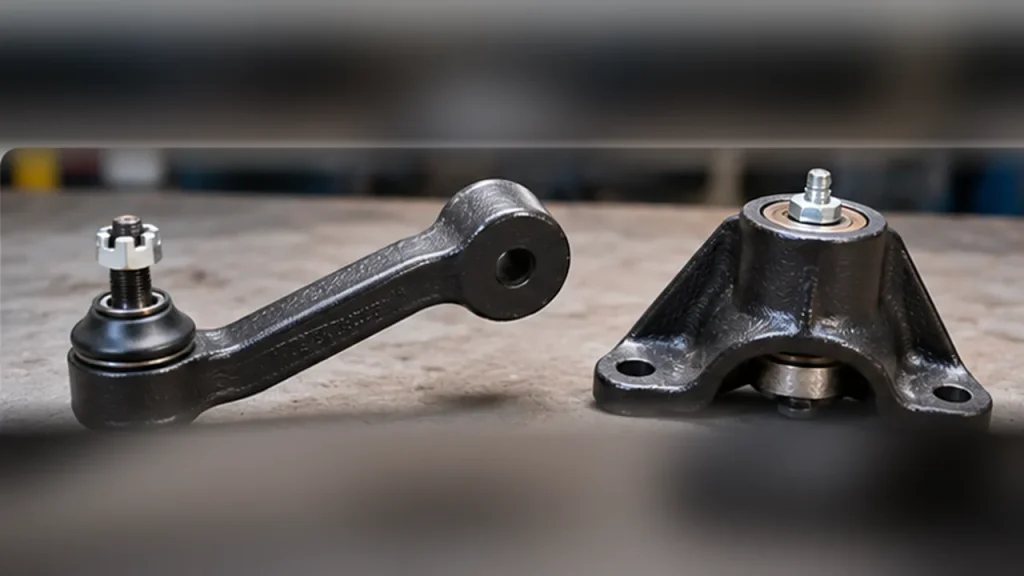
If the ball joint at the center-link connection is worn, the arm may be the part that needs replacement. If the unwanted movement comes from the frame-side pivot or bearing, replacing only the arm might leave the problem untouched.
Some replacement products combine the arm and bracket into one assembly. Others are sold individually. Parts catalogs even distinguish categories such as “Steering Idler Arm,” “Steering Idler Arm Bracket,” and “Steering Idler Arm and Bracket Assembly.”
A bracket isn’t necessarily a simple piece of steel that never wears. On certain designs, its pivot or bearing carries steering loads and can develop excessive clearance. That’s why a shop should identify the failed connection before ordering the replacement.
Can You Replace Only the Idler Arm Bushing?
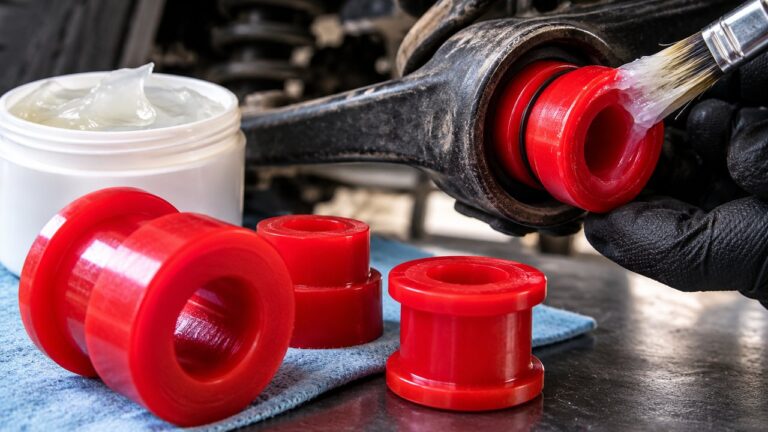
Sometimes, but not universally. A serviceable bushing may be available for a particular design, while another vehicle requires replacement of the complete pivot or arm-and-bracket assembly.
A lower-priced bushing doesn’t guarantee a cheaper completed repair. If removing and installing it requires substantial press work, or if the surrounding joint and support are already worn, replacing the larger assembly may be more practical.
Have the shop identify whether the bushing, bearing, joint, or mounting bracket has failed. The correct diagnosis matters more than choosing the smallest item listed in a parts catalog.
Idler Arm Labor Cost: How Long Does Replacement Take?
RepairPal estimates $101–$148 in labor for its national idler arm replacement benchmark. AutoZone gives a broader approximate labor range of $100–$250, reflecting differences in vehicle access and the work required.
With the correct tools and an accessible linkage, replacing an individual idler arm can be a relatively short shop job. The technician generally needs to separate the tapered joint from the center link, remove the arm or bracket mounting hardware, install the correct replacement, and secure the fasteners to specification.
That description sounds easy until a tapered stud refuses to release or a bracket bolt is heavily corroded. Removal time can increase, particularly on older trucks exposed to road salt or vehicles with restricted access around the frame.
There’s also a difference between the technician’s installation time and the total appointment. Diagnosing the steering play, sourcing the correct part, inspecting neighboring joints, and checking the alignment may extend the visit.
Rather than relying on a universal one-hour promise, ask the shop for the labor allowance used in its estimate. That makes it easier to compare two quotes fairly.
Do You Need an Alignment After Idler Arm Replacement?
Have the steering and alignment checked after replacing an idler arm. Whether the vehicle needs a full alignment adjustment depends on its steering design, the condition of the other components, and the manufacturer’s service procedure.
The idler arm normally isn’t the component used to adjust toe. It supports the center link while steering motion travels through the linkage. Nevertheless, a worn arm can allow unwanted movement, and replacing it may change how the linkage sits or behaves.
If tie rod adjustments were disturbed, other loose joints were replaced, or tire wear was already abnormal, an alignment becomes especially relevant. A good shop will correct mechanical looseness first and measure the wheel angles afterward.
For budgeting, our existing U.S. guide puts a typical two-wheel/front-end alignment around $75–$120 and a four-wheel alignment around $100–$200. Those are separate service prices, not charges automatically included in RepairPal’s idler arm estimate.
Ask whether your quote includes an inspection, an actual adjustment, or both. You can compare the usual charges in our wheel alignment cost guide
Idler Arm and Pitman Arm Replacement: Should You Pay for Both?
Some repair estimates combine idler arm and Pitman arm replacement because both components are part of a conventional steering linkage. That doesn’t mean they always need to be changed as a pair.
The Pitman arm transfers movement from the steering gearbox into the center link. The idler arm supports the opposite end. If both connections have excessive wear, addressing them during the same visit can make sense. But if one passes inspection, replacing it solely because the other arm failed is not automatically justified.
A combined repair adds another part and additional labor. Pitman arm removal may also involve a splined gearbox connection and a dedicated puller, making the work different from removing the idler-side support.
If the Pitman arm also needs replacing, its cost should be listed separately from the idler arm repair. Our Pitman arm replacement cost guide covers U.S. parts and labor estimates, including why certain Chevrolet Silverado repairs cost more than the national average.
Ask the shop to show the play at both locations and list the charges separately. For a clearer explanation of the different connections, see our Pitman arm vs. Idler arm comparison
What About Tie Rods and the Center Link?
The technician should inspect these components during the same diagnosis. Loose tie rod ends or center-link joints can cause similar steering complaints, and replacing only the idler arm won’t repair those separate faults.
A larger steering-linkage quote may therefore include more than one necessary repair. Confirm the condition of each component before approving a bundled replacement kit.
If the proposed work includes worn inner or outer tie rods, compare that portion of the estimate with our tie rod replacement cost breakdown
Is an Idler Arm the Same Thing as a Drag Link?
No. In a conventional parallelogram arrangement, the idler arm supports the center link. Depending on the steering design and parts catalog, that center link may sometimes be described as a relay rod or drag link.
Other trucks and Jeeps use a drag link with a different steering layout and no conventional idler arm at all. The replacement procedures and prices are not interchangeable merely because both parts appear under the front end.
If the mechanic has actually diagnosed a drag link rather than an idler support, check the separate figures in our drag link replacement cost guide
How to Know Whether the Idler Arm Really Needs Replacing
Loose steering and clunking noises are reasons to inspect the linkage, not proof that the idler arm has failed. A worn tie rod, loose steering gearbox mounting, damaged joint, or tire problem may produce a similar complaint.
The inspection findings that matter most include:
- Excessive movement at the support: The center link moves beyond the manufacturer’s permitted limits at the idler side.
- Play in the idler arm joint: The ball-and-socket connection has more clearance than allowed by the vehicle’s inspection procedure.
- Worn bracket pivot or bearing: Movement originates inside the frame-mounted support rather than the center-link joint.
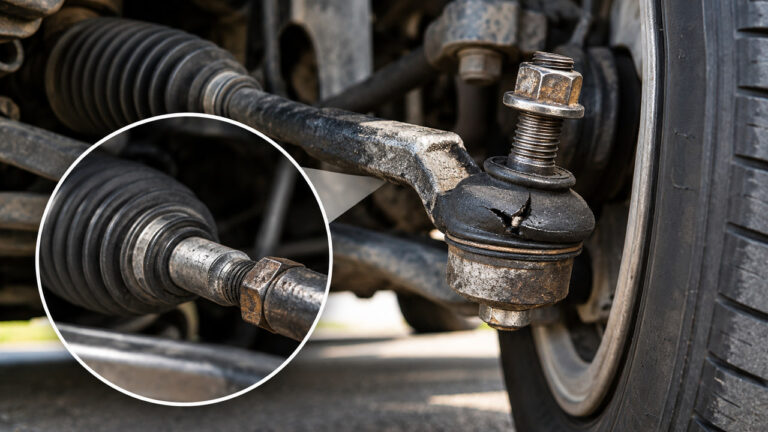
- Damaged housing, boot, or mounting hardware: Cracks, distortion, contamination, or loose attachments require further evaluation.
It’s important to distinguish normal pivoting from excessive play. An idler arm has to move as the steering operates. A mechanic should follow the specified inspection method and limits for that steering system rather than condemning the part simply because movement is visible.
RepairPal recommends inspecting the Pitman arm and tie rod ends as well because they are exposed to similar steering loads. A diagnosis that identifies the exact worn joint is more valuable than replacing whichever part appears first in an online search.
Our guide to bad tie rod symptoms explains several overlapping warning signs that should be ruled out before paying for the wrong steering component.
Can You Replace an Idler Arm Yourself and Save the Labor?
On some older trucks, an experienced DIY mechanic can replace an idler arm using the appropriate steering-joint separation tools and the manufacturer’s service instructions. Avoiding the shop labor charge can make the repair substantially cheaper.
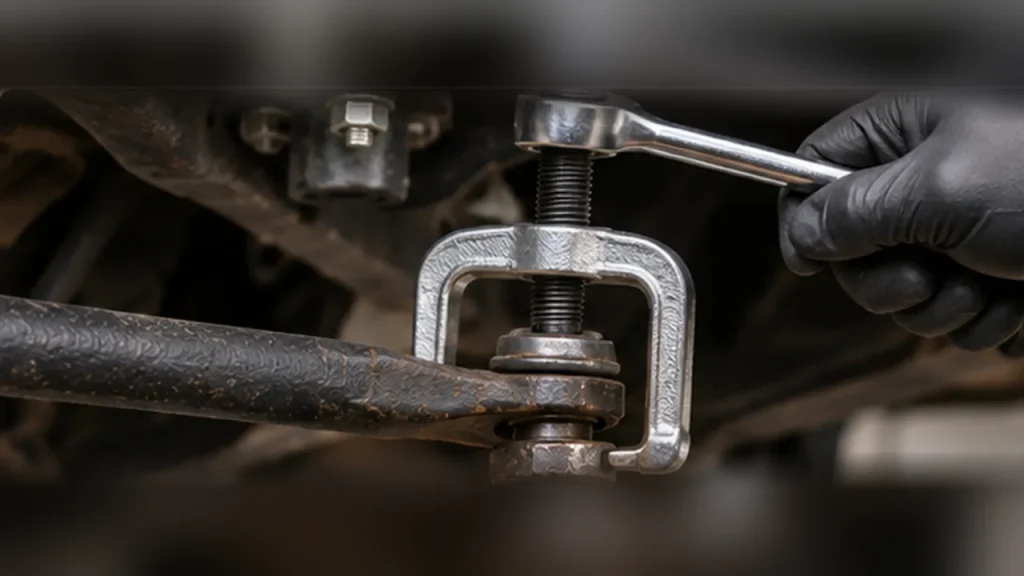
But the job isn’t risk-free. The tapered joint must be separated without damaging the neighboring linkage, the mounting points must be sound, and all fasteners must be secured according to the correct specifications.
A worn or damaged bracket can also complicate a job that initially appeared to require only a replacement arm. If the steering assembly is severely corroded or the correct procedure isn’t available, professional repair is the safer choice.
Never lift or support a vehicle using the center link or idler arm. RepairPal specifically warns that lifting from the center link can cause an idler joint to fail or separate. Use only the approved lifting and support points and never work beneath a vehicle supported solely by a jack.
Even after successful DIY installation, you should still budget for any required steering inspection and alignment. Saving labor doesn’t eliminate the need to confirm that the vehicle is safe to drive.
Idler Arm Replacement Cost: Common Questions
These are the details worth clarifying when the estimate, the parts catalog, and the symptoms don’t seem to agree.
How Much Does an Idler Arm Cost Without Labor?
AutoZone puts replacement parts around $30–$200, depending on the vehicle and product. RepairPal’s national installed-repair calculation allocates approximately $125–$228 to parts. Premium heavy-duty aftermarket arms can exceed those figures.
Is $500 Too Much for an Idler Arm Replacement?
It’s above RepairPal’s $225–$376 national estimate for a standard replacement, but it could be justified by an expensive component, bracket work, difficult removal, alignment, or other confirmed repairs. Ask for a breakdown before deciding whether the quote is fair.
Do All Cars and Trucks Have an Idler Arm?
No. An idler arm belongs to certain steering-gearbox systems with a center link. Most modern rack-and-pinion passenger cars don’t use one. Some current heavy-duty Chevrolet and GMC pickups still have idler arms, so vehicle type and production year alone aren’t enough to identify the system.
How Long Does an Idler Arm Last?
There isn’t a universal mileage interval for replacement. Joint and pivot wear depends on vehicle load, road conditions, maintenance, corrosion, and steering-system design. Inspect the arm when steering problems appear or when the manufacturer’s maintenance procedure calls for a linkage check.
Can a Worn Idler Arm Cause Uneven Tire Wear?
Yes. Excessive play can allow unintended center-link movement and changes in steering geometry while driving. However, uneven tire wear can also result from incorrect alignment, tire pressure, or other worn components, so the idler arm should not be blamed without inspection.
Is It Safe to Drive With a Bad Idler Arm?
A confirmed severely worn or loose steering joint is a safety concern. If the vehicle wanders unpredictably, has substantial steering play, or has a connection at risk of separating, stop driving and arrange professional inspection or towing. Don’t postpone a serious steering repair simply because the vehicle still moves.
How to Decide Whether Your Idler Arm Repair Quote Is Fair
Imagine receiving two estimates: one for $285 and another for $520. The lower price could be the better deal, but only if both shops are proposing the same repair. Here’s what to compare before authorizing the work.
- Confirm the failed component. Ask whether the play is in the idler arm joint, the bracket pivot, or another steering connection.
- Identify the replacement part. Get the brand, part number, and confirmation that it fits the vehicle’s exact steering configuration.
- Separate the parts and labor. Check whether the price covers one arm, a bracket, a complete assembly, or several components.
- Review extra charges. Ask about diagnostic labor, alignment, replacement hardware, taxes, and shop supplies.
- Check the remaining linkage. Have the Pitman arm, center link, and tie rod joints inspected before approving additional replacement work.
For an ordinary idler arm replacement, the national $225–$376 estimate is a sensible reference. For a heavy-duty truck, worn support bracket, or multiple steering faults, the completed repair may cost considerably more.
The best quote isn’t automatically the lowest one. It’s the one that identifies the actual worn component, includes the correct parts and required follow-up checks, and doesn’t charge you for unrelated repairs. That is what makes the final price worth paying.