Drag Link Replacement Cost: What a Fair Quote Includes
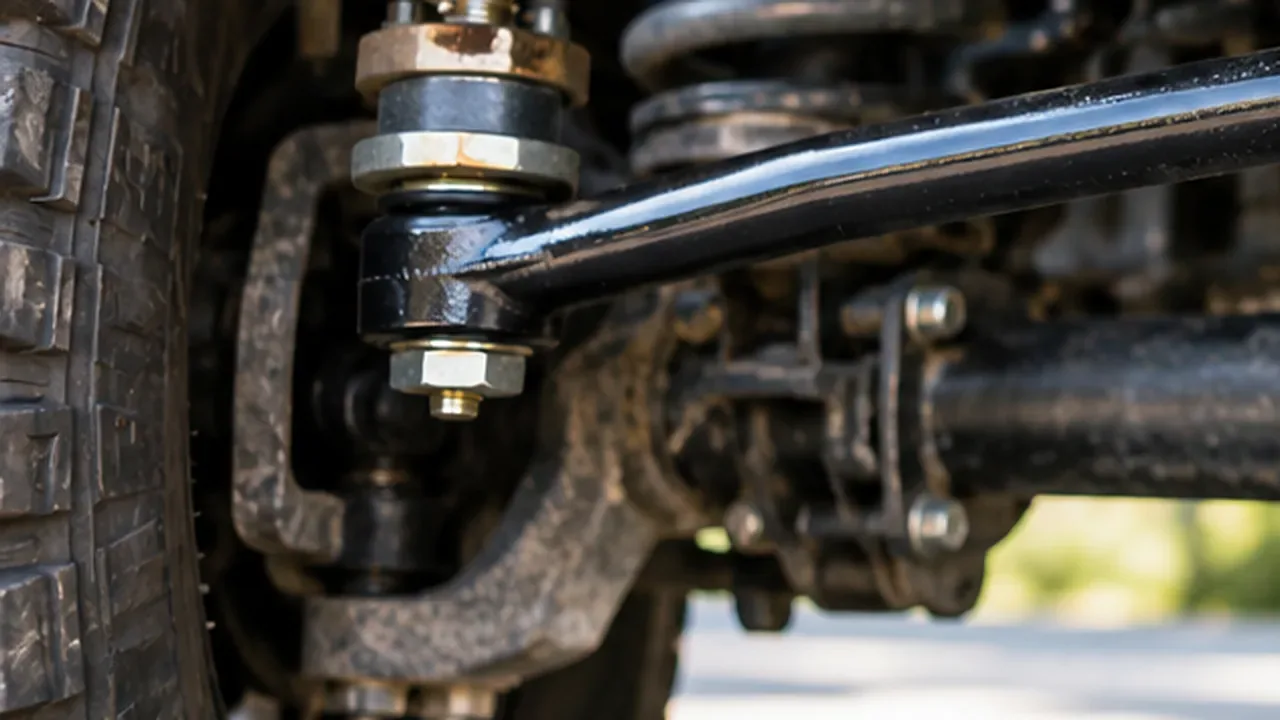
Drag link replacement usually costs a few hundred dollars in the United States, but there is no reliable single price for every vehicle. Published parts-and-labor estimates include about $227 for a 2015 Jeep Wrangler, $394 for a 2017 Wrangler, and $638 for a 2017 Ford F-250 Super Duty. Some shop and dealer quotes exceed $1,000, especially when the part or installation is more expensive.
For a newer Jeep Wrangler JL or Gladiator, one published budget is $490–$885 with a new OEM drag link, labor, and wheel alignment. The difference matters: replacing a worn joint on an older truck is not necessarily the same job as installing a complete steering linkage assembly on a newer Jeep. Before comparing prices, find out exactly which component the shop intends to replace.
Drag Link Replacement Cost: Parts, Labor, and Extra Charges
A useful quote separates the replacement drag link from the labor needed to install it. It should also identify alignment, diagnostics, and any additional steering repairs instead of hiding everything under one “front-end repair” charge.
The following is a parts-and-labor example for a 2018–2025 Jeep Wrangler JL or Gladiator using Go-Parts’ published U.S. figures. It illustrates how the bill adds up; it is not a nationwide price range for every drag link application.
| Cost Item | Published Estimate |
|---|---|
| New OEM drag link | $240–$385 |
| Shop labor | $150–$350 |
| Wheel alignment | $100–$150 |
| Total with alignment | $490–$885 |
Source: Go-Parts, Wrangler JL and Gladiator drag link replacement guide, checked October 2026. The example assumes a new OEM part and includes an alignment allowance. Taxes, other damaged components, and additional repairs may increase the total.
A straightforward job on another model could cost less. Conversely, heavy corrosion, expensive factory assemblies, or damaged mounting points can make the repair considerably more involved. A higher quote deserves an explanation, but a low quote deserves a close look at what’s included, too.
Drag Link Replacement Prices by Vehicle
Comparing actual vehicle examples is more useful than relying on a broad average. YourMechanic publishes estimates by model year and engine, along with separate shop/dealer price ranges. Those figures show how two trucks needing a similarly named repair can end up with very different bills.
| Vehicle | Service Estimate | Shop/Dealer Range |
|---|---|---|
| 2015 Jeep Wrangler 3.6L | $227 | $269–$370 |
| 2017 Jeep Wrangler 3.6L | $394 | $477–$699 |
| 2012 Ford F-250 Super Duty 6.2L | $289 | $346–$495 |
| 2017 Ford F-250 Super Duty 6.7L diesel | $638 | $784–$1,199 |
Source: YourMechanic’s Jeep Wrangler and Ford F-250 Super Duty Drag Link Replacement estimates, checked October 2026. Amounts are rounded to the nearest dollar. Service estimates and shop/dealer ranges are alternative pricing references, not charges to add together.
There is no mistake in that 2017 F-250 figure: the published estimate is substantially higher than the 2012 example. The exact steering configuration, part specification, and labor calculation make a difference. Even within a single model family, an estimate without the year and engine can be misleading.
One more detail is easy to miss. Some estimating websites use both “Drag Link Replacement” and “Center (Drag) Link Replacement” as service categories. Those labels do not necessarily describe an identical assembly or the same steering layout. Always compare the part number and repair scope before comparing the prices.
Jeep Wrangler JL and Gladiator: Standard vs. Wide Axle
For Wrangler JL and Gladiator owners, identifying the axle configuration matters just as much as choosing the brand. Go-Parts lists different OEM drag link references for standard-width and wider axle configurations used on certain trims.
Its guide identifies 68522992AA for applicable standard-axle setups and 68522995AA for applicable wide-axle setups. Those references are useful for understanding why the parts aren’t interchangeable, but they are not a substitute for a current VIN-based fitment check. Supersessions, model year, and equipment can change the correct ordering information.
A shop that knows your Jeep’s exact axle configuration is in a better position to quote the job correctly. If two estimates specify different assemblies, resolve that discrepancy before choosing the cheaper one.
Ford F-250 and F-350: Why Heavy-Duty Trucks Can Cost More
On Ford Super Duty trucks, drag link design and part fitment depend on the production year, drive configuration, and front axle. Some F-250 and F-350 applications use different steering linkage components even when the trucks look nearly identical from the outside.
OEM catalog examples for certain F-250 configurations show replacement drag link assemblies in the hundreds of dollars. Some aftermarket components are less expensive, but a quote still needs to specify whether the repair includes the entire rod assembly or only a serviceable end.
A particularly expensive Ford estimate is worth checking for other included work: steering linkage inspection, seized fasteners, a steering-wheel centering adjustment, or damaged joints nearby. Those items can change the bill without changing the basic name of the repair.
What Makes One Drag Link Replacement More Expensive?
A drag link isn’t especially complicated to look at. It’s generally a rigid steering connection with articulated joints and, on many designs, a threaded adjustment section. The difficulty lies in the exact assembly, its mounting points, and the condition of the hardware being removed.
These are the main reasons a quote may run above the parts-and-labor estimate:
- Complete assembly vs. individual end: Some designs allow a separate joint or end to be replaced, while others require a larger assembly.
- OEM vs. aftermarket: The selected manufacturer, joint design, and availability can substantially change the parts price.
- Rust and seized tapered joints: Corrosion can turn a routine removal into a longer job requiring special tools or new hardware.
- Worn adjoining parts: Tie rods, steering arms, the Pitman arm connection, or other joints may need separate attention.
- Steering adjustment: Restoring correct drag link length and steering-wheel centering can add setup time.
- Alignment or inspection: A separate alignment or steering-system diagnosis may appear on the invoice.
It is also worth asking whether the estimate includes replacement cotter pins, locking nuts, clamps, and any other fasteners specified as single-use by the manufacturer. These usually aren’t the biggest expense, but omitting required hardware to keep a quote low is not a sensible saving.
Replacing a Drag Link End vs. the Complete Assembly
The difference can be significant. Some steering systems use a serviceable drag link end, while others incorporate joints into an assembly that must be replaced together. An adjuster sleeve may also be sold separately on certain designs.
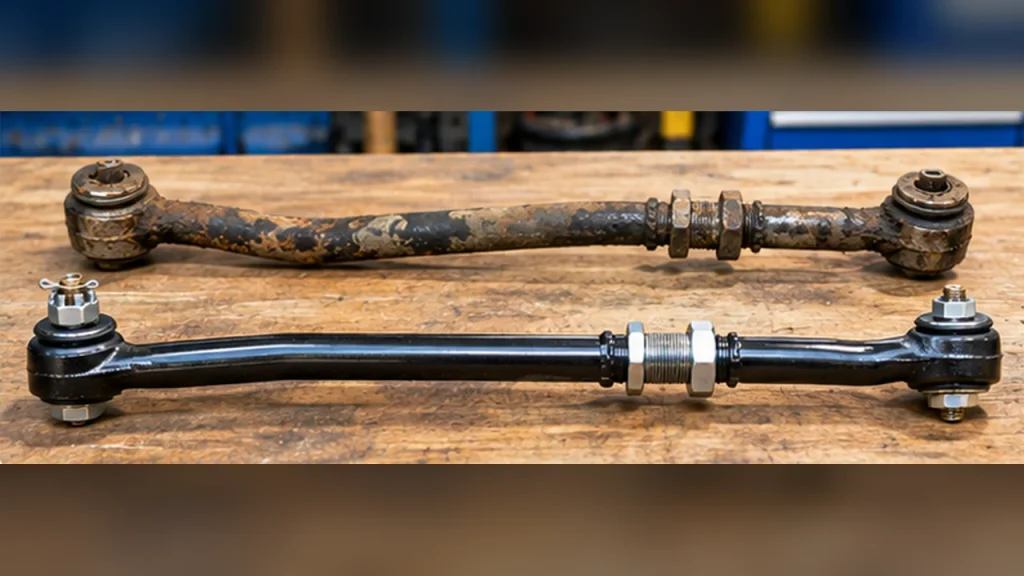
If a technician finds play at only one joint, ask whether that joint is independently serviceable under the manufacturer’s procedure. A shop may recommend a complete assembly because the additional joint is also worn, the existing hardware is damaged, or the replacement is supplied only as a unit.
Don’t assume that replacing just one end is always the cheapest completed repair. Labor, seized connections, parts availability, and the condition of the other joint can change the calculation.
Drag Link vs. Tie Rod, Track Bar, and Steering Stabilizer
The names sound related because the components work in the same area of the vehicle. But a mechanic’s quote for a drag link should not be confused with a quote for a tie rod, track bar, or steering stabilizer.
On many solid-front-axle Jeeps and trucks, the drag link transfers steering input from the Pitman arm toward a steering knuckle or steering arm. The tie rod coordinates steering movement between the front wheels. The track bar controls lateral axle location, while the steering stabilizer damps unwanted steering movement.
Those jobs are different, even though looseness in several of these components can create similar driving complaints.
Is the Drag Link the Same as a Center Link?
Sometimes the terms overlap, but not always. On a conventional parallelogram steering system, the center link or relay rod runs between the Pitman and Idler arms and carries connections for the tie rods. Some catalogs call that a drag link.
Other solid-axle vehicles use a drag link running from the Pitman arm toward a steering knuckle, without the same center-link and Idler-arm arrangement. The names are not enough to establish which part your vehicle needs.
On vehicles with a conventional center link, a worn idler arm is a separate repair from replacing the link itself. If the shop identifies excessive play at the idler-side support, our idler arm replacement cost guide explains the typical parts and labor charges.
We’ve covered those different layouts in our Pitman arm vs. Idler arm comparison
What If the Shop Actually Means a Tie Rod?
That is a different repair, with different parts and pricing. The distinction becomes especially important when a quote uses vague terms such as “steering rod,” “linkage end,” or “front steering link.”
Before approving a replacement, ask the technician to identify the worn joint and show its location. If the problem is an inner or outer tie rod rather than the drag link, use the prices in our tie rod replacement cost guide
Could It Be a Track Bar Problem Instead?
Yes. A worn track bar bushing or loose mounting bracket can cause wandering, clunks, and front-end movement. It should not automatically be mistaken for a failed drag link just because the driver notices a steering problem.
If inspection finds excessive movement at the axle-locating bar rather than at a steering joint, that is a separate repair. For the corresponding price estimates, see our track bar replacement cost guide
Do You Need a Wheel Alignment After Replacing a Drag Link?
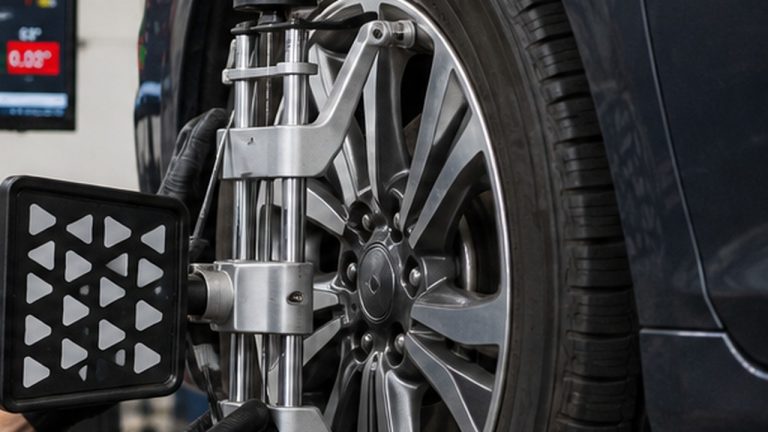
A professional steering and alignment check is strongly advisable after drag link replacement. On many solid-axle systems, changing the drag link length primarily affects steering-wheel centering rather than directly setting wheel toe. Nevertheless, the completed repair needs to be checked against the manufacturer’s steering and alignment procedure.
That distinction is important. Adjusting a drag link to center the steering wheel isn’t necessarily the same as adjusting the tie rod to establish toe. A vehicle can have an apparently straight steering wheel while still having a separate alignment issue.
On a Wrangler JL or Gladiator, Go-Parts includes a $100–$150 alignment allowance in its professional replacement budget. Shops dealing with lifted vehicles, other steering repairs, or abnormal tire wear may need additional measurement or adjustments.
The shop should explain which checks and adjustments are included instead of adding a generic four-wheel alignment fee without considering the vehicle. For broader U.S. service pricing, consult our wheel alignment cost guide
How Long Does a Drag Link Replacement Take?
For an accessible drag link with cooperative fasteners, the repair may take roughly one to two hours of shop labor. Go-Parts lists approximately 1.5–2 hours for labor on applicable Wrangler JL and Gladiator repairs, although its wider repair guidance allows more time for a complete DIY job.
Once a joint has rusted into a steering arm or the adjuster sleeve has seized, a simple time estimate can become unrealistic. Heavy-duty trucks and older vehicles may also require different tools or additional removal work.
Ask for the labor allowance on the estimate, particularly when the total seems much higher than the cost of the replacement part. A diagnostic inspection and a separate alignment appointment should not be silently confused with the installation time.
How Do You Know the Drag Link Actually Needs Replacement?
A worn drag link can create steering looseness or delayed response, but it is a mistake to diagnose the part from the driving sensation alone. Tires, steering joints, damaged mounting hardware, and front suspension components can produce overlapping symptoms.
The findings most relevant to a drag link repair include:
- Excessive joint play: A technician confirms movement beyond the manufacturer’s acceptable limits at a drag link connection.
- Damaged joint housing or shaft: Impact damage or deformation compromises the component.
- Loose adjustment hardware: A jam nut, clamp, or adjuster sleeve is no longer holding the assembly correctly.
- Damaged protective boot: A torn boot may expose the joint to water and contamination, although a damaged boot alone doesn’t establish excessive play.
- Confirmed linkage movement: A controlled inspection reveals unwanted movement at the drag link rather than elsewhere in the steering system.
There is an important technical caution here. Some steering joints are designed with a limited amount of normal movement. For example, Ford service guidance for certain Super Duty vehicles describes 1–2 mm of vertical movement at particular steering joints as a normal design characteristic. A technician should use the vehicle-specific inspection limits, not assume that every visible movement means a failed part.
If the steering suddenly becomes unpredictable, a linkage connection looks close to separating, or the vehicle develops severe front-end shaking, stop driving and arrange professional inspection or towing. This is not a problem to keep testing at highway speeds.
Will a New Drag Link Fix Death Wobble?
Only if the diagnosed drag link fault is contributing to the oscillation. Severe steering shake on solid-axle vehicles can involve more than one problem, including worn joints, track bar movement, tire faults, and incorrect suspension geometry.
Replacing the drag link may restore control when a joint or connection has failed, but it does not guarantee that all vibration disappears. A steering damper is another separate component that sometimes enters this discussion; its job is to control unwanted steering motion, not repair mechanical looseness.
If a shop has diagnosed the damper itself rather than the drag link, its parts and labor belong to a different estimate. See our steering stabilizer replacement cost guide
RAM 2500 and 3500 Owners: Check Drag Link Recall V06
Before paying for drag link work on an affected RAM heavy-duty truck, check the vehicle’s recall status. FCA issued Safety Recall V06, also identified as NHTSA 19V-021, concerning an outboard steering linkage jam nut that could loosen and allow part of the drag link to separate from its adjuster sleeve.
The manufacturer’s revised service instructions identify certain 2014–2018 RAM 2500 pickups, 2013–2018 RAM 3500 pickups, and specified RAM 3500 chassis-cab models. Not every truck from those years is included, so the VIN determines applicability.
The prescribed remedy depends on inspection results. Some affected links may be secured under the campaign procedure; others require replacement when thread engagement is insufficient. This is not a recommendation to weld, modify, or improvise a steering linkage yourself.
Contact an authorized RAM dealer with your VIN before authorizing a paid repair. The manufacturer documents the affected models, defect, and prescribed remedy in its official V06 drag link recall instructions
Can You Replace a Drag Link Yourself?
On certain vehicles, an experienced home mechanic can replace a drag link without dismantling the whole steering system. That can save the installation labor, but it is not the place to learn by guessing at torque specifications or joint separation techniques.
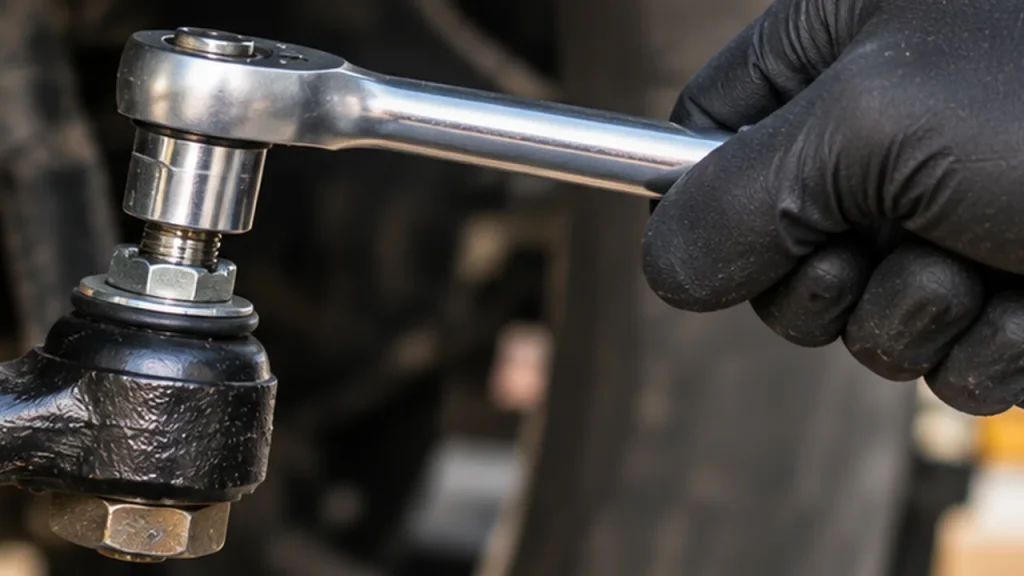
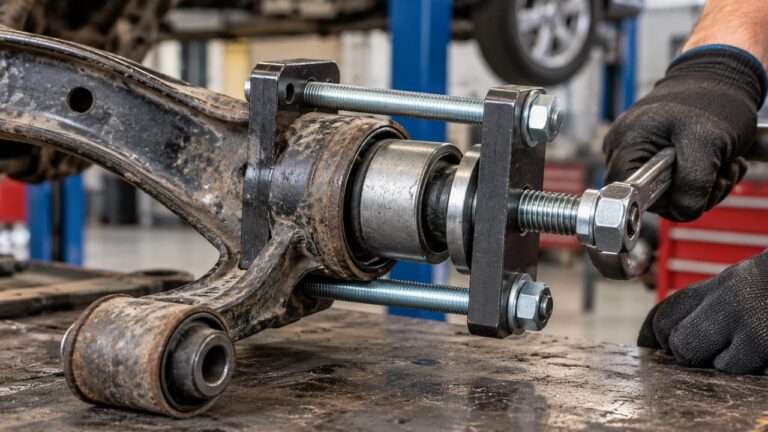
Drag link joints often use tapered studs secured with specified nuts and sometimes cotter pins. Separating those joints may require appropriate pullers, and an adjustable link must be set correctly when the new assembly is installed. Disturbing other steering components can increase the adjustment work afterward.
Before treating it as a DIY money-saving job, verify these requirements:
- The correct drag link assembly or serviceable end has been identified by VIN and steering configuration.
- Both mounting points and any required replacement fasteners are in suitable condition.
- Vehicle-specific tightening specifications and the correct service procedure are available.
- Suitable joint-separation tools, torque tools, and safe vehicle-support equipment are available.
- Steering-wheel centering, linkage clearance, and required alignment checks can be completed afterward.
Never work beneath a vehicle supported only by a hydraulic jack. If mounting brackets are damaged, the adjuster is seized, or the steering configuration has been substantially modified, professional installation is the more sensible option.
Also remember that saving installation labor doesn’t necessarily eliminate an alignment charge. That is especially relevant if the replacement changes a steering adjustment or the manufacturer’s procedure calls for verification afterward.
Drag Link Replacement Cost: Common Questions
A few practical details can help you understand an estimate, particularly when the part description or recommended service differs between shops.
Do You Have to Replace Both Drag Link Ends?
Not necessarily. It depends on whether the joints are individually serviceable and whether both are actually worn. Some vehicles require a complete assembly, while others allow individual ends to be replaced. Follow the vehicle’s parts and service information rather than assuming both ends must always be changed together.
How Long Does a Drag Link Last?
There is no universal mileage-based replacement interval. Joint wear depends on use, road conditions, corrosion, impacts, and maintenance. A sound assembly may last many years, while a damaged boot or heavy off-road use can shorten service life.
Can a Bad Drag Link Cause Uneven Tire Wear?
It can contribute indirectly when worn joints allow unwanted steering movement or other alignment problems are present. However, the drag link’s main adjustment on many solid-axle vehicles is steering-wheel centering, not toe. Tire wear should be investigated rather than automatically blamed on the drag link.
Is an Adjustable Drag Link Worth the Extra Money?
It may be appropriate for a lifted or modified vehicle when the replacement is engineered for that steering configuration. A stock truck or Jeep usually doesn’t need an expensive aftermarket link simply because the original has worn out. Fitment, joint durability, adjustment range, and clearance matter more than the word “heavy-duty” on the box.
Can You Drive With a Bad Drag Link?
A drag link is a critical steering connection. If its joint has substantial looseness, the adjuster is separating, or the steering responds unpredictably, do not continue driving. Have the vehicle inspected or towed. A failed drag link can result in loss of directional steering control.
How to Compare Two Drag Link Replacement Quotes
Suppose one shop quotes $350 and another quotes $650. Those numbers don’t tell you much until you know whether both mechanics are replacing the same assembly and including the same services. The cheaper repair may be perfectly adequate, or it may omit work the vehicle actually needs.
Before choosing, ask the shop to clarify four things:
- Which part is failing? Confirm that the diagnosis identifies the drag link, not a tie rod, track bar, or steering damper.
- What exactly will be replaced? Ask for the brand, part number, and whether the estimate includes an end, a complete assembly, or adjustment hardware.
- What is included in the total? Separate the part, installation labor, diagnostics, steering adjustment, alignment, and any applicable taxes or fees.
- What will be checked after installation? The shop should verify secure connections, correct steering response, and the relevant manufacturer-specified alignment or adjustment checks.
A reasonable drag link replacement quote should be supported by a confirmed fault, the correct vehicle-specific component, and a clear explanation of the work. A $300 job and an $800 job can both be legitimate. Paying either amount for the wrong diagnosis, however, is money wasted and could leave a serious steering problem unresolved.