How Long Do Air Suspension Bags Last? Signs of Failure
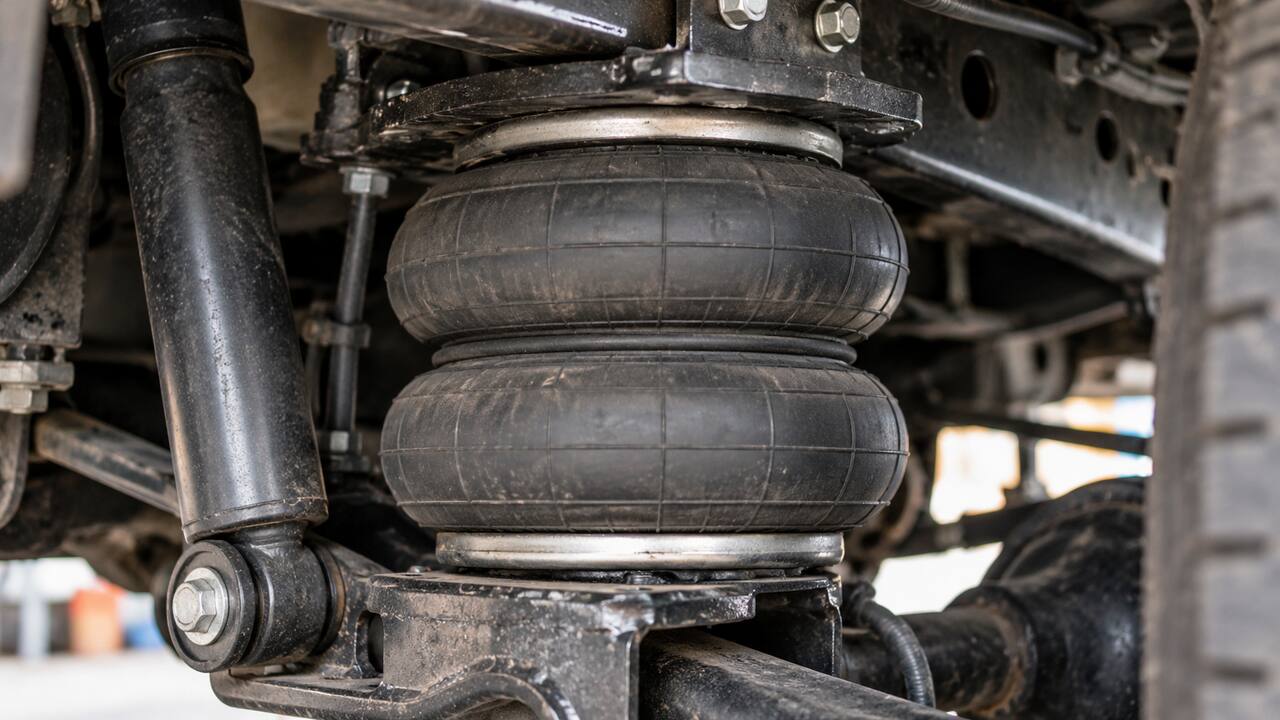
Air suspension bags commonly last several years and tens of thousands of miles, but there is no universal replacement interval. Some original-equipment air springs remain serviceable beyond 100,000 miles, while heat, road salt, abrasion, incorrect installation or an unresolved leak can cause much earlier failure.
A widely quoted planning range for passenger-vehicle air springs is around 80,000–100,000 miles, but it should not be treated as a guaranteed lifespan or scheduled replacement point. Age, condition and symptoms are more useful than mileage alone.
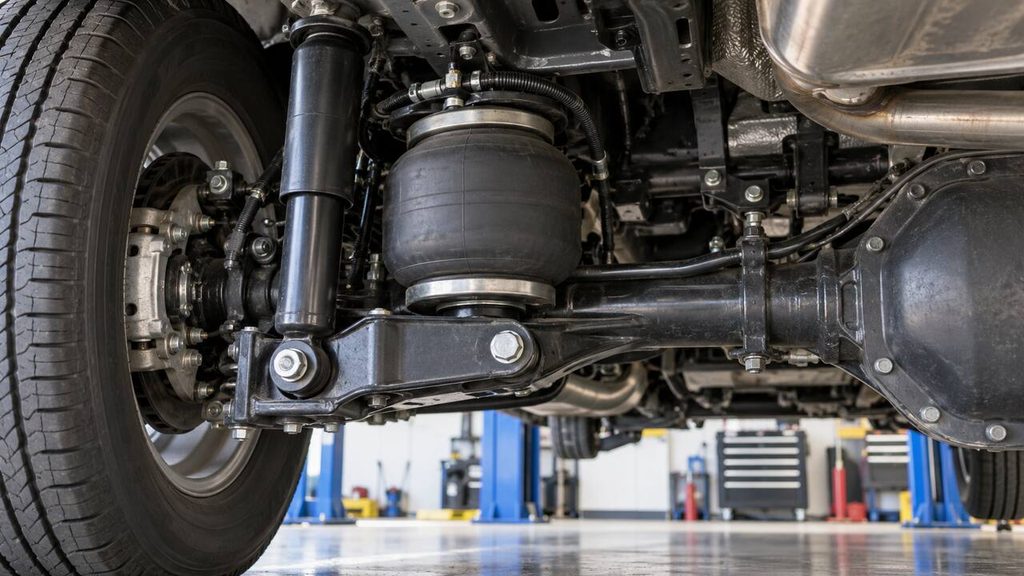
Air Suspension Bag Lifespan at a Glance
Air suspension lifespan varies considerably depending on the type of system. A factory air spring on a passenger vehicle does not necessarily age in the same way as a truck helper bag or a commercial air spring. This comparison puts the main differences into perspective:
| Type of air spring | Reasonable expectation | Important limitation |
|---|---|---|
| Factory passenger-car or SUV air spring | Often many years; 80,000–100,000 miles is a commonly quoted planning range | Some fail earlier and others last much longer |
| Air strut combining spring and damper | Varies by vehicle, climate and construction | The air spring, damper or mount can fail separately |
| Truck helper air spring | Frequently several years when correctly installed and maintained | Pressure, load, heat, abrasion and fitment strongly affect life |
| Commercial air spring | Designed for very high cycle counts | Service conditions differ greatly from passenger vehicles |
Firestone states that its aftermarket Ride-Rite helper springs commonly last four or five years, depending on heat, environment and use. Its commercial maintenance guidance says properly maintained Airide springs are designed for millions of cycles. These figures describe different products and applications, which is why one mileage claim cannot apply to every air suspension bag.
For a specific factory-equipped vehicle, the owner’s manual and manufacturer service information take priority. Many manufacturers specify inspection and diagnosis rather than automatic replacement at a particular mileage.
Air Springs, Air Struts and Helper Bags Are Not the Same
The phrase “air suspension bag” can describe several components:
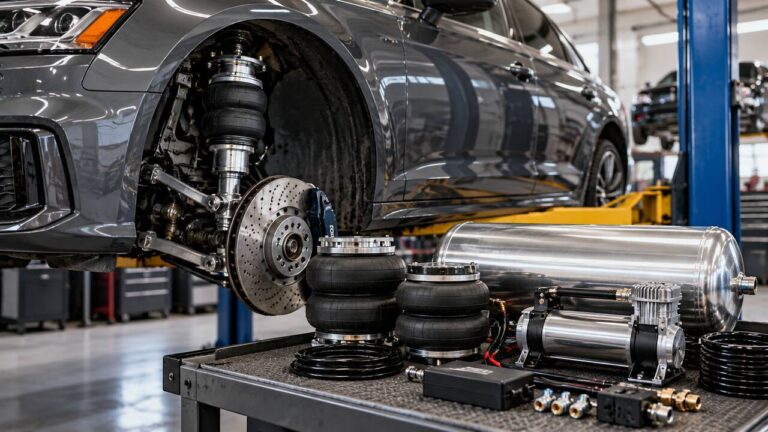
- Air spring: A rubber bellows or sleeve that replaces a coil or leaf spring and supports the vehicle.
- Air strut: An air spring and damper combined in one structural assembly.
- Helper air spring: An aftermarket bag added to an existing coil- or leaf-spring suspension to reduce sag under load.
Helper bags do not necessarily replace the original springs, and they do not increase the payload or gross vehicle weight rating established by the vehicle manufacturer. Our Silverado air bag kit guide explains how load-support systems differ from full air suspension.
What Determines How Long Air Suspension Bags Last?
Air spring life depends on more than how many miles the vehicle has traveled. Rubber condition, installation, operating pressure and exposure to heat or debris can all influence when a bag begins to leak. These are the factors worth checking:
Rubber Age and Flexing
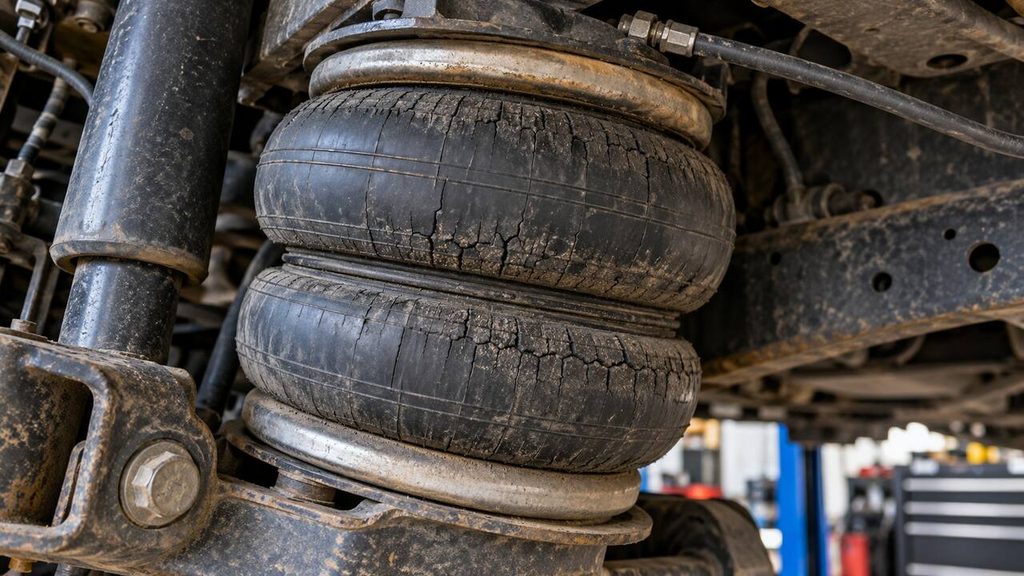
Air springs flex whenever ride height or wheel position changes. Over time, rubber can harden, develop surface checking or crack near folds and rolling surfaces. Mileage matters, but a low-mileage older vehicle can still develop age-related leaks.
Heat
Prolonged heat exposure accelerates rubber aging. An incorrectly routed exhaust or an air spring installed too close to a heat source can shorten its life significantly.
Road Salt, Dirt and Debris
Sand, gravel, mud and road salt can collect around the air spring and its piston or mounting surfaces. Abrasive material can damage the rubber as it repeatedly rolls or folds.
Rubbing or Poor Clearance
An air spring must not rub against brackets, air lines, bodywork or other suspension components. Misalignment, incorrect brackets or insufficient clearance can wear a hole through the bellows.
Incorrect Pressure
Aftermarket helper bags normally have application-specific minimum and maximum pressures. Too little pressure can allow bottoming or pinching; excessive pressure can overextend the spring or create an unnecessarily harsh ride. Follow the instructions for the exact kit rather than using a generic pressure.
Overloading
Air helper springs can level a compatible vehicle under load, but they do not strengthen its frame, brakes, axles, bearings or tires. Exceeding the manufacturer’s load rating can damage the vehicle and the air springs.
Air Leaks Elsewhere in the System
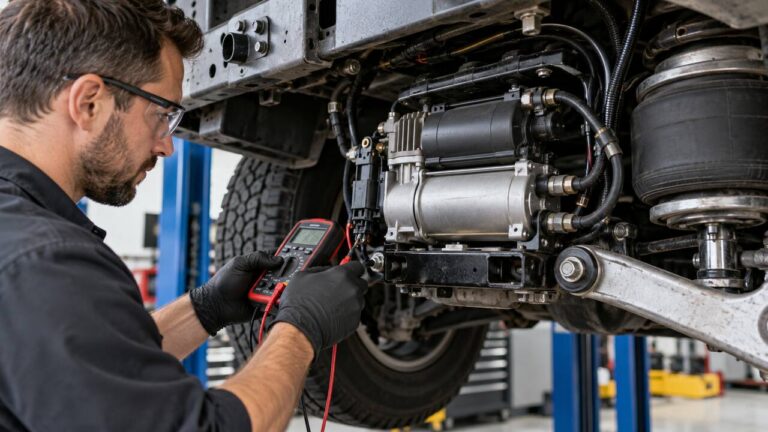
A leaking line, fitting or valve block may not initially damage the rubber bag, but it can make the compressor run excessively. Diagnosing the complete system is important because replacing the compressor without repairing the original leak can lead to another failure.
Signs an Air Suspension Bag Is Failing
A failing air spring often gives warning signs before it loses enough pressure to leave the vehicle sitting noticeably low. Some symptoms appear while driving, while others become easier to spot after the vehicle has been parked for several hours:
- One corner sits low: A leaking air spring or connection may allow that corner to sink.
- The vehicle drops overnight: A slow leak often becomes most visible after several hours parked.
- The compressor runs frequently: It may be replacing air lost through a spring, line, fitting or valve.
- The vehicle takes longer to rise: The system may have a leak, weak compressor or control fault.
- Suspension warning: Height sensors or the control module may detect that the commanded height cannot be reached.
- Visible cracks or abrasion: Dry rot, exposed reinforcement, rubbing or deformation requires professional assessment.
- Hissing: Escaping air may be audible near a spring, fitting or line.
- Uneven or harsh ride: Incorrect ride height can reduce available suspension travel.
These symptoms do not prove that the bag itself has failed. A valve block, air line, fitting, compressor, relay, height sensor or electrical fault can produce similar behavior. See our guides to finding an air suspension leak and recognizing a failing air suspension compressor.
How to Check for an Air Suspension Leak
Begin with the procedure in the vehicle or kit manufacturer’s service information. Air suspension can move automatically even when the vehicle is parked, so disable the system or select the specified service mode before working near it.
- Park on level ground and note the height at each corner.
- Follow the manufacturer’s procedure to prevent automatic height adjustment.
- Inspect accessible air springs, lines and fittings for cracks, rubbing or damage.
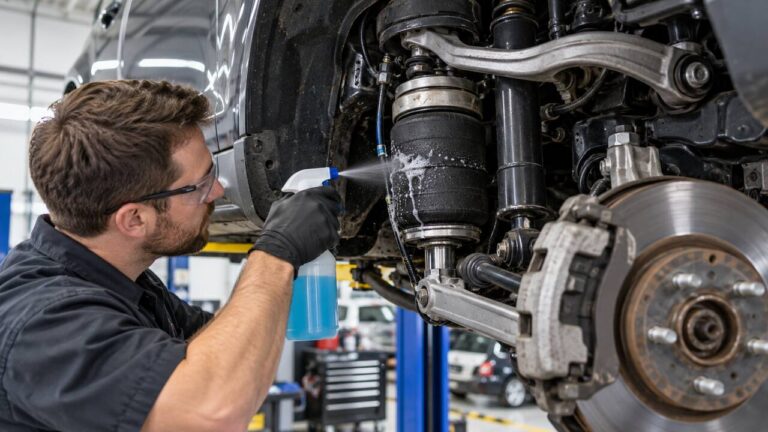
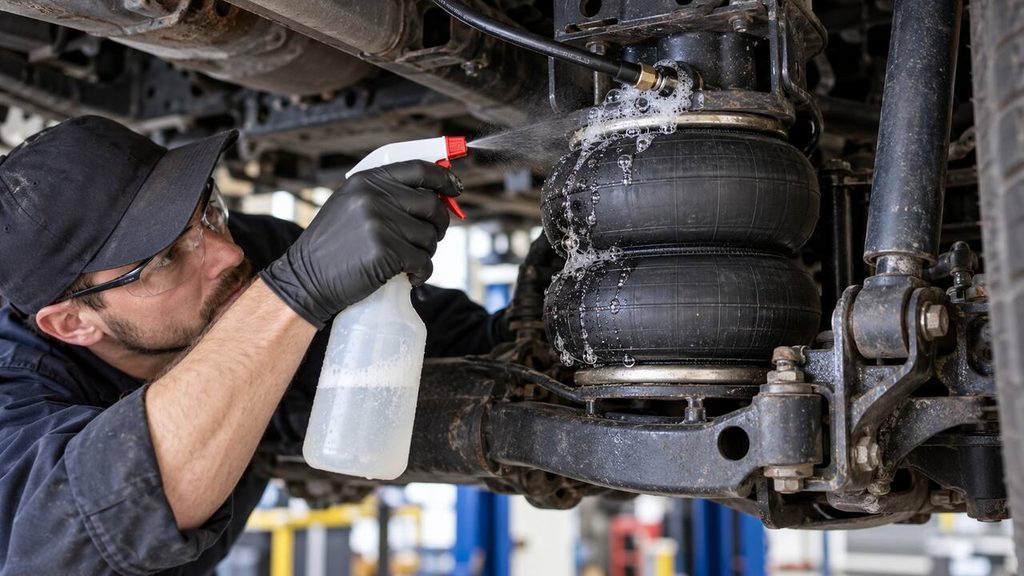
- Where the manufacturer permits it, apply a suitable soap-and-water solution to suspected connections and look for growing bubbles.
- Compare ride height again after the recommended period.
- Use a diagnostic scan tool when the system has stored suspension faults or cannot reach the requested height.
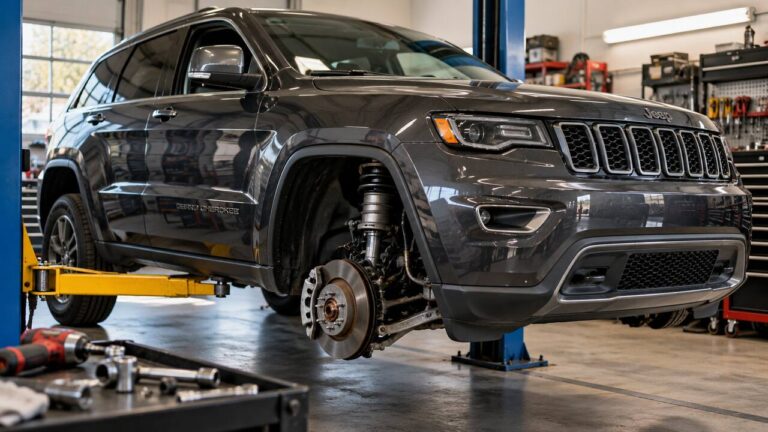
Do not crawl under a vehicle supported only by air suspension or a jack. Use correctly rated mechanical supports at the manufacturer’s specified lifting points. Never disconnect a pressurized air spring without the proper depressurization procedure.
Should Air Suspension Bags Be Replaced in Pairs?
Not every manufacturer requires pair replacement, and a single failed air spring can often be replaced separately. However, replacing both sides of the same axle may be sensible when:
- Both springs are the same age and mileage.
- The remaining spring shows cracking, abrasion or slow leakage.
- Labor overlaps substantially.
- The manufacturer or component supplier recommends axle-pair replacement.
Ask the repairer to show why the second spring is being recommended. Do not replace unrelated components solely because one bag has failed without diagnosis.
Can You Drive With a Leaking Air Suspension Bag?
Do not continue driving normally if the vehicle is extremely low, a tire can contact the body, handling is unstable or a red warning instructs you to stop. Driving at the wrong height can damage the tire, air spring, damper and other suspension components.
A small leak can also make the compressor run repeatedly until it overheats or wears out. If the vehicle’s condition is uncertain, transport it on a flatbed rather than attempting a long journey.
How to Extend Air Spring Life
You cannot stop rubber from aging, but regular inspection and prompt leak repairs can help prevent avoidable damage. The following habits are especially useful for keeping air springs and the rest of the system in good condition:
- Repair leaks before the compressor begins running excessively.
- Remove accumulated dirt, salt and debris using the manufacturer’s approved cleaning method.
- Check that air lines and bags do not rub against surrounding parts.
- Maintain the specified ride height and pressure for the exact system.
- Do not exceed the vehicle manufacturer’s payload or axle ratings.
- Use jacking or service mode before lifting the vehicle when required.
- Inspect the system after a hard impact, off-road use or visible suspension damage.
Firestone’s official Ride-Rite FAQ confirms that heat, environmental conditions and how the vehicle is used all affect air spring life.
Replacement Air Springs vs. Load-Support Kits
Before buying a part, identify whether the vehicle has factory air suspension or needs an aftermarket helper spring. These products are not interchangeable.
Firestone Ride-Rite Helper Springs
Firestone Ride-Rite kits are vehicle-specific helper springs for compatible trucks, vans, SUVs and motorhomes. They are intended to reduce rear sag and improve stability under permitted loads; they are not universal replacements for a luxury vehicle’s factory air strut.

Air Lift 1000 Helper Springs
Air Lift 1000 kits install inside the existing coil springs on specified vehicles. Fitment, pressure limits and load-leveling capacity vary by part number, so confirm the year, make, model and suspension before ordering.

Fitment warning: Never order an air spring based only on appearance or dimensions. Verify the exact application using the vehicle VIN, manufacturer catalog or kit part number. A wrong spring can have incompatible travel, pressure, mounting or load characteristics.
Frequently Asked Questions
How many years do air suspension bags last?
Many last several years, but there is no universal age limit. Firestone says four or five years is not unusual for its Ride-Rite helper springs, while factory and commercial applications can have very different service lives.
Can air suspension bags last 100,000 miles?
Yes, some factory air springs last beyond 100,000 miles. Others leak earlier because of age, climate, abrasion, heat or system faults. Mileage alone cannot confirm their condition.
Should air bags be replaced at a fixed mileage?
Usually not unless the vehicle or component manufacturer specifies an interval. Inspect them and respond to cracking, leaks, sagging, warnings or abnormal compressor operation.
Why does an air suspension bag leak only when parked?
A crack may open at a particular fold or ride height, or a valve may allow air to escape after the system stops correcting height. Measuring each corner after several hours can help identify the pattern.
Is air suspension reliable for daily driving?
It can be reliable when properly designed and maintained, but it has more potential failure points than a conventional coil-spring system. See our complete guide to whether air suspension is good for daily driving.
How much does air suspension replacement cost?
Cost varies widely by vehicle and whether the failed part is a separate air spring, complete air strut, compressor, valve block or line. Our air suspension replacement cost guide explains the main variables.
When to Inspect or Replace Air Suspension Bags
There is no single mileage at which every air suspension bag should be replaced. The decision should depend on visible wear, leaks, ride-height problems and the condition of the complete air suspension system. Keep these points in mind when deciding whether inspection or replacement is needed:
- There is no guaranteed mileage or age for every air suspension bag.
- 80,000–100,000 miles is a broad planning reference, not a replacement rule.
- Overnight sagging and frequent compressor operation are important warning signs.
- Heat, rubbing, road debris, incorrect pressure and overloading shorten air spring life.
- Diagnose the complete system before replacing the bag or compressor.
- Always buy a vehicle-specific replacement or helper kit with verified fitment.