Wheel Alignment Cost: 2-Wheel vs. 4-Wheel Prices
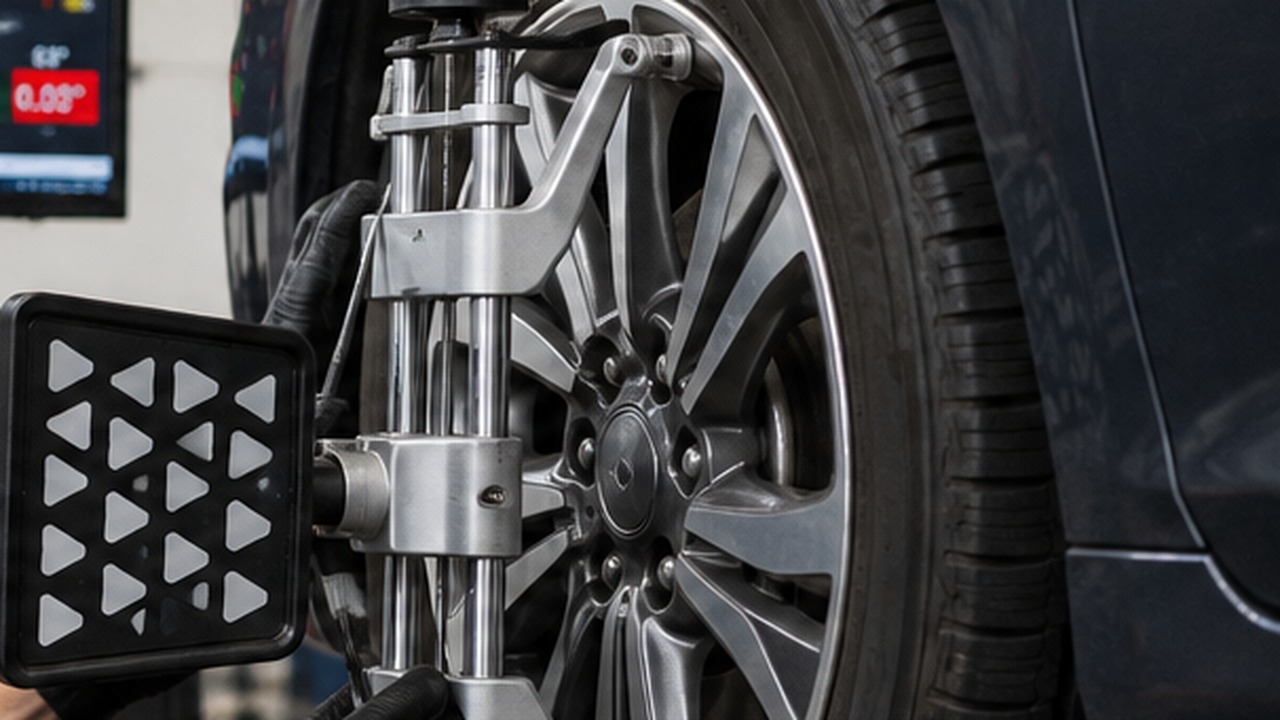
A wheel alignment typically costs about $75 to $120 for a two-wheel or front-end alignment and about $100 to $200 for a four-wheel alignment in the United States. Some shops charge less through promotions, while dealerships, modified vehicles and difficult adjustments can push the bill above $200.
That explains why you can see one shop advertise a $79 alignment while another quotes $220 for what sounds like the same service. Before comparing the numbers, find out whether each price covers two wheels or all four, what adjustments your vehicle actually allows and whether additional work is needed to bring the suspension back into specification.
Wheel Alignment Cost: 2-Wheel vs. 4-Wheel
| Alignment Service | Useful U.S. Planning Range |
|---|---|
| 2-wheel / front-end alignment | About $75–$120 |
| 4-wheel alignment | About $100–$200 |
| Dealer or premium vehicle alignment | About $150–$275+ |
| Modified, lifted or performance alignment | About $150–$300+ |
| Alignment check only | May be free or discounted at some shops |
| Parts needed to make alignment possible | Extra |
These are service-price ranges, not guaranteed quotes. A standard alignment normally requires little or no replacement parts, so most of the charge is for equipment time and technician labor.
Why Some National Estimates Are Much Higher
You may see national alignment averages approaching $200 to $275 even though local tire shops advertise prices around $80 to $150.
Those numbers are not necessarily describing exactly the same mix of vehicles and shops. National repair estimators include areas with higher labor rates, expensive vehicles and dealer-level pricing, while an advertised tire-shop special may represent the lowest-priced standard alignment the shop offers.
A quote can also increase when the vehicle cannot simply be placed on the rack and adjusted normally. Seized hardware, damaged suspension parts, aftermarket adjustment kits or modified ride height can turn a routine service into a more involved repair.
What Does a Wheel Alignment Actually Adjust?
A wheel alignment measures how the wheels sit and point relative to the vehicle and to each other. The three alignment terms you will see most often are toe, camber and caster.
Toe
Viewed from above, toe describes whether the fronts of the tires point slightly toward or away from each other. Incorrect toe can scrub tires surprisingly quickly and is one of the most commonly adjustable alignment angles.
Camber
Camber describes the inward or outward tilt of a wheel when viewed from the front of the vehicle. Some suspensions provide factory camber adjustment; others do not.
Caster
Caster relates to the forward or rearward inclination of the steering axis. It influences straight-line stability and steering return. Again, not every vehicle provides a normal factory caster adjustment.
An alignment machine can measure an angle even if your vehicle does not provide a built-in way to adjust it. That distinction becomes important when reading the alignment printout.
2-Wheel Alignment and Front-End Alignment Usually Mean the Same Thing
A two-wheel alignment normally refers to adjusting the front wheels. That is why you will also see the service advertised as a front-end alignment or front wheel alignment.
This can be appropriate on vehicles where the rear axle has no routine alignment adjustments and is already correctly positioned.
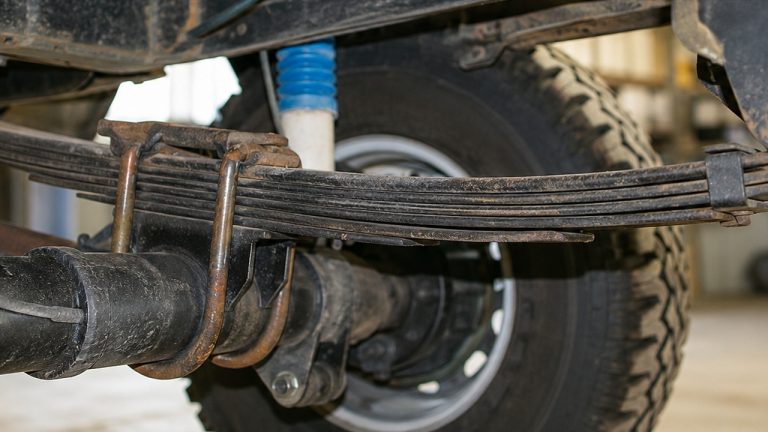
Traditional pickups and SUVs with a solid rear axle are common examples. The rear wheels can still be measured to establish the vehicle’s thrust direction, but there may be nothing at the rear to adjust during an ordinary alignment.
What You Get With a 4-Wheel Alignment
A four-wheel alignment uses measurements from all four wheels and, on vehicles with adjustable rear suspension geometry, corrects the rear before setting the front relative to it.
This matters on many modern cars and crossovers with independent rear suspension. Rear toe or camber can move out of specification just like the front.
Even when only some angles are adjustable, measuring all four wheels gives the technician a much better picture of whether the vehicle is tracking straight.
Does AWD or 4WD Automatically Mean You Need a 4-Wheel Alignment?
No. The phrase “four-wheel alignment” refers to alignment geometry, not to whether engine power reaches four wheels.
An AWD car with independent rear suspension commonly has rear alignment considerations, but an older 4WD truck may use solid axles with limited or no routine adjustments at one end.
The suspension design and manufacturer alignment procedure determine what needs to be measured and adjusted—not the AWD or 4WD badge on the tailgate.
The Alignment Printout Is More Useful Than the Service Name
A useful alignment report shows the measured values before and after adjustment.
You will normally see individual readings for each wheel and a specified acceptable range. Colors are often used to make the report easier to read, although the exact layout depends on the alignment equipment.
The printout can answer several useful questions:
- Which angles were actually out of specification?
- Which values changed after adjustment?
- Is an angle still outside specification because it is not adjustable?
- Does the rear axle or suspension point in the correct direction?
- Is the steering wheel centered after the work?
If a value remains well outside specification after an alignment, the next question is why. Another alignment attempt cannot straighten a bent component or restore a collapsed bushing.
An Alignment Does Not Repair Worn Suspension Parts
This is one of the easiest ways for a cheap alignment to become a more expensive visit.
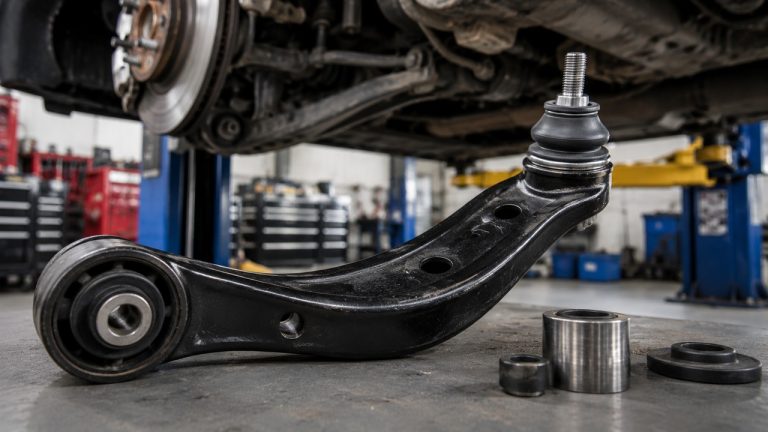
The technician may discover looseness in a tie rod, ball joint, control arm bushing or another component before making adjustments. If the wheel can move because a joint is worn, aligning the vehicle before repairing that play would produce an unreliable result.
For example, if a worn tie rod is responsible for unstable toe, the repair itself has to come first. Our tie rod replacement cost guide covers that situation separately.
Why Seized Adjusters Can Increase the Price
Alignment hardware lives underneath the vehicle and can spend years exposed to water, salt and road debris.
Toe sleeves, eccentric bolts and other adjusters can corrode until they no longer move normally. A technician may need additional time to free the hardware, or replacement parts may be necessary before the angle can be corrected.
This is especially common on older vehicles in areas that use road salt. A $100 alignment service can therefore turn into a suspension-hardware repair that costs substantially more.
Some Vehicles Need Extra Parts to Make Camber or Caster Adjustable
Not every factory suspension includes an adjustment for every angle.
If a vehicle is outside specification because of ride-height changes, accident damage or normal manufacturing limitations, a shop may recommend cam bolts, adjustable control arms, shims or another correction method.
Those parts are not normally included in the advertised wheel alignment cost.
Before approving an adjustment kit, make sure the shop has identified why the vehicle is outside specification. A bent suspension component should not simply be adjusted around as though nothing is wrong.
Lifted and Lowered Vehicles Can Cost More to Align
Changing ride height changes suspension geometry.
A modest vehicle-specific lift or lowering setup may still align normally if the suspension retains sufficient adjustment range. Larger changes can require aftermarket components to recover acceptable caster, camber or toe.
A modified truck may also require more technician time because the target alignment settings are not necessarily as simple as returning every value to the center of an OEM specification designed around stock ride height.
That is why specialty alignment shops often charge more for lifted, lowered or performance-oriented vehicles.
Performance Alignment Can Intentionally Use Different Settings
Not every alignment aims for the same outcome.
A normal street alignment prioritizes tire life, stability and manufacturer specifications. A track-oriented car may intentionally use more negative camber or different toe settings to improve cornering behavior.
Performance alignment can therefore cost more because the technician is targeting customer-specific measurements rather than simply bringing a standard road car into the factory range.
Wheel Alignment vs. Wheel Balancing
These are completely different services.
Alignment concerns the direction and angles of the wheels relative to the vehicle.
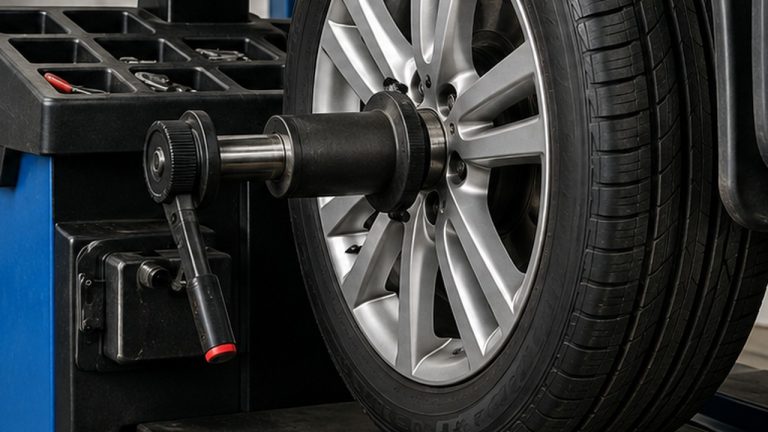
Wheel balancing corrects uneven weight distribution within a tire-and-wheel assembly by adding small balancing weights.
A vehicle that pulls or wears tires unevenly may need alignment. A steering wheel that vibrates mainly at highway speed can point toward wheel/tire imbalance or another rotating-component problem instead.
Paying for balancing does not correct toe or camber, and paying for an alignment does not balance the tires.
Does Getting New Tires Mean You Need an Alignment?
New tires do not physically change suspension alignment by themselves.
But installing expensive new tires is a sensible time to check alignment if the old set showed uneven wear, the vehicle pulls, the steering wheel sits off-center or the alignment history is unknown.
Correcting an alignment problem after the new tires have already developed an uneven wear pattern is much less satisfying than catching it first.
Uneven Tire Wear Does Not Always Mean the Alignment Is Wrong
Alignment is a common cause of abnormal tire wear, but it is not the only one.
Tire pressure, worn shocks or struts, loose steering components, wheel bearing problems and suspension wear can also change how a tire contacts the road.
Our suspension and uneven tire wear guide covers those other causes in more detail.
When an Alignment Is Needed After Suspension or Steering Work
Some repairs disturb components that directly control wheel position. Others do not.
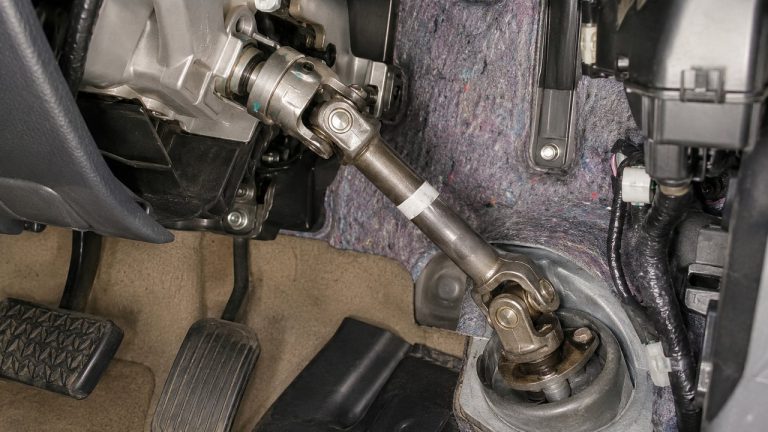
Tie rod replacement is an obvious example because changing tie rod length changes toe. Strut, control arm, ball joint and steering rack work can also justify alignment depending on the suspension design and what was disturbed.
On the other hand, replacing a power steering pump or hydraulic hose normally does not change alignment geometry.
If you are deciding whether a specific repair should be followed by an alignment, use our separate guide to alignment after replacing suspension parts. That article covers the “do I need one?” question; this page focuses on what the alignment itself costs.
Strut Replacement and Alignment
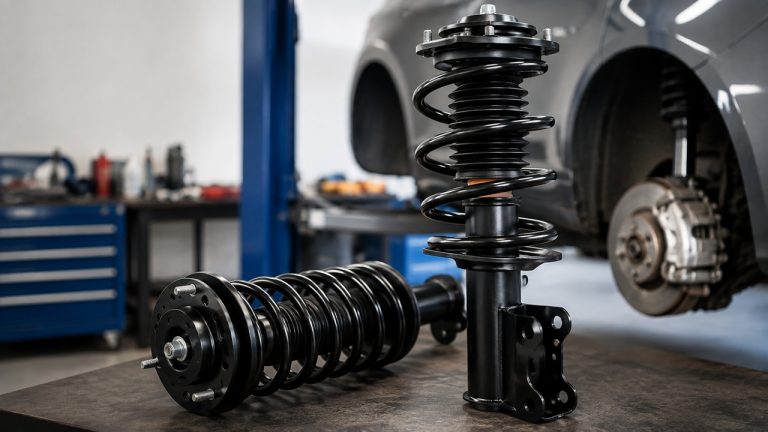
Strut work deserves particular attention because some front suspension designs use the strut as part of the wheel-locating structure.
If the strut-to-knuckle connection can affect camber or other geometry, an alignment after replacement helps verify that the new components are positioned correctly.
For the cost of the mechanical repair itself, see our strut replacement cost guide.
Does ADAS Calibration Come With a Wheel Alignment?
Not automatically.
Modern vehicles may use cameras, radar and steering-angle information for systems such as lane keeping, adaptive cruise control and automatic emergency braking.
Depending on the vehicle and the work performed, a manufacturer procedure may require calibration or initialization after certain repairs or alignment changes. That service can require separate equipment and additional labor.
Do not assume every ordinary alignment requires hundreds of dollars of ADAS calibration, but do not assume calibration is unnecessary on every modern vehicle either. The correct procedure is vehicle specific.
How Long Does a Wheel Alignment Take?
A routine alignment commonly takes around 30 to 60 minutes once the vehicle is on the alignment rack.
The appointment can take longer if the shop first has to inspect the suspension, free seized hardware, install adjustment parts or correct a steering-wheel centering problem.
Performance vehicles and modified suspensions can also require more measuring and adjustment cycles than a straightforward factory-spec alignment.
Can You Check Alignment at Home?
You can perform rough toe and ride-height checks at home, and experienced enthusiasts sometimes use strings, plates or specialized tools for motorsport setup.
That is not equivalent to placing the vehicle on a calibrated alignment rack that measures all four wheels relative to each other and to the vehicle’s geometric centerline.
For ordinary road use, especially after steering or suspension repairs, a professional alignment provides much more useful information than judging the wheels by eye.
Is a Lifetime Alignment Plan Worth It?
It can be, but only if the terms fit how you use the vehicle.
A driver who keeps the same vehicle for many years, drives on poor roads or regularly changes suspension components may recover the extra upfront cost quickly.
Before buying one, check whether the plan:
- belongs to the vehicle or to the owner
- has a minimum time or mileage between alignments
- covers modified vehicles
- includes all normal adjustments
- excludes additional parts and seized hardware
A lifetime plan does not mean a shop will replace worn suspension parts for free every time the alignment goes out.
Frequently Asked Questions
How much does a wheel alignment cost?
A two-wheel or front-end alignment commonly costs about $75 to $120, while a four-wheel alignment typically costs about $100 to $200. Dealer, luxury, modified and difficult vehicles can cost more.
How much does a front wheel alignment cost?
A front wheel or two-wheel alignment commonly costs around $75 to $120. Lower promotional prices are available in some areas, while higher labor-rate shops can exceed that range.
How much does a 4-wheel alignment cost?
Four-wheel alignment commonly costs about $100 to $200. Premium vehicles, difficult adjustments and dealer labor rates can push the price higher.
Is a 4-wheel alignment better than a 2-wheel alignment?
Not automatically. The correct service depends on the vehicle’s suspension design and which angles are adjustable. A vehicle with adjustable rear geometry benefits from measuring and correcting the rear, while a solid rear axle may have no routine rear adjustment.
How long does an alignment take?
A routine alignment usually takes about 30 to 60 minutes on the rack. Worn parts, seized adjusters, modified suspension or additional calibration work can increase the time.
Does an alignment include balancing?
No. Alignment adjusts wheel geometry, while balancing corrects weight distribution within each tire-and-wheel assembly. They are separate services.
Do I need an alignment after getting new tires?
New tires do not change alignment by themselves, but checking alignment is sensible if the old tires wore unevenly, the steering wheel is off-center, the vehicle pulls or the alignment history is unknown.
Why did my alignment quote become more expensive?
Common reasons include seized adjustment hardware, worn steering or suspension parts, a need for aftermarket adjustment components, modified ride height or a vehicle that requires additional calibration procedures.
Compare the Result, Not Just the Advertised Price
A $79 alignment can be perfectly adequate for a straightforward vehicle, while a $200 quote can also be reasonable when all four wheels require adjustment or the vehicle demands more technician time. The service name alone does not tell you enough.
The useful comparison is what was measured, what could actually be adjusted and whether the final readings are within the appropriate specification. A clear before-and-after report tells you much more than choosing a shop solely because its sign advertised the lowest wheel alignment cost.