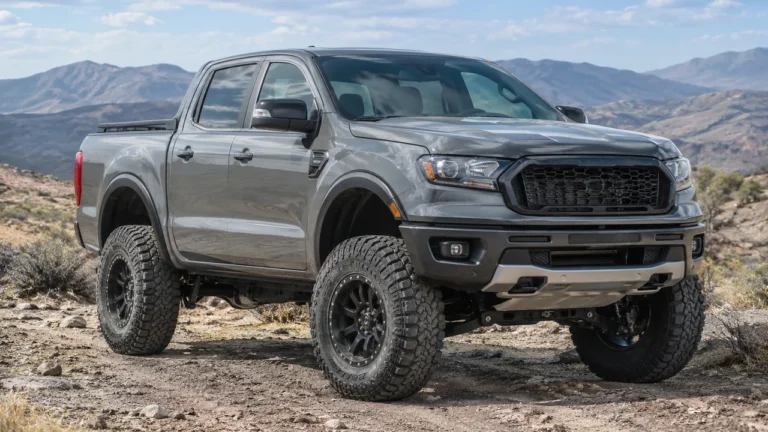
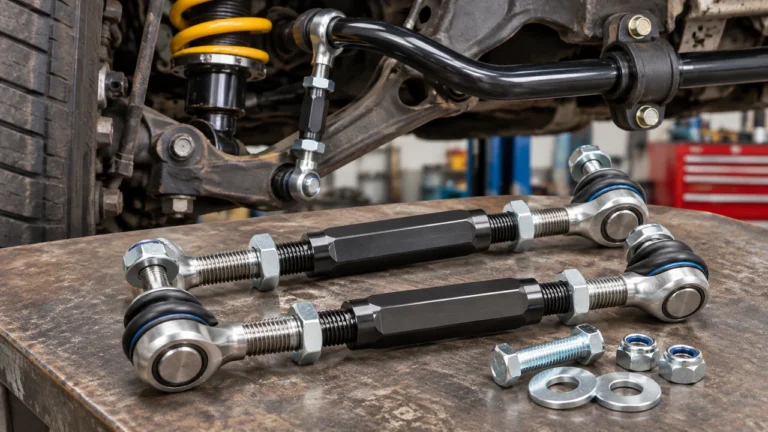
GMC Sierra 2500HD Lift Kit: Best Heights, Tires & Fitment by Year
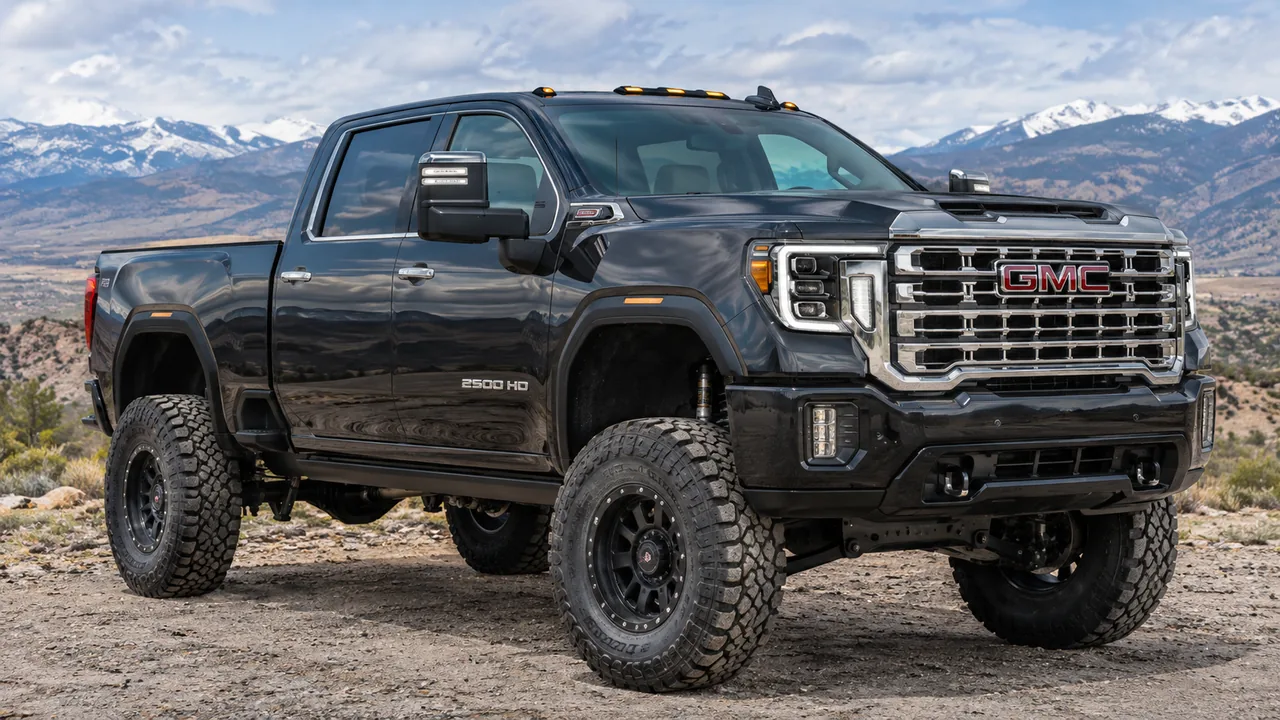
A 4-inch GMC Sierra 2500HD lift kit is a particularly useful size to investigate if you want a noticeably taller three-quarter-ton truck without committing to a 6- or 7-inch build. But four inches on a 2005 Duramax, a 2015 Denali and a 2024 AT4X can mean three very different tire packages. For a Sierra that spends most weekends pulling a trailer, a 1.5–2-inch front level or the original suspension may be the better purchase.
The important distinction is the starting truck. A factory AT4X already has 35-inch tires and specialized dampers; a conventional 2500HD does not need the same lift to reach the same stance. Here is how to narrow the choices by year, suspension equipment and the wheels you intend to keep.
GMC Sierra 2500HD Lift Kit: Where to Start
The following recommendations are shopping targets, not a promise that a particular tire will clear. Lift height refers to the kit’s advertised front increase unless indicated otherwise. Rear height often differs, and factory-raised models need their own reference point.
| Your Sierra HD | First option to compare | Decision that matters most |
|---|---|---|
| Work truck or frequent tow vehicle | Stock height or 1.5–2 in level | Loaded rake and front suspension travel |
| Standard-height daily driver | 2–3 in matched suspension package | Shock length, upper arm clearance and tire fitment |
| Standard-height truck built around 35s or 37s | 4–4.5 in geometry-corrected kit | Model year, wheel width and body clearance |
| Dedicated tall build | 5–7 in complete system | Steering, front differential, rear springs and wheel approval |
| 2024–2026 AT4X or AT4X AEV | Factory suspension or trim-specific kit | DSSV shocks, special control arms and additional lift |
| Denali or Denali Ultimate | Kit explicitly listing the HD application | Factory equipment, overload springs and wheels |
Do not order a half-ton part because the title says Sierra. The HD platform uses front torsion bars and a rear leaf-sprung axle in the applications discussed here. Our Sierra 1500 lift kit guide covers the lighter truck separately, including its different factory off-road and electronic-damping packages.
What a 4-Inch Lift Really Buys You
Four inches is an attractive middle ground, but it is not a universal tire-clearance number. A proper comparison includes the front suspension architecture, the rear lift supplied with the package and the actual wheel dimensions the maker approves. Look at the three generations before deciding that you need exactly four inches.
2001–2010: A 4.5-Inch Kit Does Not Automatically Fit 35s
For an older Sierra, a complete kit can be easier to assess than an ambitious torsion-key adjustment. The BDS 4.5-inch system for 2001–2010 single-rear-wheel 4WD trucks provides a useful reality check. Its published tire recommendations are 33×12.50 on selected 17-, 18- or 20-inch wheels, with possible trimming. The design uses relocated torsion-bar mounts and front differential brackets; it is more than a pair of taller keys.
A used 2005 or 2006 Sierra 2500HD may have aftermarket keys, replacement steering parts or a different front bumper already installed. Have the installer establish what is on the truck before using a new kit’s fitment chart. If the desired tire is a 35, look for a system that actually lists it instead of extrapolating from a newer HD.
2011–2019: A Different 4.5-Inch Application
On the redesigned HD chassis, the BDS 2011–2019 4.5-inch system advertises room for tires up to 35 inches in its approved configurations. It uses a no-torsion-drop arrangement. That is a different answer from the same manufacturer’s older application, even though the nominal lift height is identical.
For a 2015 Sierra 2500HD lift kit, or a 2012 Duramax build, use the year-specific steering and suspension parts and make sure the desired wheels match the later hubs. Do not buy a used wheel package from a 2005 truck simply because both have eight lugs. The wheel section below explains the bolt-pattern break.
2020–2025: Four Inches at the Front, Two at the Rear
Cognito’s 110-P0890 standard HD package is an example of a four-inch front lift paired with a two-inch rear increase, FOX 2.0 shocks and a no-torsion-drop front design. The published tire specification reaches 37×12.50 with a nine-inch-wide wheel and 5.5 inches of backspacing. That does not mean every wheel with a 37-inch tire will fit or that trimming is unnecessary.
The rear height is an important part of the purchase. Someone expecting the entire truck to rise four inches could be disappointed when the intended result is a reduction in factory rake. For a fifth-wheel owner, the resulting bed height matters as much as the appearance. Confirm current model-year and trim approval, particularly for 2026 trucks and later.
Two Four-Inch Kits From the Same Manufacturer
McGaughy’s makes the equipment distinction unusually clear. The conventional 2020–2026 package, part 52452, supplies replacement M84 shocks and excludes factory Multimatic DSSV-equipped trucks. The 52454 AT4X/ZR2 system instead works with the original DSSV dampers and explicitly includes the AEV configuration. The latter is listed for 2024–2026.
This is why a search for a 4 inch lift kit for a GMC Sierra 2500HD should not end with a height filter. The two packages have different shock arrangements and application restrictions. Ask for the front and rear changes measured from your truck’s original ride height, not just a photograph of another lifted AT4X.
AT4, AT4X AEV and Denali: Read the Factory Equipment First
These names are easy to confuse when browsing a general GMC catalog. A lift that fits an AT4 with conventional shocks can be wrong for the more specialized AT4X, while a Denali HD is not simply a heavier version of the electronically damped Sierra 1500 Denali.
Sierra 2500HD AT4 and X31 Off-Road Package
The HD AT4 uses an off-road-oriented suspension specification. In the 2025 lineup, for example, GMC describes its package with Rancho twin-tube shocks and underbody protection. X31 equipment is another factory option to identify. Do not assign the Sierra 1500 AT4’s two-inch factory lift to an HD just because the badges are similar.
A mild lift may be available for the conventional HD suspension, but check whether the kit retains or replaces the factory shocks, whether any skid plate needs to be removed or repositioned and whether the original wheel can be reused. If a catalog lists the AT4 but not the AT4X, treat that as a meaningful boundary rather than an omission.
2024–2026 AT4X: Keep the Multimatic Dampers in the Plan
The 2500HD AT4X arrived for the 2024 model year with an advertised factory suspension increase of 1.5 inches, Multimatic DSSV spool-valve dampers and 35-inch tires. It also has different front suspension hardware. If the only reason for a lift is to get 35s, the factory truck already meets that goal.
An additional lift requires an AT4X-specific design. Cognito’s 110-P1313 AT4X/ZR2 package adds a nominal 2.5 inches at the front and half an inch at the rear while retaining the DSSV shocks. The system uses revised mounting geometry and shock brackets rather than simply increasing torsion-bar adjustment. Cognito also identifies the AEV Salta wheel as compatible with selected 37×12.50 tires; other factory-wheel configurations need their own clearance checks.
An AT4X that sits taller is not necessarily an AT4X that works better. Ask the shop to check compression and extension travel, damper operating range and front axle angles. The suspension should move through its intended range without the shock becoming the unintended travel stop.
AEV Edition: Bumper and Wheel Clearance Are Part of the Fitment
The AEV package combines off-road-specific bumpers, protection and 18-inch Salta wheels. Those items can change the space around a tire, so an owner’s experience with a non-AEV AT4X is not a complete fitment specification. The wheel barrel must also clear the steering and suspension components used by the chosen lift.
Preserving the original AEV wheels may be preferable to buying a wide aftermarket wheel just to achieve a particular look. Ask the lift manufacturer for a combination that includes the actual wheel and tire model. A statement that a 37-inch tire fits an AEV wheel should not be read as permission to ignore trimming, tire width or interference under articulation.
Denali and Denali Ultimate: Luxury Trim Is Not a Suspension Part Number
The Denali Ultimate joined the HD lineup for 2024. For either Denali trim, identify the equipment from the VIN and the actual truck. Do not use the half-ton Denali’s MagneRide or Adaptive Ride Control application as a substitute for the HD parts catalog. Conversely, if a lift maker excludes a Denali or a specific factory damper package, obtain written clarification rather than assuming the exclusion is a catalog error.
Many owners want to retain the original 20-inch wheels, comfortable ride and trailering features. Start with a kit that expressly approves those wheels and the truck’s rear spring setup. Verify any required headlamp aiming and driver-assistance calibration with the installer. A suspension modification can affect camera and sensor geometry even when it produces no immediate warning on the instrument panel.
Sierra 2500HD Lift Kit Fitment by Model Year
The major breaks in aftermarket HD catalogs are 2001–2010, 2011–2019 and 2020 onward. Body updates inside those ranges still matter, especially for tire-to-fender clearance. Use this map to identify which catalog to start with; it is not a part-number interchange chart.
| Model year | Catalog family | Common purchasing mistake |
|---|---|---|
| 2001–2006 | First-generation HD | Buying non-HD Sierra 2500 or 1500HD parts by badge alone |
| 2007 Classic | Carryover HD body | Confusing Classic with the redesigned 2007 truck |
| 2007 new body–2010 | Later body, earlier HD chassis group | Assuming bumper and tire clearance match Classic |
| 2011–2014 | Redesigned HD chassis | Reusing pre-2011 eight-lug wheels |
| 2015–2019 | Updated HD body | Ignoring trim-specific exclusions and existing equipment |
| 2020–2023 | Current-generation HD applications | Overlooking rear overload springs or gas/diesel differences |
| 2024–2026 | Refreshed HD; AT4X added | Ordering a conventional kit for an AT4X or AEV |
| 2027 | Check new model-year listings | Extending earlier approval without confirmation |
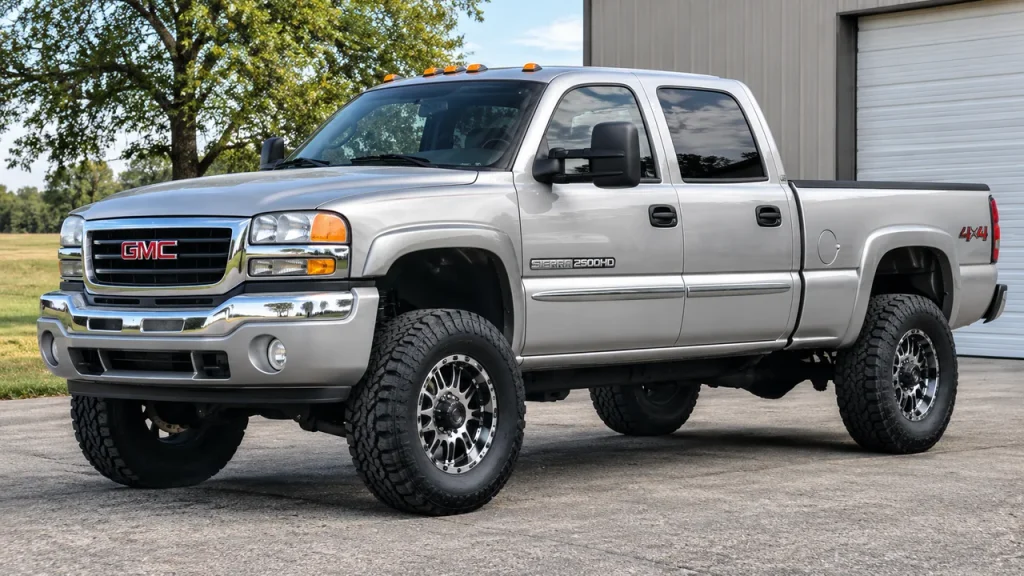
2001–2007 Classic: Identify the Truck Before the Engine
A 2002, 2003 or 2004 GMC Sierra 2500HD lift kit listing may group several GM heavy-duty models. Not every Sierra 2500 without the HD designation belongs in the same application. Check the VIN, drivetrain, axle and manufacturer fitment chart. The Duramax engine name alone is not enough to identify the suspension.
Age is particularly relevant here. Loose pitman or idler arms, worn ball joints, damaged CV boots and corroded torsion-bar mounting points can undermine the result of an otherwise suitable lift. A steering inspection before ordering parts is usually more useful than planning a bigger tire around worn components.
2007 New Body–2010: Do Not Shop by a Body Photo Alone
The 2008 Sierra 2500HD and earlier-body 2007 Classic do not have the same exterior openings even where a manufacturer groups their mechanical lift components. Check the individual application and wheel/tire notes. A front bumper modification on a previous owner’s truck is another reason a forum photograph cannot settle clearance on yours.
2011–2019: Hubs, Steering Parts and the Wheel Package
The redesigned 2011 HD chassis brings a significant wheel compatibility change. Most 2001–2010 HD pickups use 8×165.1 mm (8×6.5 inches); the 2011-and-newer applications use 8×180 mm. A 2015 Sierra 2500HD lift kit does not make older wheels fit those hubs. Verify wheel center bore, mounting hardware, brake clearance and load rating as well as the bolt pattern.
The 2015 body update is also worth remembering if you are comparing tire clearance photos across the full 2011–2019 chassis group. Read the actual fender and bumper requirements for the truck in front of you.
2020–2026: Rear Spring Selection and Factory Off-Road Models
The 2020 redesign brought new application families; the 2024 refresh added the AT4X and Denali Ultimate. A product advertised for a broad 2020–2026 range may offer different rear hardware selections and still exclude the AT4X. Select by the manufacturer’s actual part number, not a retailer’s generic vehicle filter.
2027 Sierra HD: Wait for Explicit Kit Approval
GMC’s Sierra HD AT4 and AT4X specifications identify the 2027 HD AT4X with DSSV dampers, 35-inch tires and a factory 1.5-inch suspension lift. Those familiar specifications are not proof that a 2024–2026 aftermarket system transfers. Obtain explicit 2027 model-year approval before ordering; pay particular attention to suspension mounting details and any new driver-assistance equipment.
35s, 37s and Factory Wheels: What Actually Fits?
A useful tire chart needs a kit, a wheel and a body configuration. The examples below are manufacturer-listed combinations for the specific applications already discussed. They are not road-test results or guarantees of clearance at full steering lock and compression.
| Application | Published tire target | Wheel specification or condition |
|---|---|---|
| BDS 4.5 in, 2001–2010 SRW 4WD | 33×12.50 | 17×9 or 18×9, 5.5 in backspacing; possible trimming |
| BDS 4.5 in, 2011–2019 | Up to 35 in | Use the kit’s wheel chart; do not reuse early HD wheels |
| Cognito 110-P0890, eligible conventional HD | 37×12.50 | 9 in wide, 5.5 in backspacing; trimming may apply |
| Cognito 110-P1313, eligible AT4X | 37×12.50 | 9 in wide, +18 mm offset; liner tie-back and trimming |
| BDS 6.5 in, eligible 2020–2026 4WD | 37×12.50 | 17×9 or 18×9, 4.625 in backspacing; possible trimming |
The last example refers to the BDS 6.5-inch no-torsion-drop system. It also lists a 38×13.50 tire on a 20×9 wheel with 6.18 inches of backspacing, but excludes the AT4X and ZR2. BDS says original 20-inch wheels can be refitted with up to a 35×12.50 tire on that system; factory 17- and 18-inch wheels cannot be refitted because of tie-rod clearance. Aftermarket wheels of those smaller diameters are a separate question.
Why a Zero-Offset Wheel Can Make a 37 Harder to Fit
For the standard Cognito four-inch kit, the manufacturer calls for relatively minor trimming with a 37×12.50 tire on a nine-inch wheel at +18 mm offset, and more extensive trimming if the same width wheel has zero offset. A ten-inch zero-offset wheel calls for still more body clearance work. The tire moves farther out and sweeps a larger area through the opening as the steering turns.
This is a particularly useful comparison when buying a Sierra 2500HD on 37s. A wider wheel can solve clearance at one suspension component while creating a new interference point near the bumper or the back of the fender. Use our wheel offset and backspacing guide to translate catalog dimensions. Confirm the exact tire’s measured diameter and section width rather than relying on the nominal label.
Can a 2500HD Run 35s Without a Full Lift?
On some later conventional HD applications, a modest level with the right wheel and tire can be enough for a selected 35-inch-class tire. The stock AT4X already uses nominal 35s. Earlier trucks can be more restrictive. A narrow metric tire and a wide flotation-size tire of similar diameter do not necessarily have the same clearance.
If maintaining useful steering range and original wheels is important, compare a narrower tire before increasing the lift height. A test fit needs to account for steering angle, tire deflection, suspension compression and load, not just the gap above a stationary tire.
Wheel Load Rating Matters on a Three-Quarter-Ton Truck
A wheel intended mainly for a lighter pickup may not have a sufficient load rating for an HD. Check the wheel and tire capacity for the vehicle’s axle loads and required inflation pressure. Make sure the wheel manufacturer approves the mounting hardware. Larger tires also change effective gearing and speedometer readings, and their mass can affect acceleration and braking.
For towing, compare the original and replacement tire specifications, not just the load-range letter. Retain sufficient capacity for actual axle loads and the truck’s requirements. Neither a taller lift nor a higher-rated tire increases the certified vehicle or axle ratings.
When a Level, a 3-Inch Kit or a Taller Lift Makes More Sense
The four-inch options above are not the only sensible choices. Decide how much of the vehicle’s original purpose you want to preserve before selecting a package. A daily work truck, a camping build and a wide-wheel show truck place different demands on the same chassis.
1.5–2 Inches: Keep the Load-Carrying Stance
For occasional gravel roads and regular trailer use, a small front correction may be enough. On a torsion-bar HD, raising the front resting position can reduce available downward wheel travel. A re-indexed key does not automatically restore it. Our torsion bar key guide covers the hardware and adjustment limitations in detail.
Ask the shop to measure available suspension travel and check alignment at the proposed height. Leave room for the rear springs to settle under normal tongue or pin weight. A nose-high truck when loaded is rarely a useful result of a leveling kit. Our leveling kit vs. lift kit guide explains when a front-only change is preferable to raising both ends.
3–3.5 Inches: Look Beyond the Upper Control Arms
A matched three-inch system can be appropriate where a mild level is insufficient. Compare how the kit addresses upper ball-joint articulation, damper length, bump stops and steering movement. Do not presume the presence of aftermarket upper control arms makes every torsion-key setting acceptable.
Some packages in this height range raise the rear slightly; others primarily change the front. Read the front and rear dimensions separately. If a 35-inch tire is the objective, buy the application that documents the desired wheel combination, not the one that happens to advertise the larger number.
5–7 Inches: Check the Torsion-Bar Crossmember and Driveline
A taller conventional HD suspension system often uses new steering knuckles and relocated front suspension pivots. A torsion-drop design lowers the key crossmember, whereas an NTD design keeps the torsion bars nearer their original vertical position through changes at the front mounting area. Neither label guarantees the lowest underbody obstacle clearance; the front differential and new crossmembers still occupy space.
Look for adequate clearance around the front driveshaft, brake hoses and steering linkage. Tall rear lift blocks can increase leverage on the spring assembly under acceleration. Discuss axle wrap and any compatible traction-bar system with the installer rather than stacking blocks or adding unrelated hardware.
If you are considering a shared GM kit, our Chevy Silverado 2500HD lift kit guide covers the shared chassis considerations and broader height tradeoffs. Use the GMC-specific trim and wheel approvals here to finish the selection.
The Equipment Questions That Change an HD Lift Kit Order
Two apparently identical Sierra HDs can have different spring packs, driveline layouts and front axle weight. The following checks are worth doing before comparing shock upgrades or final prices.
Rear Overload Springs and the Two-Piece Driveshaft
Inspect whether the rear leaf pack has a separate top-mounted overload spring. That is one of the order selections in modern BDS HD lift packages, and it changes rear fastening and spacer requirements. It is not something you can determine from the Denali or AT4 badge alone. Photograph the leaf pack and confirm the build information with the installer.
A long-wheelbase truck may also have a two-piece rear driveshaft with a carrier bearing. The BDS six-and-a-half-inch example requires a carrier-bearing relocation kit on those configurations. Include required driveline hardware in the estimate instead of treating it as an optional response to vibration after the installation.
6.6 Duramax Diesel vs. Gasoline V8
Engine weight and axle loading can affect the spring setting and damping specification. Older HD trucks also have other gasoline-engine applications. Confirm the actual powertrain, front axle rating and any front spring or camper package. Avoid choosing a diesel-calibrated conversion for a gasoline truck unless the manufacturer approves both.
The distinction matters particularly for systems that replace torsion bars with coilovers. A conventional torsion-bar lift and an engineered coilover conversion are different products; the latter needs the correct spring rate and mount design. Do not treat it as a bolt-on shock upgrade.
2WD and 4WD, Cab Length and Previous Modifications
Several HD lift families include both drive types, while others are restricted to 4WD. The absence of a driven front axle does not prove the steering knuckles or other front suspension hardware interchange. Enter the cab and bed configuration where requested, and disclose any existing lift, aftermarket bumper, plow equipment or wheel spacers.
Do not combine old torsion keys with a complete system to obtain extra height unless the kit maker explicitly approves the combination. The tested travel, steering and driveline geometry applies to the complete specified system.
Installation Budget and Trailering After the Lift
A front level may cost roughly a hundred dollars in basic hardware, while an engineered crossmember system can cost several thousand before installation. The gap is largely explained by the parts and labor involved, not just the advertised height. Price comparisons should use complete quotes for the same truck and tire objective.
Ask the shop to include these items in a written quote before authorizing the work:
- Exact kit part number, factory-suspension exclusions, front and rear height changes.
- Any wheel replacement, required liner work, drilling, cutting or permanent frame-bracket changes.
- Rear overload and carrier-bearing hardware where required, plus any worn steering or suspension parts found during inspection.
- Alignment, applicable sensor and camera calibration, speedometer correction, and headlamp aiming.
- Full steering and suspension-clearance checks and the manufacturer’s follow-up inspection or fastener re-torque schedule.
For a gooseneck or fifth-wheel trailer, check loaded bed-rail clearance, trailer attitude, hitch adjustment range and articulation clearance between truck and trailer. With a conventional bumper-pull trailer, the hitch height and approved equipment also need attention. If the truck cannot tow the intended load safely after modification, a different lift height is a better solution than forcing the hitch configuration to work.
A suspension lift does not increase GVWR, GAWR, GCWR or the manufacturer’s towing capacity. Have the final configuration assessed against the truck’s ratings and intended loads. The lift maker’s approval also does not necessarily establish compatibility with every driver-assistance feature; for example, the BDS 6.5-inch system noted above has not been tested by BDS for Super Cruise compatibility.
Frequently Asked Questions About GMC Sierra 2500HD Lift Kits
These answers apply to the heavy-duty 2500 pickup. Use the exact application notes for your model year and factory equipment before buying parts.
Is a 4-inch lift enough for 37s on a GMC Sierra 2500HD?
It can be on some later trucks with a specifically approved system and wheel combination. It is not a general rule for every Sierra HD. Certain older 4.5-inch applications list only 33s or 35s, while a later four-inch package may list 37s with trimming. Confirm the actual tire dimensions and wheel mounting position.
Does the GMC Sierra 2500HD AT4 have a factory lift?
Do not confuse the HD AT4 with the half-ton AT4 or HD AT4X. The HD AT4 has off-road suspension equipment, while GMC explicitly advertises a 1.5-inch factory lift on the HD AT4X. Verify the year and trim before choosing any additional height.
Can I lift an AT4X and keep the factory DSSV shocks?
Yes. Some dedicated Cognito and McGaughy’s systems retain those dampers through specific mounting and geometry changes. A regular Sierra HD lift is not an alternative unless its manufacturer explicitly includes the AT4X. Check the AEV application separately if applicable.
Will a Silverado 2500HD lift kit fit my Sierra 2500HD?
Many manufacturers develop shared GM HD applications. Confirm that the exact part number includes your GMC model, year, drivetrain and factory suspension. Wheel and body clearance must also be checked on the Sierra rather than assumed from a Silverado installation.
Can I keep the stock 20-inch Denali wheels?
Some systems allow this, but others need different backspacing or wheel clearance around a new knuckle or tie-rod end. Verify the exact wheel and tire combination in the lift manufacturer’s notes. A wheel that fits without a tire mounted may still leave insufficient body clearance after the tire is fitted.
What is the best lift for a Sierra 2500HD that tows regularly?
Stock suspension or a modest, properly engineered front level is often the least disruptive option. If the truck needs a complete lift, select the lowest height that meets the tire objective and verify loaded rake, braking, hitch geometry and trailer clearances. Never assume a lift increases towing capacity.
Can I install a 2020–2026 lift on a 2027 Sierra HD?
Only with explicit manufacturer approval for the 2027 model and its equipment. A shared engine or familiar factory lift specification does not establish compatibility of control arms, steering, dampers or installation hardware.