Clock Spring Replacement Cost: Parts, Labor & Car Prices
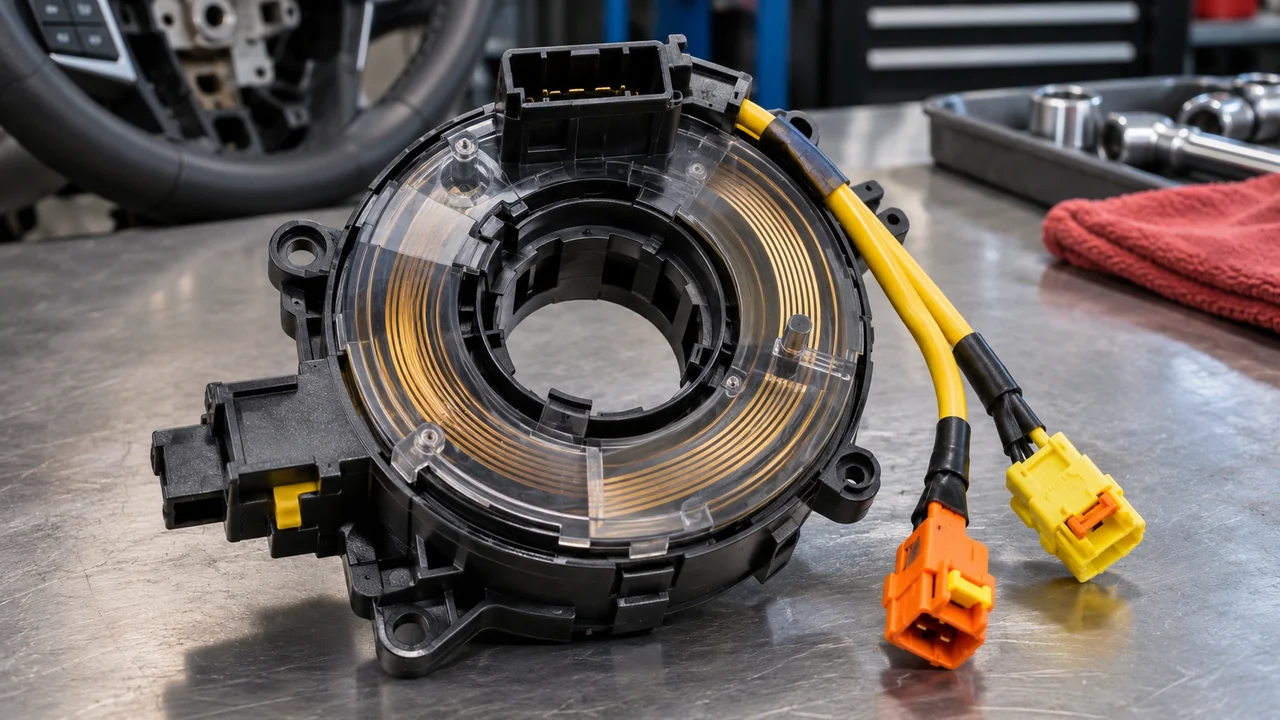
Clock spring replacement costs $510–$567 on average in the U.S., including parts and labor, according to RepairPal’s September 2026 estimate. Around $387 of that amount is the replacement component; labor accounts for roughly $123–$180. Taxes, diagnosis and any required electronic procedures can change the final price.
That average can be misleading if you’re looking at a bill for a particular vehicle. AutoNation publishes examples as low as $182–$222 for a 2011 Hyundai Elantra, while RepairPal lists $1,258–$1,321 for a 2023 Ford F-150. A more expensive steering-wheel electronics assembly can make a seemingly simple repair surprisingly costly.
Before paying for a new clock spring, make sure the failed circuit has been identified and check your VIN for a recall or manufacturer warranty extension. This component carries electrical connections for the driver’s airbag, so getting the diagnosis right matters for safety as well as your wallet.
Clock Spring Replacement Cost: Parts, Labor and Total
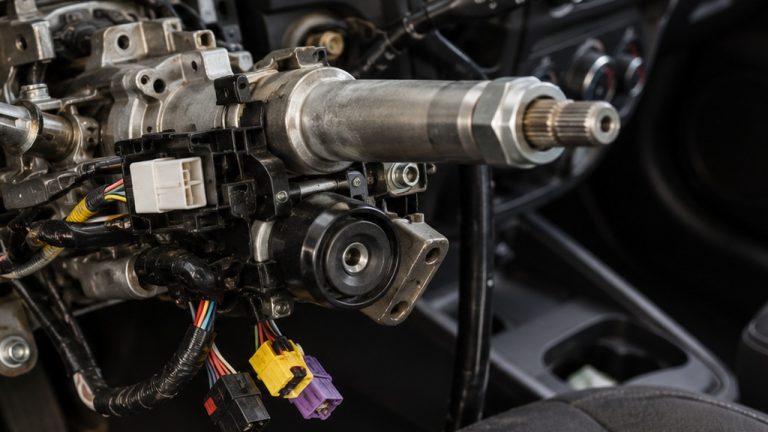
A clock spring sits directly behind the steering wheel. Its internal flexible electrical conductor keeps the driver’s airbag, horn and other wheel-mounted controls connected while the wheel turns. It isn’t a mechanical spring that makes the steering wheel return to center.
For a typical paid replacement, the nationwide figures look like this. They are a benchmark, not a universal menu price for every car.
| Cost item | Published U.S. estimate |
|---|---|
| Clock spring / airbag clockspring | About $387 |
| Installation labor | $123–$180 |
| Total parts and labor | $510–$567 |
| SRS fault diagnosis | Check whether included |
| SRS reset / steering-angle procedure | Vehicle-dependent |
| Taxes, fees or other repairs | Not included |
Source: RepairPal, Air Bag Clockspring Replacement Cost Estimate, updated September 3, 2026. The part figure is an estimated national component cost, not the price of every clock spring sold in the U.S.
AutoNation Mobile Service gives a wider general planning range of $130–$970 installed, with replacement parts around $60–$800 and labor around $70–$170. That isn’t necessarily a contradiction: its range covers everything from inexpensive older-car components to much more complex assemblies. Both providers agree that the vehicle-specific part is often the biggest variable.
A $300 quote may be perfectly reasonable on one older car. On another, even a $900 quote could reflect the correct factory assembly. The useful questions are which part number the shop chose, why that part is required and what diagnostic work has already been done.
Clock Spring Replacement Prices by Car and Model Year
Here are published examples from U.S. estimators. I’ve kept exact years where available because two generations of the same model can have very different steering-wheel electronics. Don’t compare an Elantra repair in California with an F-150 dealer quote as though the labor and parts were interchangeable.
| Vehicle / reference | Installed estimate | Source |
|---|---|---|
| 2011 Hyundai Elantra, 1.8L (sample ZIP) | $182–$222 | AutoNation |
| 2016 Ford F-150 | $361–$418 | RepairPal |
| 2023 Ford F-150 | $1,258–$1,321 | RepairPal |
| 2023 Toyota Camry | $545–$596 | RepairPal |
| 2016 Toyota Camry | $803–$855 | RepairPal |
| Chevrolet Impala (model-wide) | $434–$488 | RepairPal |
| 2018 Jeep Wrangler JK | $637–$688 | RepairPal |
Sources: RepairPal’s F-150, Camry, Impala and Wrangler JK airbag clockspring estimates; AutoNation Mobile Service’s 2011 Hyundai Elantra example. Checked November 2026. The Hyundai figure is a location-specific example; the Impala row is a model-wide estimate. None includes every possible tax, fee or additional repair.
The spread is real, but don’t treat these figures as a parts catalog. A price for a 2016 truck cannot simply be carried forward to a 2023 truck, and an estimate for one version of a steering-wheel switch module may not apply to another trim.
Ford F-150: Why a Newer Truck Can Cost Over $1,000
A 2016 F-150 has a published replacement estimate of $361–$418. For a 2023 F-150, RepairPal lists $1,258–$1,321, including about $1,124 for parts and $134–$197 in labor. The striking difference is mainly the estimated component price, not five extra hours of work.
Some newer steering-wheel assemblies combine several functions or come in different versions depending on equipment. Don’t buy the cheapest product labeled ‘F-150 clock spring’ and assume it’ll work. Ask for the full OE part number, the steering-wheel options used to select it and whether the repair calls for a larger assembly.
Estimators also update their underlying parts prices, so older online screenshots may disagree with current listings. The safest comparison is a written VIN-specific quote showing the replacement part and labor separately.
Toyota Camry and Corolla: Spiral Cable Is the Key Term
Toyota often calls this component a spiral cable or spiral cable sub-assembly. Those names refer to the electrical connection behind the steering wheel; they don’t automatically mean that the entire steering column needs replacement.
RepairPal lists a 2023 Camry at $545–$596, but a 2016 Camry at $803–$855. If you’re shopping for parts, the exact steering-wheel buttons, trim, and steering-angle-sensor arrangement may affect which spiral cable assembly fits. A similar-looking housing does not prove electrical compatibility.
Jeep Wrangler JK: Check for Recall Coverage First
RepairPal’s 2018 Wrangler JK estimate is $637–$688. On older JKs, however, a published price may not be what the owner actually pays: certain clock spring failures have been covered by safety recalls. Whether your Jeep qualifies depends on its VIN and campaign details, not simply the Wrangler badge.
A separate section below explains the relevant Jeep campaigns and how to check them before authorizing a paid repair.
Hyundai Elantra and Sonata: A Lower Quote May Also Be Covered
AutoNation’s $182–$222 example for a 2011 Elantra is much lower than the national RepairPal estimate. It is an example for a particular vehicle and location, not a promise that every Hyundai repair costs $200.
There is an even more important consideration for certain older Elantra and Sonata vehicles: Hyundai has an extended clock spring warranty for eligible VINs. If that applies, the correct next step is a dealer coverage check rather than buying an aftermarket replacement.
Why Clock Spring Parts Prices Vary So Much
A clock spring looks modest from the outside: usually a circular plastic housing with electrical connectors. The price depends on what’s inside and what’s sold with it. Sometimes you’re buying a basic spiral cable; other applications supply a more expensive assembly that interacts with steering-wheel switches and sensors.
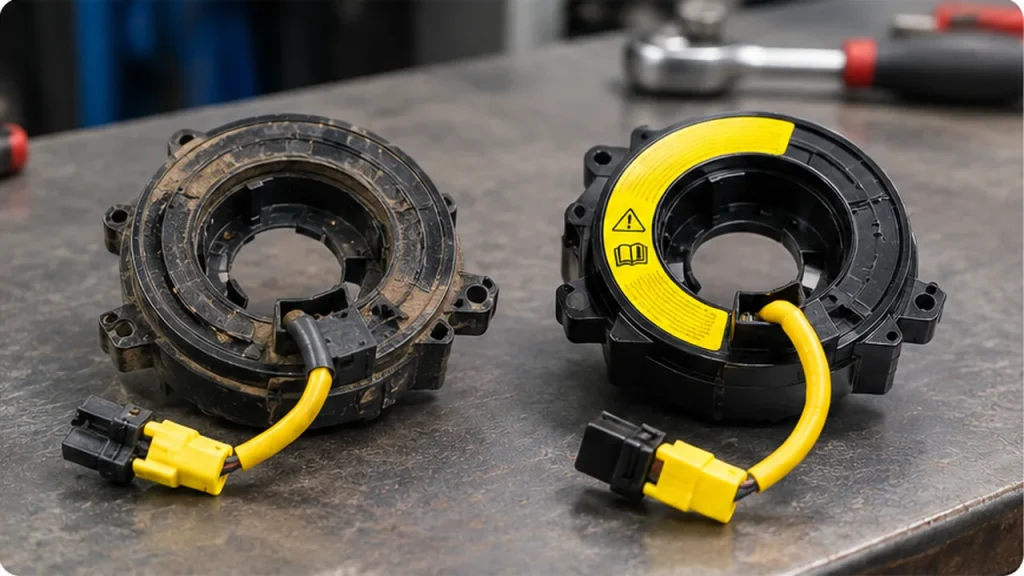
The main price differences come down to the following details:
- Integrated electronics: The clock spring may be supplied with a steering-angle sensor, contact plate or parts of a steering-column switch module.
- Steering-wheel equipment: Audio controls, cruise control, heating and other functions can require specific connectors or circuit paths.
- OEM versus aftermarket: A genuine factory assembly may cost more, but a correct, quality replacement must meet the vehicle’s SRS and electrical requirements.
- Superseded part numbers: Manufacturers revise components over time; the original number may have a newer replacement with different fitment notes.
- Availability: Parts for a discontinued model or a less common trim may cost more or take longer to obtain.
- What is included: Two estimates can sound identical while one includes a full combination-switch module and the other only the spiral cable.
If two garages disagree by several hundred dollars, ask each one for a photo or description of the specified replacement assembly and its part number. That often explains more than comparing hourly labor rates.
Clock Spring vs. Steering Angle Sensor: One Part or Two?
Some vehicles have a steering angle sensor associated with the clock spring; others treat it as a separate component. The sensor reports steering-wheel position to systems such as stability control, while the clock spring maintains electrical connections as the wheel rotates. They are related, but they do not do the same job.
A fault code involving the steering angle sensor does not automatically prove that the flexible ribbon cable is broken. Likewise, an open driver airbag circuit doesn’t automatically mean the steering angle sensor needs replacing. The shop should use the correct wiring diagram and diagnostic procedure rather than replace both by default.
If the steering angle sensor is the actual problem, the repair cost can be quite different. Our steering angle sensor replacement cost guide explains parts and labor prices, plus when recalibration may be enough instead of replacing the sensor.
What Extra Charges Might Appear on the Repair Bill?
The mechanical access work is generally centered on the steering wheel and the upper end of the column. The additional costs are more likely to involve finding the actual electrical fault, handling the airbag system correctly and completing whatever checks the manufacturer specifies afterward.
An itemized estimate may contain these services. They are not all required on every car.
- SRS scan and diagnosis: Reading airbag diagnostic trouble codes and tracing the relevant circuit before buying parts.
- Steering-wheel removal: Labor to access the clock spring, including safe handling of the driver airbag and column trim.
- SRS fault clearance and verification: Confirming the restraint system recognizes the repair and the warning lamp behaves normally.
- Steering-angle calibration: Required only where the vehicle service procedure calls for it after sensor or related component work.
- Related switch or harness repair: A damaged connector, combination switch or wiring fault may need its own diagnosis and part.
- Dealer or specialty scan equipment: Some systems require manufacturer-specific tools or procedures rather than a basic generic code reader.
A diagnostic fee is not automatically padding. It’s often the difference between replacing the failed part and guessing. What shouldn’t happen is charging separately for a procedure already included in the quoted labor without explaining it.
Does a New Clock Spring Need Programming or Calibration?
Not always. Some replacements require the SRS system to be checked and relevant fault codes cleared. Others involve a steering-angle neutral-point or calibration procedure, especially when the sensor was replaced or the manufacturer requires it. The answer depends on the exact vehicle.
Don’t confuse an SRS scan with a wheel alignment. Calibration of an electronic steering-angle sensor is not the same operation as adjusting toe, camber or caster on an alignment rack. A shop should identify the specific procedure rather than charge for all three by default.
How to Tell Whether the Clock Spring Is Actually Faulty
An airbag light is a reason to investigate immediately, but it isn’t a diagnosis. The same is true of a horn that stops working or steering-wheel controls that respond only sometimes. Each symptom has more than one possible cause.
A failing clock spring becomes more plausible when several functions that share its wiring develop trouble, especially when the problem changes as the steering wheel turns. Still, the technician needs evidence from the SRS scan and circuit inspection before condemning it.
Airbag Light or Driver Airbag Circuit Fault
The flexible conductor carries an electrical path associated with the driver’s airbag. If that path becomes open or intermittently disconnected, the SRS may illuminate a warning light and store a related fault code. In some failures, the driver’s airbag may not deploy in a collision.
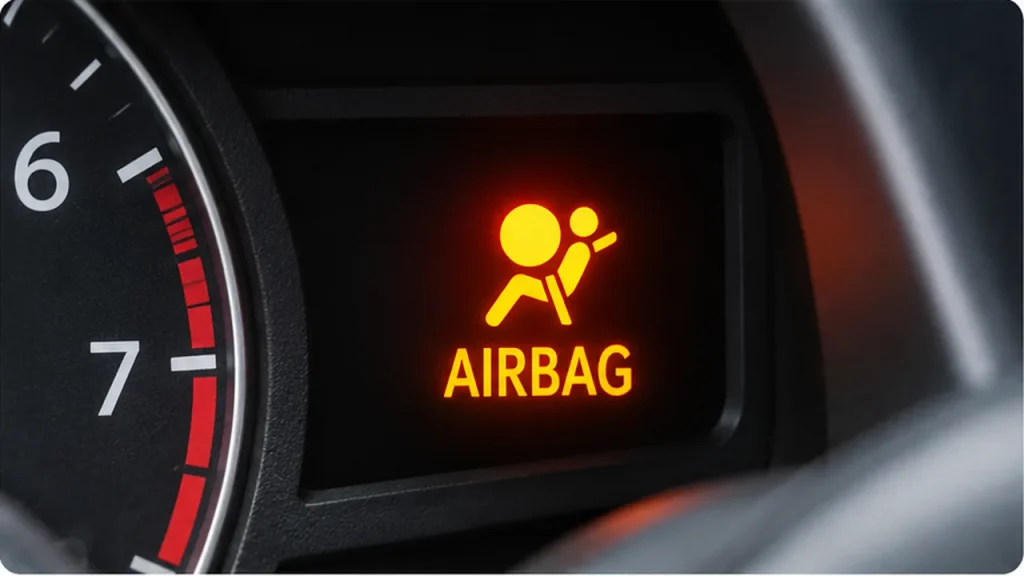
The key word is may. The light can also be triggered by a loose connector, other wiring, a sensor or a restraint control module. A qualified technician should diagnose the exact fault. Never bypass an airbag warning light to get the vehicle through an inspection.
Horn, Cruise Control or Steering-Wheel Buttons Not Working
A failed horn alone could be a fuse, relay, switch or horn unit. A failed cruise-control button could be the switch itself. But if the horn and several wheel-mounted controls fail together—or work intermittently at particular steering-wheel positions—the clock spring deserves attention.
Not every circuit in a particular steering wheel necessarily routes through the same section of the assembly, so the exact symptoms differ by vehicle. The wiring diagram matters more than a one-size-fits-all checklist.
ABS, Traction Control or Steering Angle Warnings
On vehicles where the steering angle sensor is part of, or associated with, the column assembly, the fault may also produce stability-control warnings. Those lights can appear alongside an airbag warning or independently.
The system should be scanned for the relevant trouble codes before parts are changed. Wheel-speed sensor, stability-system and steering-angle faults can overlap in the driver’s experience without sharing the same cause.
Clock Spring Replacement vs. Steering Column or Shaft Repair
The clock spring isn’t the steering column and it isn’t the intermediate shaft. It is an electrical interface near the steering wheel. Replacing it normally doesn’t mean removing the complete mechanical column, rebuilding the rack or replacing the steering shaft beneath the dashboard.
If the real problem is a worn bearing, failed tilt mechanism or a damaged column assembly, that’s a different diagnosis and a larger job. Our steering column replacement cost guide covers those mechanical and structural failures rather than the airbag spiral cable.
The intermediate steering shaft is another separate component. A worn universal joint or loose coupling can cause a clunk or sticky steering, but it doesn’t ordinarily explain dead steering-wheel radio buttons. See our steering shaft replacement cost guide if the mechanic has found play or binding below the column.
This distinction also keeps two common searches separate: airbag clock spring replacement cost is an electrical/SRS repair, while steering column replacement cost deals with the supporting and steering hardware. Don’t approve a complete column just because a fault code mentions a component mounted on it.
Can a Clock Spring Replacement Be Free? Recalls and Warranty Extensions
This is worth checking before any shop orders a part. Safety recalls can cover a particular defect for eligible vehicles, and a manufacturer may separately extend warranty coverage for specified components. The two programs are not identical, and neither applies to every example of a model.
Jeep Wrangler Clock Spring Recalls: S33, S40 and 27B
FCA’s Safety Recall S33 / NHTSA 16V-290 applies to certain 2007–2010 Wrangler JK vehicles within specified production dates. Safety Recall S40 / NHTSA 16V-288 applies to certain right-hand-drive 2011–2016 Wrangler JK vehicles. A later campaign, 27B / NHTSA 24V-196, also concerns certain right-hand-drive 2016 Wranglers. These are distinct eligibility groups, not a blanket recall for every Wrangler ever built.
The underlying concern in these campaigns involves the clockspring and the driver’s airbag circuit. The applicable repair may include other steering-wheel covers or column shrouds. A Jeep dealer can determine which campaign, if any, applies using the VIN and the manufacturer’s current recall records.
Use the official NHTSA recall lookup to check for unrepaired U.S. safety recalls, and ask the dealer about completed recalls or other manufacturer coverage. NHTSA’s VIN tool does not show every old completed campaign or non-recall warranty extension, so a zero-result screen is not the whole history.
Hyundai Elantra and Sonata: 15-Year Clock Spring Coverage
Hyundai’s TXXA clock spring program offers up to 15 years with unlimited mileage from first retail delivery or first use for certain 2011–2014 Elantra, 2011–2013 Sonata and 2011–2014 Sonata Hybrid vehicles. The program has specific eligibility rules and related airbag diagnostic codes; it is not a promise that every failed switch or clock spring on those models is free.
Hyundai’s 2026 service communication 26-BE-022H addresses diagnostic codes B134600 and B148100 in the relevant driver-airbag circuits. Because the coverage period begins with the original in-service date, some early vehicles may already be outside the time window even if their mileage is low.
Check your VIN on Hyundai’s official clock spring extended-warranty page or have a Hyundai dealer confirm eligibility, the relevant fault codes and whether the repair qualifies. A manufacturer warranty extension may not appear as an open safety recall in the NHTSA search.
What Happens During Professional Clock Spring Replacement?
The work takes place around the steering wheel, not in the suspension. The technician follows the vehicle-specific airbag disable and handling procedure, gains access to the spiral cable assembly, installs the correct centered component, reconnects the wheel electronics and checks the restraint system afterward.
Two details are easy to underestimate. First, the replacement must be matched to the vehicle’s wheel controls and sensor arrangement. Second, the clock spring has a limited designed range of rotation. Incorrect centering can damage the new ribbon when the wheel reaches full lock, sometimes before the owner realizes anything is wrong.
Labor estimates vary with access, wheel design, whether a sensor/module is integrated and any required diagnosis or electronic checks. A shop should give you a vehicle-specific labor allowance rather than promise the same installation time on a basic older sedan and a late-model truck.
Why Steering Wheel Centering Matters
The electrical ribbon must accommodate normal steering travel in both directions. A clock spring installed off-center can be stretched at one end of travel, even if the steering wheel looks perfectly straight when the vehicle is parked.
Related work on the intermediate steering shaft, steering rack or column can cause damage if the steering wheel is allowed to spin freely while the linkage is disconnected. That’s why repair procedures emphasize locking or controlling steering-wheel position and checking the assembly’s designed neutral position.
Should You Replace an Airbag Clock Spring Yourself?
This isn’t the repair I’d recommend choosing solely to save an hour of shop labor. Removing the driver airbag exposes part of the Supplemental Restraint System (SRS), which can cause serious injury if handled incorrectly. It also creates the possibility of damaging the new clock spring through incorrect installation or centering.
A competent professional should use manufacturer-approved SRS procedures and suitable diagnostic tools. Avoid testing airbag inflator circuits with an ordinary multimeter or probing yellow SRS connectors without the specific approved procedure. A generic online video cannot replace the instructions for your vehicle’s restraint system.
If you suspect a clock spring fault, the safer money-saving step is to verify recall or warranty eligibility and obtain a written diagnostic quote. Paying to identify the exact failed circuit is generally preferable to buying an incorrect steering-wheel electrical assembly and risking an airbag-system fault.
Does Clock Spring Replacement Require Wheel Alignment?
Normally, no. Replacing the clock spring itself does not adjust the front wheels’ toe, camber or caster. The steering wheel must be correctly centered and the relevant electronic checks completed, but that is not the same as a four-wheel alignment.
If the same visit involves replacing tie rods, steering gear components or other parts that affect wheel angles, an alignment may be needed because of that additional work. If your clock-spring-only invoice includes an alignment, ask what other repair or measurement makes it necessary. The separate service and its prices are explained in our wheel alignment cost guide.
Clock Spring Replacement Cost: Questions Owners Often Ask
These are the questions that usually matter once the shop has identified a possible airbag clockspring problem and you have an estimate in front of you.
Is $700 Too Much for a Clock Spring Replacement?
Not necessarily. It’s above the $510–$567 RepairPal national benchmark, but specific vehicles and steering-wheel assemblies cost considerably more. Before saying yes, check the part number, whether SRS diagnosis and verification are included and whether an applicable campaign might cover the repair.
Can a Clock Spring Be Repaired Instead of Replaced?
A damaged internal ribbon cable is generally handled by replacing the appropriate service assembly rather than improvising a splice. This is part of an airbag circuit, so a makeshift wiring repair is not an acceptable substitute for the manufacturer-approved component and procedure.
How Long Does a Clock Spring Last?
There is no standard mileage interval that tells you to replace it at 60,000 or 100,000 miles. Many last the vehicle’s life. Failures can develop from age, repeated flexing, contamination, a collision or incorrect steering-column service. Replace the component for a confirmed fault or applicable campaign, not just because of the odometer reading.
Can a Bad Clock Spring Prevent the Airbag From Working?
Yes. An open circuit in the clock spring can interrupt the driver’s airbag connection, and a warning lamp may indicate that part of the SRS will not function as intended in a crash. But an airbag light can have other causes, which is why the correct diagnosis is important.
Will Disconnecting the Battery Clear the Airbag Light?
It isn’t a reliable repair. A stored SRS fault may remain or return when the vehicle checks the circuit again. After correcting the actual problem, the relevant manufacturer procedure determines how fault codes are cleared and system operation is verified. Don’t treat an extinguished lamp by itself as proof that the airbag is safe.
Can You Drive With a Bad Clock Spring?
The car may still steer normally because the clock spring is not the mechanical steering shaft, but the horn or driver airbag circuit may be compromised. Arrange prompt professional diagnosis rather than continuing to drive indefinitely with an unresolved airbag warning. If steering itself is binding or unpredictable, stop driving and have the vehicle assessed separately.
How to Compare Two Clock Spring Replacement Quotes
Suppose one garage quotes $380 and another quotes $740. One may be charging too much; they may also be quoting different assemblies. With SRS repairs, comparing two totals without knowing the diagnosis and part number is an especially poor shortcut.
Before approving the job, ask for the following information in writing:
- Confirmed failure: Which SRS or steering-system fault code and test results support a clock spring diagnosis?
- Exact component: Is the price for the spiral cable alone, an integrated steering-angle sensor or a larger switch module? What is the OE or supplier part number?
- Parts and labor: How much is the replacement component, how much is installation and which additional diagnostic charges apply?
- Required electronic work: Does the estimate include SRS verification, fault-code handling and any manufacturer-required sensor procedure?
- Recall or extended warranty: Has the VIN been checked with the manufacturer, including programs that do not appear in a standard recall lookup?
- Final total and warranty: Are fees included, and what happens if the replacement part is faulty or the original warning light remains?
The national $510–$567 figure gives you a useful first reference, but it isn’t the number every driver should expect to pay. The best estimate identifies the exact failed circuit, quotes the correct part and accounts for the airbag-system checks required to finish the repair properly. A cheaper guess can become the most expensive option if the warning light comes straight back on.