Pitman Arm Replacement Cost: How Much Should You Pay?
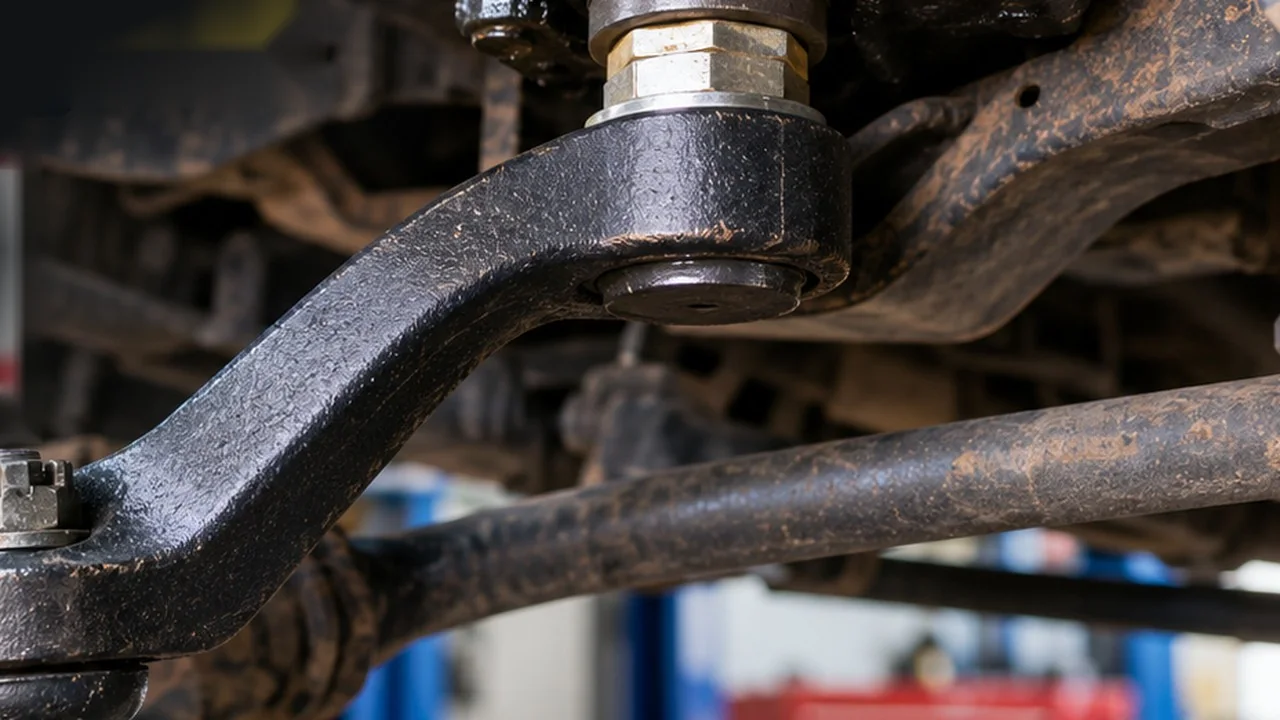
Pitman arm replacement costs about $253–$385 in the United States, including parts and labor, according to RepairPal. That estimate includes roughly $102–$164 for the replacement arm and $151–$221 for installation. It does not include taxes, additional steering repairs, or a separate wheel alignment.
Those numbers are a starting point, not a ceiling. YourMechanic publishes replacement estimates approaching $500 for certain Chevrolet Silverado 2500HD trucks, with shop and dealer price ranges considerably higher. If you’ve received a $600 quote, it may be legitimate. What matters is the vehicle, the work included, and whether the Pitman arm is actually the part that needs replacing.
Pitman Arm Replacement Cost: Parts, Labor, and Total
A typical estimate separates the cost of the arm from the labor required to remove it from the steering gearbox and install the replacement. That distinction is useful because a Pitman arm can be inexpensive to buy but surprisingly difficult to remove.
Here is RepairPal’s national U.S. estimate, last updated September 3, 2026:
| Cost Item | Estimated Price |
|---|---|
| Replacement Pitman arm | $102–$164 |
| Installation labor | $151–$221 |
| Total replacement cost | $253–$385 |
| Wheel alignment, if needed | Additional charge |
| Related steering repairs | Additional charge |
Source: RepairPal, Pitman Arm Replacement Cost Estimate, September 2026. The figures represent a national estimate, not a guaranteed local quote. Taxes, fees, location, and other necessary repairs can change the amount charged.
At first glance, that labor charge may seem high for a single metal arm. The reason is its connection to the steering gearbox. The Pitman arm fits tightly over a splined output shaft, also called the sector shaft, and removal usually requires a dedicated puller. When that connection has been exposed to years of corrosion, the job can take longer than the part’s size suggests.
Before accepting a quote, check whether it covers the Pitman arm alone or includes other linkage components. Replacing the idler arm, center link, or steering gearbox is additional work, not automatically part of a standard Pitman arm replacement.
Pitman Arm Replacement Prices for Chevrolet Silverado Trucks
Chevrolet Silverado and GMC Sierra pickups account for many searches about Pitman arm prices. That’s particularly true of older trucks and heavy-duty models using a steering gearbox with conventional linkage.
Vehicle-specific estimates tell a different story from the national average. YourMechanic publishes the following figures for several Silverado applications with Pitman arm replacement listings:
| Vehicle | Service Estimate | Shop/Dealer Price |
|---|---|---|
| 2004 Silverado 2500HD 6.0L | $461 | $554–$797 |
| 2012 Silverado 2500HD 6.0L | $466 | $560–$807 |
| 2015 Silverado 2500HD 6.6L diesel | $498 | $592–$839 |
| 2005 Silverado 3500 6.0L | $493 | $586–$829 |
Source: YourMechanic’s Chevrolet Silverado 2500HD and Silverado 3500 Pitman Arm Replacement estimates, checked October 2026. Prices are rounded to the nearest dollar. The service estimate and shop/dealer price are different quoting options; they should not be added together. Vehicle configuration and location affect actual pricing.
A 2015 Silverado 2500HD owner seeing a $700 dealer quote shouldn’t assume the shop is overcharging just because RepairPal’s national estimate ends at $385. The two figures cover different pricing situations. Ask the shop for a vehicle-specific breakdown before comparing them.
Chevy Silverado 1500 vs. 2500HD: Does the Model Matter?
Absolutely. A Silverado 1500 and a Silverado 2500HD are not interchangeable for steering parts. Even within the same model name, the system can change with the generation, drivetrain, and suspension configuration.
Some Silverado 1500 generations use rack-and-pinion steering, which doesn’t have a conventional Pitman arm. Other truck applications use a steering gearbox connected to a Pitman arm and center link. A generic online estimate can be misleading if the vehicle doesn’t actually have the component listed.
If you’re ordering a replacement arm or comparing labor quotes, confirm the exact year, model, drivetrain, and steering system first. A VIN-specific parts lookup is more reliable than selecting a part based only on “Chevy Silverado.”
What About GMC Sierra, Ford Super Duty, and RAM Trucks?
Many GMC Sierra heavy-duty trucks use steering arrangements related to their Chevrolet counterparts, but that doesn’t mean every part number or estimate is identical. Ford Super Duty and certain RAM trucks also use Pitman arms in applicable steering-gearbox configurations.
It’s tempting to borrow a Silverado estimate for another full-size pickup. Don’t. The mounting spline, arm length, steering geometry, component access, and service procedure can all differ. A lifted truck may also have aftermarket steering components that change the required replacement part.
For any of these vehicles, get a quote based on the actual steering assembly rather than the closest truck in a national pricing table.
How Much Does a Pitman Arm Cost Without Labor?
Shopping for the part yourself can reveal a much lower price than the installed repair estimate. That doesn’t necessarily mean the mechanic’s quote is inflated: retail parts prices exclude labor, shop overhead, and the work of confirming fitment.
For example, Advance Auto Parts lists Pitman arms for the 2005 Chevrolet Silverado 2500HD across a fairly wide retail range. Go-Parts also publishes separate OEM and aftermarket price estimates for the 1999–2007 Silverado/Sierra GMT800 generation.
| Parts Example | Published Price |
|---|---|
| 2005 Silverado 2500HD retail Pitman arms | $64.99–$289.99 |
| Carquest 600-65353 listing | $80.99 |
| MOOG K6536HD listing | $162.99 |
| 1999–2007 GMT800 aftermarket arm estimate | $30–$90 |
| 1999–2007 GMT800 OEM arm estimate | $140–$250 |
Sources: Advance Auto Parts, 2005 Chevrolet Silverado 2500HD Pitman Arms; Go-Parts, 1999–2007 Silverado/Sierra GMT800 steering guide. Checked October 2026. These are parts-only retail listings or general parts estimates, not installed repair quotes. Fitment, brand, availability, and prices can change.
That table shows why asking for the part number is so useful. A $90 aftermarket arm and a $250 factory component may serve similar purposes, but they aren’t necessarily equivalent in fitment, materials, joint design, or warranty coverage.
OEM vs. Aftermarket Pitman Arms
An OEM replacement is built to the original vehicle specification, which can make it an appealing choice when the truck is otherwise stock. Quality aftermarket arms can also be suitable, provided the supplier confirms compatibility with the steering gearbox and linkage.
Check the spline pattern, indexing, shaft diameter, arm length, and connection at the opposite end. An arm that looks close on a workbench can still be wrong for the truck. On vehicles using different joint arrangements, the replacement may also need specific hardware or a matching linkage end.
For older trucks, the cheapest listed item may not be the best overall value if its fitment is uncertain or its replacement requires repeating difficult labor. Conversely, a premium arm isn’t automatically necessary for a vehicle driven on ordinary roads.
What Makes Pitman Arm Replacement Labor Expensive?
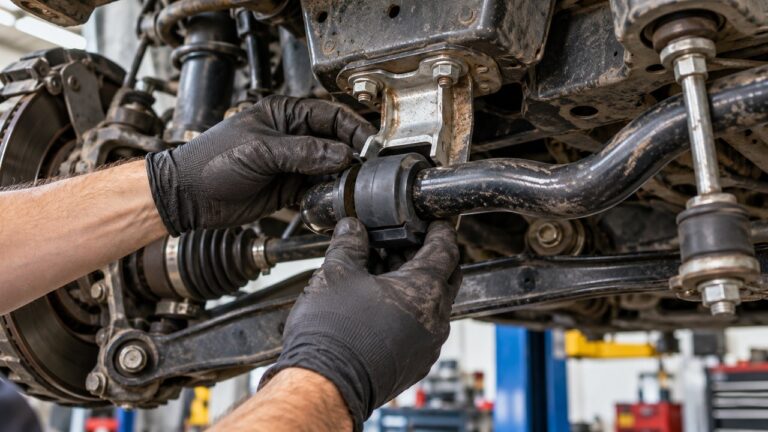
Here’s the part of the invoice people often underestimate. A Pitman arm is secured to a steering gearbox shaft with a high-load splined connection. Releasing it without damaging the gearbox, bearings, or nearby steering hardware takes the correct equipment and procedure.
Several circumstances can raise the labor charge:
- Seized shaft connection: Corrosion can make the arm difficult to remove from the tapered sector-shaft splines.
- Limited tool access: Frame rails, skid plates, suspension components, or other hardware may obstruct the puller.
- Heavy-duty steering parts: Larger arms and tight connections may require more robust tools than a typical passenger-car repair.
- Damaged retaining hardware: The shaft nut, locking device, or related fasteners may require replacement according to the service procedure.
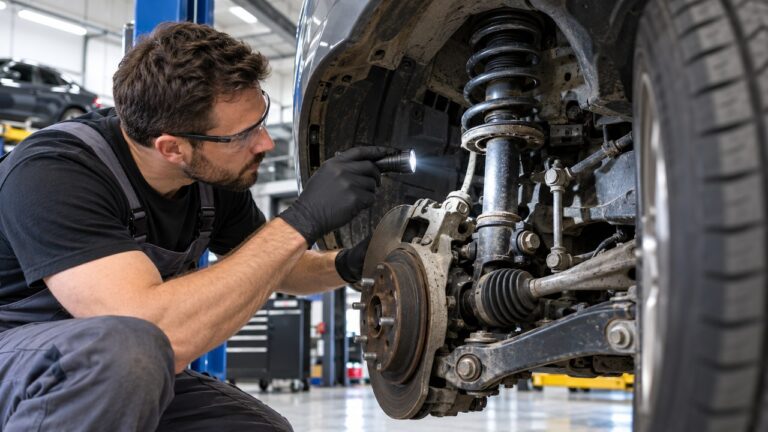
- Additional diagnosis: The shop may need to distinguish a worn linkage joint from steering gearbox play before replacing anything.
- Additional steering work: A confirmed fault in the center link, idler arm, or tie rods adds parts and labor beyond the Pitman arm itself.
Go-Parts gives a two-to-four-hour labor discussion for Pitman and idler arm work together on certain older GM trucks. That is not a universal labor allowance for one Pitman arm. The time charged for your vehicle should come from the appropriate repair procedure and the work actually performed.
Does the Steering Gearbox Have to Come Out?
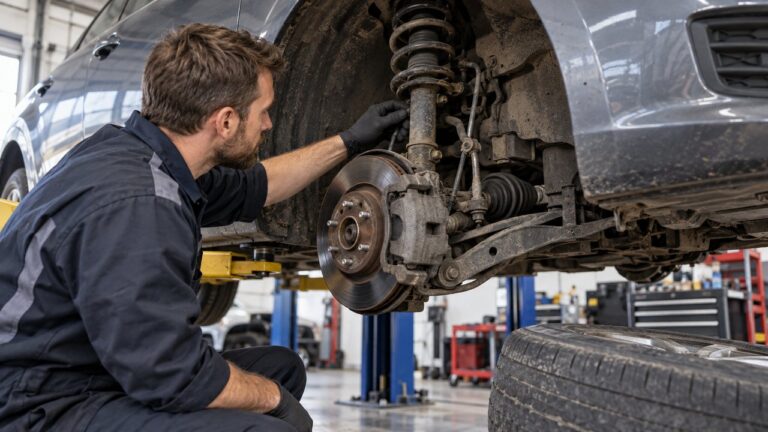
Not always. Many applications allow the Pitman arm to be removed with the gearbox installed, provided there is sufficient room for the correct puller. Other vehicles have tighter clearances, and a particular service procedure may require additional access work or partial removal of surrounding components.
That is a reasonable question to ask when labor is unusually high. The shop should be able to explain whether removal of the gearbox or another major component is actually necessary for your model.
Don’t confuse extra access labor with replacing the steering gearbox itself. A failed gearbox is a different diagnosis, even though the Pitman arm attaches directly to it.
Is the Pitman Arm Actually Bad, or Is Another Steering Part Worn?
A truck that wanders or has a clunk when turning doesn’t automatically need a Pitman arm. Similar symptoms can come from the center link, idler arm, tie rods, steering gearbox, or even loose mounting hardware. Replacing the wrong part is an expensive way to discover that distinction.
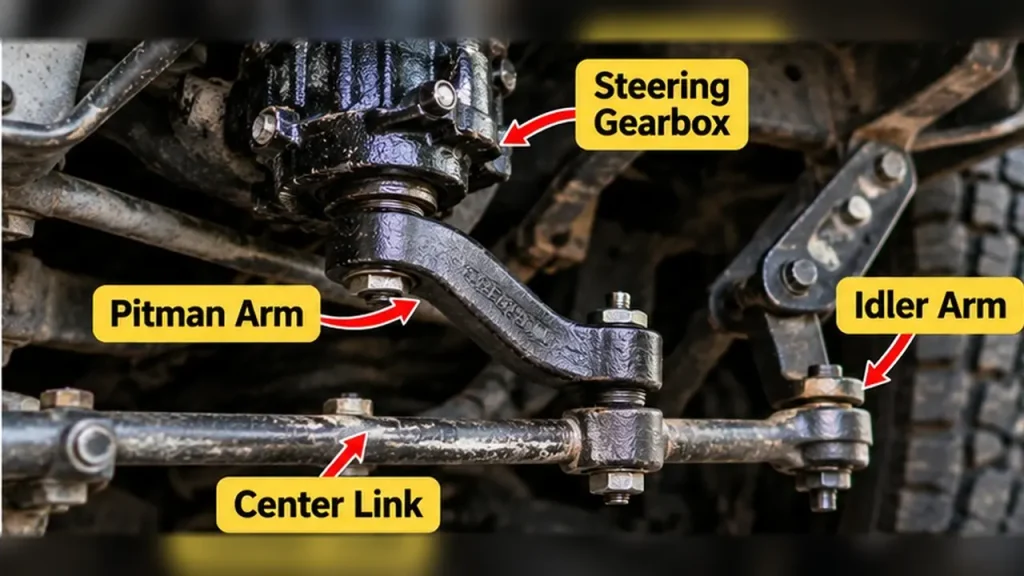
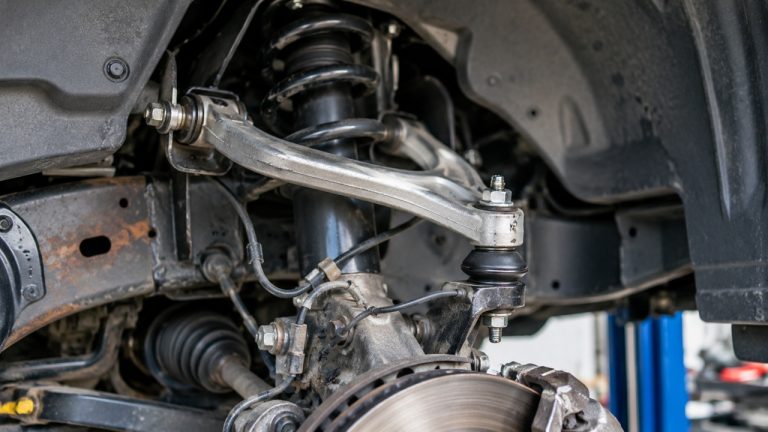
Depending on the steering design, the Pitman arm may have a linkage joint at one end or may connect to a separate joint housed in the center link or drag link. On some designs the forged arm itself has no serviceable ball joint. A mechanic must identify which component actually contains the wear.
Pitman Arm vs. Idler Arm: Which Repair Are You Paying For?
In a conventional parallelogram steering system, the Pitman arm receives movement from the steering gearbox. The idler arm supports the opposite end of the center link. Both can affect steering feel, but the mounting points and repair procedures differ.
A quote should say which connection is loose. If the unwanted movement is at the frame-mounted idler support, replacing the gearbox-side Pitman arm won’t repair it. Our guide to Pitman arm vs. idler arm differences explains how the two components fit into the steering system.
If the diagnosis identifies the idler assembly instead, its replacement price needs to be considered separately. We’ve covered the typical parts, labor, and bracket costs in our idler arm replacement cost guide.
What If the Problem Is the Drag Link or Center Link?
Terminology creates some confusion here. On certain vehicles, a center link is called a relay rod or drag link. On other trucks and Jeeps, the drag link forms a different connection from the Pitman arm toward a steering arm or knuckle.
A worn joint at the end of that link may look like a Pitman arm problem from a distance. Ask the technician to identify the worn component and its exact connection. If the link is the part being replaced, compare its prices in our drag link replacement cost guide.
Could a Tie Rod or Steering Gearbox Be the Real Cause?
Yes. Excessive play can develop at a tie rod joint, or the steering gearbox can have its own internal or mounting problems. The key is finding where steering input is being lost.
If the gearbox output shaft moves correctly but a linkage joint has excessive clearance, the inspection should focus on that joint. If there is excessive lost motion inside the gearbox, replacing the Pitman arm may not solve the steering problem.
There is also a separate repair called a Pitman arm shaft seal replacement. It addresses a leaking seal at the steering gearbox output shaft, not necessarily a defective arm. The arm may need to be removed to access the seal, but the two jobs should not be confused.
When tie rod wear is confirmed, that repair has its own parts, labor, and alignment considerations. You can compare those charges in our tie rod replacement cost guide.
Do You Need a Wheel Alignment After Replacing a Pitman Arm?
A steering and alignment check is advisable after Pitman arm replacement. Whether a full alignment adjustment is necessary depends on the vehicle’s steering design, the work performed, and its manufacturer’s service procedure.
The Pitman arm normally isn’t a direct toe adjustment. Its job is to transmit steering gearbox motion into the linkage. However, replacing it can affect steering-wheel position or reveal other problems in the linkage, especially if several components were disturbed.
On an older truck with a conventional center link, the technician should verify correct Pitman arm indexing, steering-wheel centering, joint security, and applicable alignment measurements. If tie rod adjustment was disturbed or tire wear was already abnormal, an actual alignment may be needed.
In the United States, a front-end or two-wheel alignment commonly costs around $75–$120, while a four-wheel service is often around $100–$200. Those are separate budgeting figures, not charges automatically included in a Pitman arm replacement quote.
Ask whether the quoted service includes an alignment inspection, adjustments, or both. For the broader price differences, see our wheel alignment cost guide.
Can You Replace a Pitman Arm Yourself?
Experienced DIY mechanics can replace a Pitman arm on some vehicles, and avoiding shop labor can save a meaningful amount. But this isn’t simply a matter of undoing two nuts and pulling off a loose arm.
The gearbox connection may be extremely tight, and a dedicated Pitman arm puller is normally needed. Incorrect removal methods can damage the gearbox or its output shaft. The new arm also has to be correctly indexed and secured with the specified hardware and tightening procedure.
Before attempting the repair, make sure you can meet the following requirements:
- Identify the exact replacement part by vehicle and steering configuration.
- Have the manufacturer’s removal, installation, and tightening instructions available.
- Use a properly sized Pitman arm puller and suitable joint-separation tools.
- Check the splines, output shaft, mounting hardware, and connected steering joints for damage.
- Verify correct indexing, steering operation, and required alignment checks before returning the vehicle to service.
AutoZone’s Pitman arm replacement guidance specifically cautions against using hammers or pry bars on the gearbox connection. Steering gearbox specialist Red-Head also emphasizes correct spline seating and manufacturer-specified torque rather than forcing the arm into position.
Never support the vehicle using the steering center link or Pitman arm. Use the specified lifting points and appropriate stands. If the arm is seized, the shaft appears damaged, or the replacement cannot be seated correctly, stop and have the work assessed professionally.
Can You Remove a Pitman Arm Without a Puller?
Trying to save the cost of a puller is usually a poor trade. The arm can be tightly seated on tapered splines, and hammering on it risks damaging steering gearbox components. A general-purpose puller may also fail to grip the arm correctly.
Some parts stores offer tool-loan programs, making it possible to obtain the proper puller without buying one outright. Confirm that the tool is rated and shaped for the specific arm and available working space.
This is a tool-selection issue rather than a reason to improvise a removal technique. The vehicle-specific service instructions should determine how the connection is separated.
Stock vs. Drop Pitman Arm: Does a Lift Kit Change the Cost?
Owners of lifted Jeeps and trucks sometimes discover that the Pitman arm on their vehicle isn’t the factory shape. A drop Pitman arm changes the height of the drag link connection to suit certain modified steering arrangements.
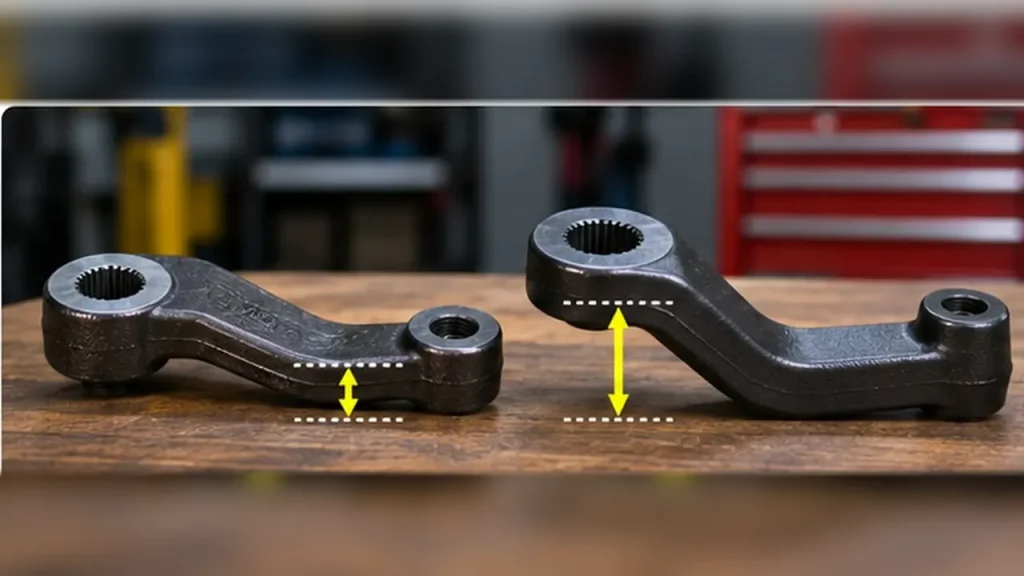
That doesn’t mean every lifted vehicle needs one. In fact, fitting a drop arm without accounting for the track bar and drag link geometry can introduce or worsen bump steer. The appropriate setup depends on the suspension design and the instructions for the particular lift system.
For an ordinary replacement, the goal is to restore the correct steering geometry, not automatically install a more aggressively dropped arm. If your existing arm is aftermarket, ask the shop to identify the lift kit and steering configuration before ordering parts.
A modified vehicle may also require extra inspection or alignment work. The broader costs of suspension modifications are covered in our lift kit installation cost guide.
Pitman Arm Replacement Cost: Frequently Asked Questions
These are some of the questions that tend to come up when the replacement part is cheaper than the repair estimate or when a shop recommends additional steering work.
Is $500 Too Much for a Pitman Arm Replacement?
Not necessarily. Although RepairPal’s national estimate is $253–$385, YourMechanic lists roughly $466–$498 in service estimates for several Silverado 2500HD applications, with higher shop/dealer ranges. Check the vehicle-specific labor allowance, part number, and any included alignment before judging the quote.
How Long Does Pitman Arm Replacement Take?
There is no reliable single time for every vehicle. An accessible arm that releases cleanly can be a relatively short repair, while a seized connection or restricted tool access can add substantial labor. The shop’s vehicle-specific labor estimate is more useful than a universal time claim.
Should You Replace the Pitman Arm and Idler Arm Together?
Only if both components need attention or an applicable repair procedure justifies replacing them together. They should be inspected during the same steering diagnosis, but wear in one does not prove the other has failed. A combined quote should separate the parts and labor for each repair.
How Long Does a Pitman Arm Last?
A sound Pitman arm can last many years, and some last for the vehicle’s service life. There is no universal mileage interval requiring replacement. Wear depends on the joint design, road conditions, impacts, corrosion, and the condition of connected steering components.
Does a New Pitman Arm Need Grease?
That depends on the design. Some serviceable steering joints have grease fittings; others are sealed. The splined connection to the gearbox is a different interface and must be assembled according to the manufacturer’s specifications. Don’t apply grease or anti-seize to that connection unless the applicable service instructions expressly require it.
Can a Bad Pitman Arm Cause Wandering or Tire Wear?
Excessive movement at a Pitman arm connection can reduce steering precision, contribute to wandering, or permit changes in steering geometry. But worn tie rods, idler arm movement, tires, and incorrect alignment can produce similar symptoms. Inspection should locate the actual source of play before replacement.
Is It Safe to Drive With a Bad Pitman Arm?
A severely loose or damaged Pitman arm connection is a serious steering safety issue. If the arm or linkage is at risk of separating, the steering becomes unpredictable, or the vehicle is difficult to control, stop driving and arrange professional inspection or towing. A critical steering connection should never be treated as a repair that can be postponed indefinitely.
How to Tell Whether Your Pitman Arm Replacement Quote Is Fair
Two estimates can differ by several hundred dollars without either being dishonest. One shop may quote an aftermarket arm and routine installation. Another may specify a factory part, difficult removal, and additional checks. What you need is enough detail to compare the same job.
Before approving the repair, ask these questions:
- What has actually failed? Ask the technician to identify the worn joint, damaged arm, spline connection, or other steering fault.
- Which replacement part is specified? Confirm the brand, part number, and exact vehicle fitment.
- How much labor is included? Find out whether the price covers normal removal, difficult access, or additional component removal.
- Are other repairs included? Separate any idler arm, drag link, tie rod, or gearbox work from the Pitman arm charge.
- What happens after installation? Confirm the steering checks, any required alignment, replacement hardware, and the final total including fees.
Use the $253–$385 national estimate as your first reference, then consider the more expensive Silverado examples if they better match your vehicle. Neither figure can replace an actual diagnosis and itemized quote.
Above all, don’t pay for a Pitman arm simply because the steering feels loose. Have the mechanic show you where the unwanted movement occurs. Once the failed part is confirmed, the price becomes much easier to judge—and you’re less likely to pay twice for a problem that should have been identified on the first visit.