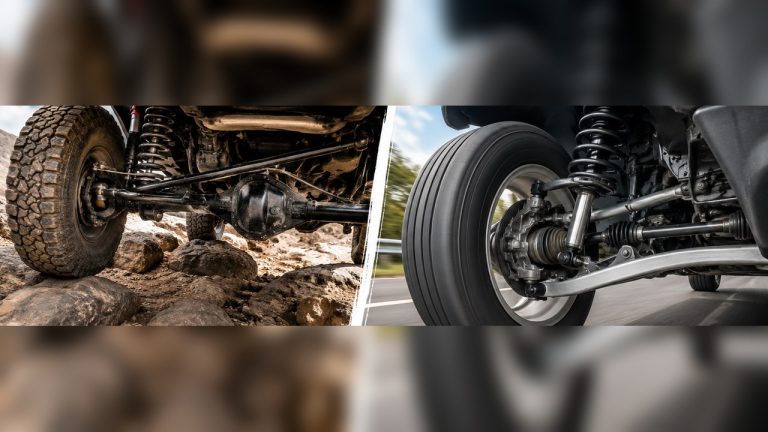
Sway Bar Disconnect Explained: What It Does & When to Use It
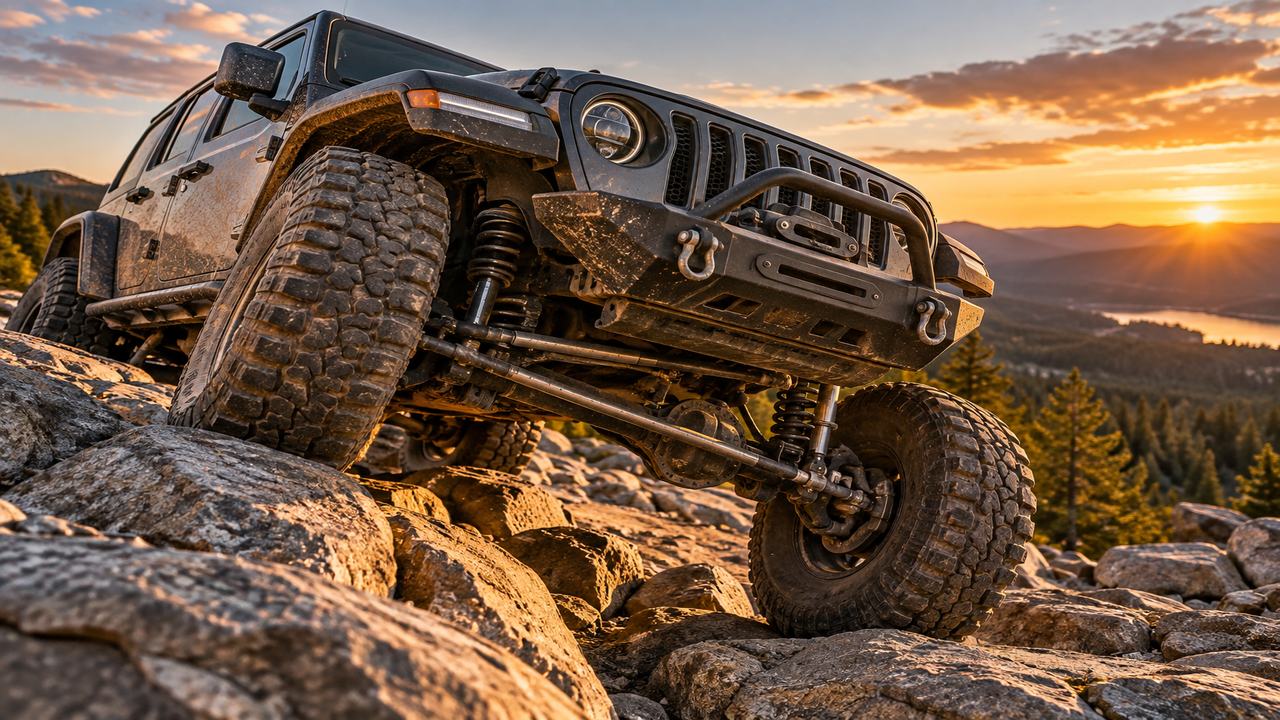
A sway bar disconnect temporarily removes the anti-roll bar’s resistance between the left and right wheels, allowing them to move more independently on uneven terrain. Off road, that can improve usable articulation, help the tires stay in contact with the ground and make a 4×4 feel less rigid over rocks, ruts and crossed-up obstacles.
The tradeoff is equally important: the sway bar normally controls body roll and improves stability on pavement. Disconnecting it is therefore an off-road, low-speed tool, not a general handling upgrade. For normal road and highway driving, the bar should be connected unless the vehicle manufacturer specifically says otherwise.
And one distinction matters from the start: disconnecting a sway bar does not magically create extra suspension travel. It removes a force that can prevent the suspension from using all of the travel already available when the left and right wheels need to move in opposite directions.
Sway Bar Disconnect at a Glance
| With Sway Bar Connected | With Sway Bar Disconnected |
|---|---|
| Left and right suspension movement is coupled | Each side can move more independently |
| Less body roll on pavement | More body movement at low speed |
| More resistance to cross-axle articulation | More usable articulation on uneven terrain |
| Sharper, more controlled road handling | Softer feel over rocks, ruts and offset bumps |
| Best for normal road driving | Best for slow technical off-road driving |
| Should normally remain connected at speed | Normally reconnected before returning to pavement |
If your goal is rock crawling, technical trails or keeping the front tires in contact with highly uneven terrain, a disconnect can make a noticeable difference. If you mostly drive gravel roads, highways or mild trails, the benefit may be much smaller.
What Does a Sway Bar Actually Do?
A sway bar—also called an anti-roll bar, anti-sway bar or stabilizer bar—is a torsion spring that connects the suspension on the left and right sides of an axle.
When both wheels rise or fall together, such as when the vehicle crosses a smooth dip, the bar does relatively little. The important effect happens when one wheel moves differently from the other.
During a corner, for example, the outside suspension compresses while the inside unloads. That twists the sway bar. The bar resists the difference in movement, reducing body roll and helping the vehicle remain flatter and more predictable.
That is valuable on pavement. The problem is that an off-road obstacle often asks the suspension to do exactly the opposite.
When the left front tire climbs a rock while the right front tire drops into a hole, maximum grip usually requires those wheels to move in very different directions. A connected sway bar resists that difference.
Disconnecting it removes much of that resistance.
Why Disconnecting the Sway Bar Improves Articulation
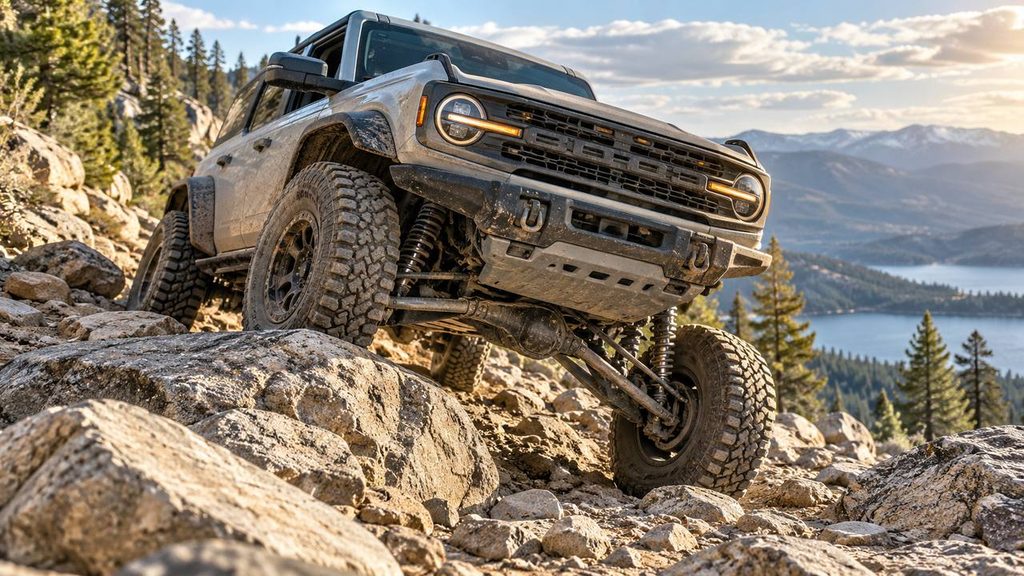
Imagine the front suspension crossed up on a trail. One wheel is being pushed toward the body while the opposite side needs to droop downward.
With the sway bar connected, the wheel moving upward twists the bar and creates a force that influences the suspension on the opposite side. Instead of letting each corner simply follow the terrain, part of the suspension effort is being used to twist the stabilizer bar.
Disconnect the bar and that left-to-right coupling is greatly reduced. One wheel can compress while the opposite wheel droops with less resistance from the anti-roll system.
This is why the vehicle can often keep a tire on the terrain longer instead of lifting it into the air.
More tire contact can improve traction, but it is important not to overstate the effect. A tire touching the ground does not automatically have useful traction. Available grip also depends on tire load, surface, tire construction and pressure, differential behavior, lockers, throttle control and the rest of the suspension.
Does Disconnecting the Sway Bar Increase Suspension Travel?
Usually, it increases usable articulation rather than changing the suspension’s fundamental geometric travel limit.
The suspension is still constrained by components such as shock length, control-arm geometry, ball joints or CV joints, brake hoses, bump stops, driveshafts, steering links and physical clearance.
A connected sway bar may stop one side from reaching as much of that available movement when the two wheels are traveling in opposite directions. Disconnecting the bar removes that resistance and may allow the suspension to reach closer to its existing limits.
That distinction is different from a true long-travel suspension system, where components and geometry are specifically changed to increase available wheel travel.
Some manufacturers may quote additional articulation or travel for a particular vehicle with its stabilizer bar disconnected. Those figures are valid for that specific suspension design; they should not be treated as a universal percentage that applies to every 4×4.
Connected vs Disconnected: What You Feel Behind the Wheel
On Pavement
With the sway bar connected, body movement is better controlled when changing lanes, entering a corner, braking while turning or making an emergency steering correction.
This becomes especially important on tall trucks and SUVs because their center of gravity is typically higher than that of a passenger car.
Disconnecting the bar reduces that roll resistance. The vehicle may lean more, feel slower to respond and require larger steering corrections during transitions.
On Uneven Trails
At low speed, the same reduction in roll stiffness can become an advantage.
Instead of one front bump feeding as much force into the opposite side, the wheels can follow uneven terrain more independently. The ride can feel less head-tossing over alternating bumps, while the suspension gains freedom to flex across rocks, washouts and deep ruts.
The key phrase is low speed. What feels compliant and flexible while crawling over rocks can feel loose and unstable during fast road maneuvers.
When Should You Disconnect a Sway Bar?
A front sway bar disconnect makes the most sense when the trail requires substantial left-to-right suspension movement.
- Rock crawling
- Deep cross-axle ruts
- Large ledges and offset obstacles
- Slow technical trails
- Terrain where a front wheel repeatedly lifts
- Sections where keeping the tires in contact with the ground is more important than controlling body roll
You may notice much less benefit on relatively flat dirt roads, sand, smooth forest roads or trails where both front wheels move together most of the time.
In those conditions, keeping the sway bar connected may provide a more controlled vehicle without sacrificing meaningful traction.
When Should the Sway Bar Stay Connected?
The bar should normally remain connected for street driving, highway speeds and situations where predictable body control matters more than maximum articulation.
It can also be useful to keep it connected on faster dirt roads. A rough road does not automatically mean maximum suspension flex is desirable; at speed, excessive body motion can make the vehicle harder to control.
Off-camber terrain deserves extra judgment as well. More articulation can help tires follow the terrain, but removing roll stiffness also allows greater chassis lean. A disconnect is a tool, not a requirement for every off-road situation.
Factory electronic systems may impose their own speed, transfer-case or drive-mode restrictions and may reconnect automatically. Always follow the procedure for the exact vehicle and model year.
Manual Sway Bar Disconnects vs Electronic Systems
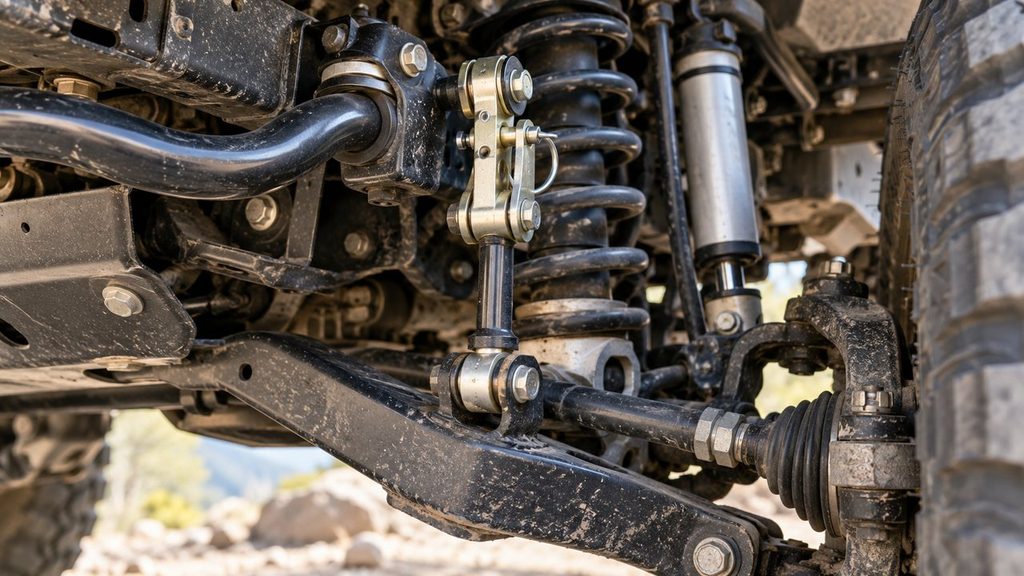
There are several ways to temporarily remove a sway bar from the equation, and they do not all work the same way.
Manual Quick-Disconnect Links
Aftermarket quick disconnects typically replace conventional sway bar end links with hardware that can be detached without removing the complete sway bar.
At the trailhead, the driver removes the retaining hardware, releases the link or links and secures them so they cannot contact the tire, axle, brake hose or other suspension components.
The advantages are simplicity and relatively low cost. There is no actuator, control module or factory electronic mechanism to operate.
The disadvantages are equally practical: you may have to crawl under or around a dirty vehicle, the bar can be under load and difficult to release, and reconnecting the system can be awkward if the left and right sides are not positioned correctly.
Factory Electronic Disconnects
An electronic sway bar disconnect lets the driver change between connected and disconnected modes from inside the vehicle.
Depending on the design, an electric or electro-hydraulic actuator operates a mechanical coupling in the stabilizer bar assembly. When released, the two sides can rotate with much less influence on each other. When locked together again, the bar resumes its normal anti-roll function.
Current off-road vehicles offering versions of this idea include the Jeep Wrangler Rubicon, Ford Bronco variants and Ram Power Wagon. The operating logic is not identical between them, so instructions from one vehicle should never be assumed to apply to another.
Permanent Sway Bar Removal
Removing the sway bar completely is not the same as installing a disconnect.
A disconnect preserves the ability to restore normal roll control before returning to faster driving. Permanent removal eliminates that choice and can significantly alter handling.
For a dual-purpose vehicle driven both on pavement and trails, retaining a functioning sway bar is usually the more versatile approach.
Sway Bar Disconnect vs Sway Bar Link
A normal sway bar link and a sway bar disconnect are related but not interchangeable terms.
The sway bar link is the component connecting the end of the stabilizer bar to the suspension. On most road vehicles it is meant to remain attached.
A quick-disconnect link is intentionally designed so that connection can be temporarily released for off-road use.
If a standard sway bar link breaks, separates or becomes loose during normal driving, that is a fault—not an off-road feature. Clunks, loose handling or damaged links should be inspected rather than treated as equivalent to a proper disconnect system.
If you are dealing with a failed bar, links or bushings rather than intentionally modifying off-road articulation, see our sway bar replacement cost guide for the repair side of the problem.
What Happens to Traction When the Bar Is Disconnected?
Disconnecting the front sway bar can improve the suspension’s ability to keep both front tires touching uneven ground, which can increase the opportunities for those tires to generate useful grip.
But articulation and traction are not the same thing.
An open differential can still send torque in an undesirable way. A tire can still slip on mud, wet rock or loose gravel. Electronic traction control and locking differentials also change how available tire contact is converted into forward motion.
Think of the disconnect as helping the suspension present the tire to the terrain. What happens with the available grip after that depends on the tire, drivetrain and surface.
Front vs Rear Sway Bar Disconnect
Most factory off-road disconnect systems focus on the front sway bar.
There are several reasons. The front suspension often has a substantial stabilizer bar because steering response and body-roll control are critical on pavement, and freeing the front axle or front suspension can produce a useful articulation gain on technical terrain.
Rear suspension behavior is more vehicle-specific. Some 4x4s already have considerable rear articulation, relatively soft rear roll stiffness or a suspension layout that responds differently to bar removal.
Disconnecting both ends of a vehicle without understanding the resulting roll balance can dramatically change handling. Do not assume that if disconnecting the front is useful, removing the rear bar must be even better.
Solid Axle vs IFS: Does the Disconnect Still Help?
Yes, a sway bar disconnect can benefit both a solid front axle and independent front suspension, but the suspension underneath still determines what happens after the bar is released.
Solid Front Axle
With a solid axle, the left and right wheels are already mechanically connected by the axle housing. The axle can roll beneath the chassis while one wheel compresses and the other droops.
A sway bar adds another source of resistance to that cross-axle motion. Disconnecting it can therefore make a substantial difference in how freely the axle articulates.
The axle still has to be located by control arms, radius arms or links, while many solid-front-axle layouts also use a track bar to control lateral axle movement. Our radius arm vs 4-link comparison explains how the longitudinal links control axle movement and rotation, while our guide to track bar function and geometry covers the separate job of keeping the axle laterally positioned beneath the chassis.
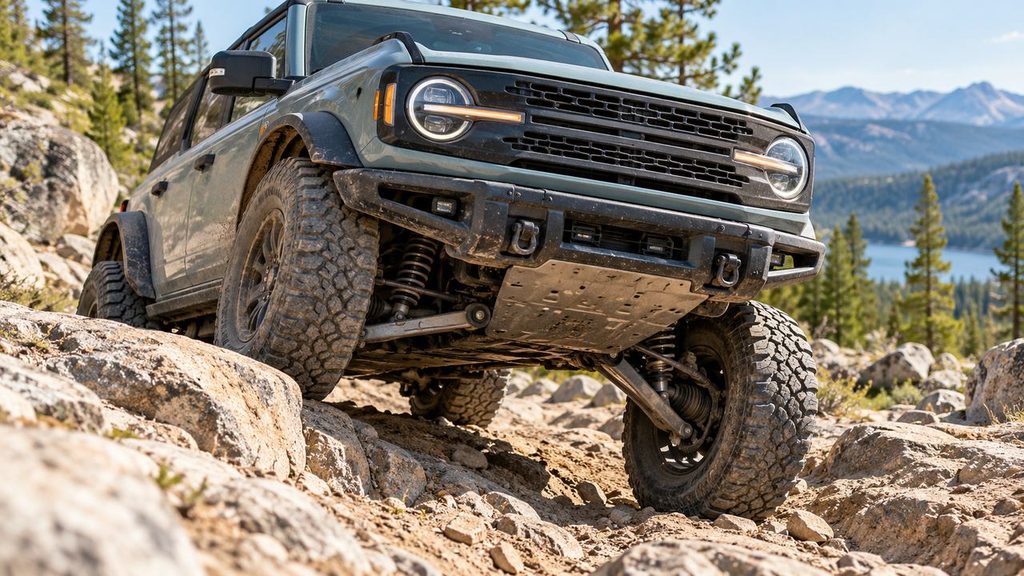
Independent Front Suspension
With IFS, each wheel already has its own control arms and wheel path, but the sway bar still couples left and right movement.
Disconnecting it allows each side to use its available independent motion with less anti-roll resistance. It does not turn IFS into a solid axle and does not remove limitations imposed by CV joints, control-arm geometry, shock travel or steering components.
The broader differences between the two suspension architectures are covered in our solid axle vs independent suspension guide.
Why a Disconnect Can Make Rough Trails Feel Smoother
The benefit is not limited to maximum wheel flex.
With the stabilizer bar connected, a bump affecting one front wheel can create force at the opposite side through the bar. On alternating rocks or ruts, that can make the body feel as though it is being pushed from side to side.
Reducing that cross-coupling can let the wheels react more independently, so the body does not follow every single wheel movement as aggressively.
At crawling speed, that can make the vehicle feel more compliant even though spring rates and shock valving have not changed.
Again, the same softness is not desirable everywhere. As speed rises, body control becomes more important, which is why a disconnectable bar is more versatile than simply removing the bar.
Do You Need a Sway Bar Disconnect for Off-Roading?
No. Plenty of capable 4x4s work very well off road with their sway bars connected.
A disconnect becomes increasingly useful as terrain demands more cross-axle articulation. It is most noticeable when the stabilizer bar itself is becoming one of the components limiting how well the tires follow the terrain.
For mild trails, the limiting factors may instead be tires, ground clearance, approach and departure angles, differential traction or driver technique.
That is why adding a disconnect should solve an actual need rather than simply checking another box on an off-road build list.
Can You Drive With the Sway Bar Disconnected?
At low speed on suitable off-road terrain, that is exactly what a disconnect is designed to allow. Normal road driving is different.
Without normal sway-bar action, the body can roll farther during steering inputs. Emergency maneuvers, quick lane changes and corners can therefore feel very different from the handling the vehicle was designed to provide with the bar connected.
Factory systems help manage this risk by limiting when the disconnect can operate or by automatically reconnecting under certain conditions.
For example, current Wrangler Rubicon systems use vehicle-specific operating conditions involving drive mode and speed. Other vehicles use different logic. Aftermarket manual disconnects have no computer protecting you from forgetting to reconnect them.
Before leaving the trail, physically confirm that a manual disconnect is correctly reattached and secured.
Why a Sway Bar May Refuse to Disconnect or Reconnect
A sway bar works by carrying torsional load between the two sides of the suspension. If one wheel is substantially higher than the other, the bar may already be twisted and loaded.
That load can make a manual pin difficult to remove or prevent an electronic coupler from moving cleanly into position.
Depending on the vehicle, moving slowly onto more level ground or allowing the suspension to settle can relieve the load enough for the system to engage or disengage.
Do not hammer, pry or force loaded disconnect hardware without knowing the procedure. Stored suspension force can move components suddenly when released.
If a factory electronic system repeatedly refuses to reconnect, shows a warning or remains stuck in off-road mode, follow the manufacturer’s procedure and inspect the system before normal road use.
Quick Disconnects: What to Check Before Buying
If your 4×4 does not have a factory disconnect, aftermarket quick-disconnect links may provide similar trail convenience without changing the complete suspension.
Fitment matters more than simply finding a link described as “adjustable.” Check:
- Vehicle and model-year compatibility — mounting dimensions can differ even within the same model line.
- Lift height range — a lifted vehicle may need a longer link so the sway bar operates at the intended angle when connected.
- Clearance when disconnected — the loose link and bar must not contact tires, brake hoses or steering components.
- Retention method — disconnected components need a secure place to stay while driving the trail.
- Bushing or joint design — the link still needs to function correctly during normal connected driving.
- Ease of reconnection — a design that works well in the garage may be frustrating when covered in mud and loaded unevenly on a trail.
After changing link length or other suspension components, also check clearance throughout steering lock and suspension movement rather than evaluating the vehicle only at static ride height.
Common Mistakes With Sway Bar Disconnects
Assuming More Flex Is Always Better
Maximum articulation is useful in some terrain, but suspension still needs control. A disconnected vehicle may have more body motion, and that can be undesirable on fast or heavily off-camber sections.
Confusing Articulation With Added Travel
The disconnect usually lets the existing suspension use more of its available travel during opposite-side wheel movement. It does not automatically lengthen shocks or change the suspension’s hard geometric limits.
Forgetting to Reconnect Before the Road
This is especially relevant with manual systems. Electronic factory systems may provide warnings or automatic logic; a removable pin does not know whether you are entering a highway.
Using the Sway Bar as the Droop Limit
If disconnecting the bar reveals enough droop that a brake hose, shock, CV joint or driveshaft reaches an unsafe limit, the suspension has another problem to solve.
The sway bar should not be relied upon as the component protecting hoses, joints or shocks from overextension.
Assuming a Broken Link Is Basically a Free Disconnect
A failed link may leave components loose, allow unexpected movement or create contact with nearby parts. An intentional disconnect system is designed to be released and secured safely; a broken suspension component is not.
Factory Electronic Disconnect Examples
Factory systems are useful examples because they show the purpose of the technology without implying that every implementation works identically.
Jeep Wrangler Rubicon: uses an electronic front sway bar disconnect to increase front suspension articulation during low-speed off-road driving. Vehicle speed and four-wheel-drive mode are part of the operating logic.
Ford Bronco: selected off-road-focused configurations use a front stabilizer bar disconnect to increase articulation across uneven obstacles. Because the Bronco uses independent front suspension, it also demonstrates that the benefit is not exclusive to solid front axles.
Ram Power Wagon: pairs an electronically disconnecting front sway bar with other off-road hardware to give its heavy-duty solid front axle more freedom to articulate.
These systems reinforce the same basic principle: retain roll stiffness when it is useful, then temporarily release it when slow technical terrain demands more independent wheel movement.
Frequently Asked Questions
Why do people disconnect the front sway bar off road?
They disconnect it so the left and right front wheels can move more independently. This reduces the anti-roll bar’s resistance to cross-axle articulation and can help the suspension keep the tires in contact with uneven terrain.
Will disconnecting a sway bar make the ride softer?
It can feel softer over alternating bumps and uneven off-road terrain because movement at one wheel is transmitted less strongly through the stabilizer bar to the opposite side. Spring rate and shock damping themselves do not change.
Can you disconnect only one sway bar link?
Some designs effectively disable the bar by releasing a connection, while other aftermarket systems are designed to disconnect and secure both links. Follow the instructions for the specific kit rather than assuming one universal procedure.
Do you need to jack up the vehicle to reconnect quick disconnects?
Not necessarily. Reconnection is often easiest when the vehicle is on relatively level ground and the left and right suspension positions place little twist in the bar. Exact procedures vary by kit.
Does a sway bar disconnect help an IFS vehicle?
Yes. Independent front suspension already allows separate wheel paths, but a connected stabilizer bar still resists differences between left and right wheel movement. Disconnecting it can free more usable articulation within the IFS system’s existing geometric limits.
Is an electronic disconnect better than manual quick disconnects?
It is more convenient because the driver can usually operate it from inside the vehicle, and factory systems may include protective operating logic. Manual quick disconnects are simpler and usually cheaper but require physical disconnection and reconnection.
Can a sway bar disconnect replace a locker?
No. They solve different problems. A sway bar disconnect helps suspension articulation and tire contact, while a locking differential controls how torque is distributed between wheels on an axle.
When a Sway Bar Disconnect Is Actually Worth Having
A sway bar disconnect is most valuable when you regularly encounter terrain where the front suspension is visibly fighting to keep both tires on the ground—rocks, deep ruts, ledges and other slow obstacles that require substantial cross-axle articulation.
It gives a dual-purpose 4×4 something permanent sway bar removal cannot: flexibility off road without giving up normal roll control when you return to pavement.
But it is not a shortcut to long-travel suspension, a replacement for lockers or a feature every trail vehicle must have. If the terrain never asks the front wheels to move far in opposite directions, the difference may be small.
The best way to think about it is simple: the sway bar is valuable when you want the two sides of the suspension to resist moving differently. A disconnect is valuable when the trail demands exactly the opposite.