Ram 1500 Air Suspension Problems: Causes and Fixes
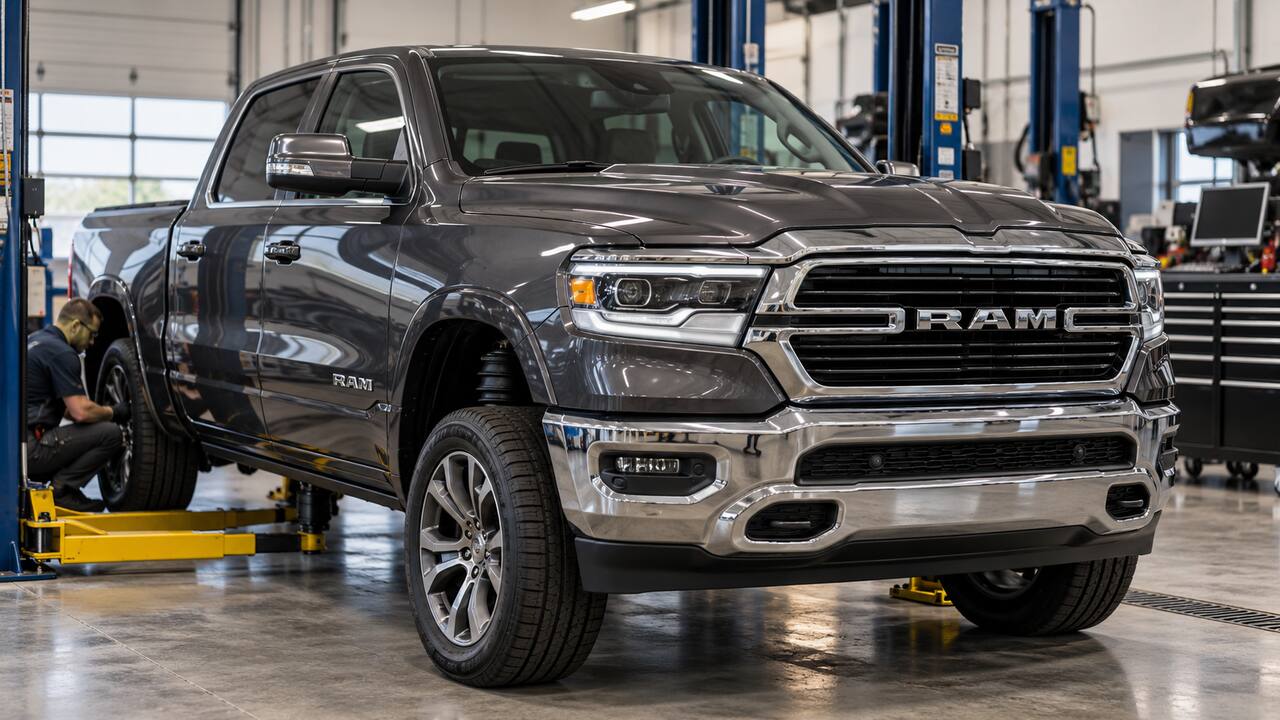
The most common Ram 1500 air suspension problems are air leaks, a truck that sags after parking, slow or failed height adjustment, excessive compressor operation, cold-weather malfunctions, and “Service Air Suspension System” warnings.
If the system is stuck in one ride height or remains in Tire/Jack Mode, follow our Ram 1500 air suspension reset guide before replacing any components. A reset may restore a disabled operating mode, but it will not repair an air leak, faulty height sensor, or failed compressor.
This guide applies primarily to factory four-corner air suspension on the 2013–2018 Ram 1500 and applicable 2019-and-newer Ram 1500 models. Menus, components, and service procedures can vary between the older DS/Classic platform and the newer DT generation, so always confirm the instructions for your model year.

Ram 1500 Air Suspension Problems at a Glance
Different air suspension failures can produce similar symptoms, so a low ride height or dashboard warning does not automatically mean the compressor needs replacing. The table below summarizes common problems, possible causes, and useful first checks:
| Symptom | Likely Causes | First Check |
|---|---|---|
| One corner drops overnight | Leaking air spring, fitting, or line | Compare ride height before parking and the next morning |
| Front or rear axle sits low | Leak, valve block problem, compressor fault, or low system pressure | Check for warnings and listen for compressor operation |
| Truck will not raise or lower | Protection mode, weak compressor, fuse or electrical fault, sensor issue | Check the selected suspension mode and scan for fault codes |
| Compressor runs frequently | Air leak or compressor losing efficiency | Inspect for leaks before replacing the compressor |
| Problem appears in freezing weather | Moisture, frozen valve or line, weak compressor, or electrical issue | Record temperature and warning message; obtain a proper diagnosis |
| Truck sits unevenly after suspension work | Height sensor, linkage, calibration, or incorrect service mode | Inspect sensor linkages and verify calibration |
| “Air Suspension Temporarily Disabled” | Operating conditions or a protective suspension mode | Check Tire/Jack, Transport, and Wheel Alignment modes |
| “Service Air Suspension System” remains | Stored system fault requiring diagnosis | Use a scan tool capable of reading suspension-module codes |
1. Ram 1500 Sags on One Side After Parking
A Ram 1500 that is level when parked but lower at one corner several hours later most likely has an air leak. The leak may be in the rubber air spring, a connector, an air line, or the valve block. Temperature changes can also alter ride height slightly, but a clearly collapsed corner is not normal.
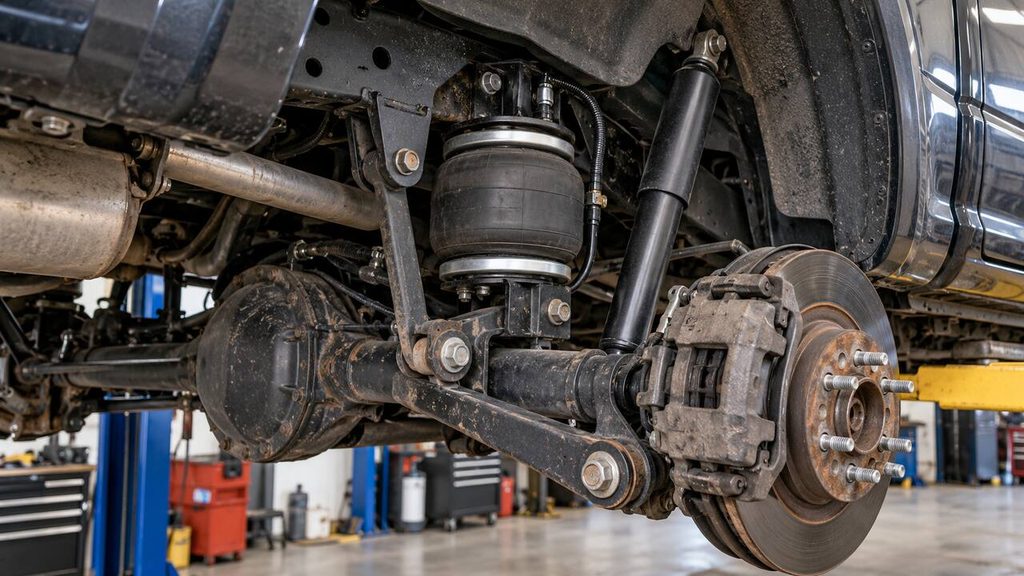
Park on level ground, note the height at all four wheel arches, and check it again after several hours. This observation helps identify which circuit is losing pressure. Do not crawl under a vehicle supported only by its air suspension because its height can change unexpectedly.
Avoid pouring generic tire sealant or an unapproved sealing product into the air suspension. It can contaminate valves, lines, and the compressor assembly. The correct repair is to locate the leak and replace or reseal the affected component according to the manufacturer’s procedure. For safe inspection methods, see our guide to diagnosing air suspension leaks.
2. Front or Rear Suspension Stays Too Low
If an entire axle remains low, the problem is not necessarily two failed air springs. Possible causes include a shared air circuit leak, valve block fault, insufficient compressor output, sensor input problem, or a suspension control fault.
Do not repeatedly command the truck to rise if the compressor is running for long periods without changing the height. Continuous operation can overheat a struggling compressor and turn one repair into two.
3. Air Suspension Will Not Raise or Lower
The system may temporarily refuse a height change because of vehicle speed, engine status, door position, payload, operating temperature, or a selected service mode. A genuine system fault can cause the same symptom, so first read the exact instrument-cluster message rather than assuming the compressor has failed.
Ram owner’s manuals explain that the air suspension has several protective modes, including Tire/Jack Mode, Transport Mode, and Wheel Alignment Mode. These modes intentionally disable or alter automatic leveling for specific service operations. Check the Suspension menu in the instrument cluster or Uconnect settings and verify that an appropriate mode has not been left enabled.
The available menus differ by model year. Consult the correct manual for your truck, such as the official 2016 Ram 1500 user guide or 2020 Ram 1500 owner’s manual.
4. Compressor Runs Too Often or Sounds Abnormal
The compressor may operate briefly when the truck corrects its height; Ram’s manual describes brief operation as normal. Running repeatedly while parked, operating for unusually long periods, becoming much louder, or failing to raise the truck suggests a problem.
A worn compressor is possible, but always check for leaks first. A small leak forces the compressor to cycle more frequently and can eventually wear it out. Replacing only the compressor without repairing the leak may lead to another failure.
For additional checks, see how to tell if an air suspension compressor is failing.
5. Ram Air Suspension Problems in Cold Weather
Cold-weather complaints are particularly common among owners of earlier Ram 1500 air suspension systems. A truck may fail to change height, sit low, or display a warning during freezing conditions and operate normally again after warming up.
Possible causes include moisture freezing within the pneumatic system, a valve or compressor already operating near its limit, lower battery performance, damaged wiring, or a temperature-sensitive leak. Warming the truck may make the symptom disappear, but it does not prove that the underlying fault has been repaired.
Do not keep replacing blown fuses or relays without determining why the circuit is overloaded. Record the outside temperature, truck height, warning message, compressor behavior, and whether the problem disappears when warm. That information can make professional diagnosis much faster.
6. Ride-Height Sensor or Linkage Problems
Ride-height sensors tell the control module how high each part of the truck is sitting. A damaged sensor, disconnected linkage, corroded connector, wiring fault, or incorrect calibration can make the module command the wrong height even when the air springs and compressor are functional.
This is especially worth checking after suspension, alignment, wheel, or underbody work. Replacing a sensor may require a scan-tool calibration; simply installing the part does not guarantee that the system will interpret its position correctly.
7. “Service Air Suspension System” Warning
A persistent service warning means the suspension control module has detected a fault. The message alone does not identify the failed part. A basic engine-code reader may show no useful information because the relevant codes are stored in the suspension module.
Use a scan tool that can communicate with the Ram air suspension system. Record the codes before clearing them, because they provide valuable evidence about pressure, compressor performance, sensors, valves, voltage, or communication faults.
Check Suspension Modes Before Replacing Parts
There is no universal button combination that repairs or fully recalibrates every Ram 1500 air suspension system. Procedures vary by model year, and professional calibration normally requires a compatible scan tool.
For a temporary operating glitch, you can perform these safe preliminary checks:
- Park the truck on firm, level ground and close all doors.
- Start the engine and read the complete instrument-cluster message.
- Open the Suspension settings and make sure Tire/Jack Mode, Transport Mode, or Wheel Alignment Mode is not enabled unintentionally.
- Return the suspension to its normal operating mode using the controls described in your model-year owner’s manual.
- If the warning remains, the truck will not level, or the compressor runs excessively, stop cycling the system and obtain a suspension-module scan.
Turning the ignition off and restarting the truck may clear a temporary condition, but it is not a repair. Do not disconnect the battery merely to erase a warning before recording the diagnostic codes.
How a Technician Diagnoses the Problem
A proper diagnosis follows a systematic sequence instead of replacing parts based on symptoms alone. A technician should check the suspension control system, electrical supply, air circuits, and ride-height sensors before deciding which components need repair:
- Verify the complaint: compare ride height, warning messages, temperature, and compressor behavior.
- Scan the suspension module: retrieve stored and active faults before clearing anything.
- Inspect electrical power: test the battery, charging voltage, fuses, relays, grounds, connectors, and wiring according to the service information.
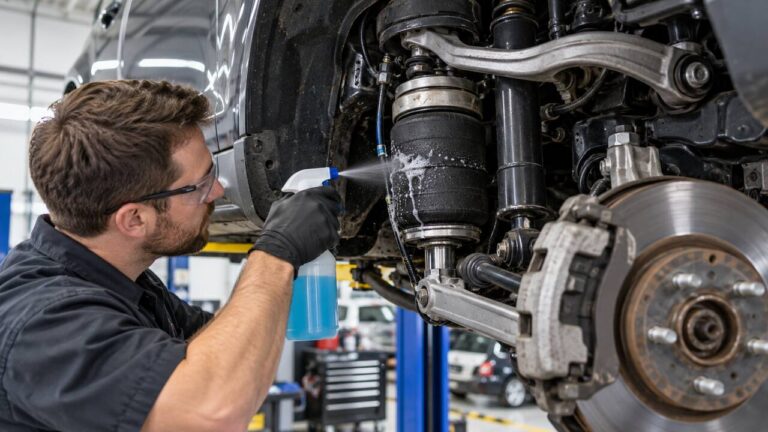
- Check for air leaks: inspect air springs, fittings, lines, and valve connections using an approved leak-detection method.
- Test compressor performance: determine whether it can build and maintain the required system pressure.
- Inspect height sensors: check linkages, wiring, live sensor data, and calibration.
- Repair and calibrate: replace only confirmed failed components and perform the required ride-height calibration.
Common Ram Air Suspension Repairs and Cost Factors
Repair cost depends much more on the failed part than on the warning displayed. A line or fitting repair may cost a few hundred dollars, while an air spring, compressor, valve assembly, or multi-component repair can cost considerably more.
| Repair Type | What May Be Required |
|---|---|
| Minor air leak | Line, connector, seal, or fitting repair |
| Leaking air spring | Air spring replacement and leak test |
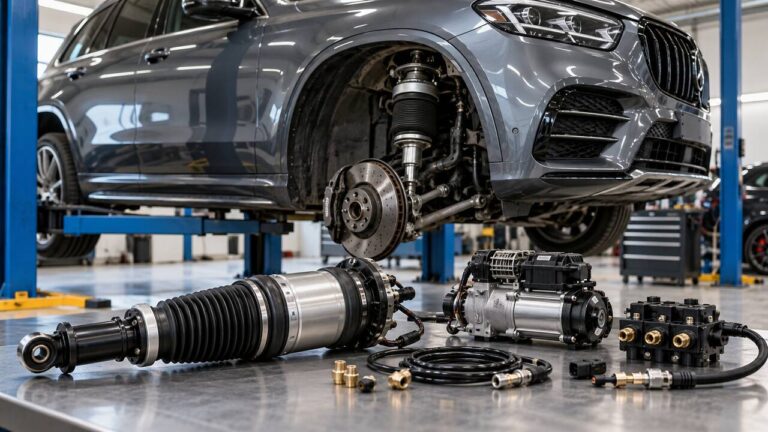
| Weak or damaged compressor | Compressor, relay, dryer, or related electrical repair |
| Valve block fault | Valve assembly replacement and system testing |
| Height-sensor fault | Sensor or linkage repair followed by calibration |
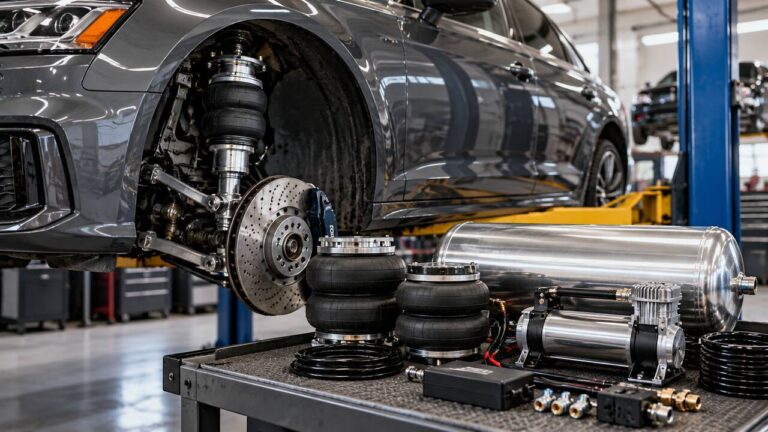
| Multiple aging components | System repair or evaluation of a coil-spring conversion |
Our air suspension replacement cost guide explains typical component prices and what should be included in a professional estimate.
Repair the Factory System or Convert to Coil Springs?
Repairing the original system preserves automatic load leveling, adjustable ride height, and the truck’s intended operating features. It is generally the better option when the Ram is in good condition and only one or two components have failed.
A model-specific coil-spring conversion may be worth considering when an older truck has repeated failures or several expensive components need replacement. Before converting, verify fitment, payload and towing implications, warning-light solutions, alignment requirements, insurance considerations, and local regulations. A conversion changes how the truck operates and should not be treated as a universal upgrade.
Can You Drive With a Ram 1500 Air Suspension Fault?
Do not continue driving if the truck is resting near its bump stops, a tire is rubbing, one corner is severely collapsed, steering or braking feels unstable, or the instrument cluster instructs you to stop. Arrange professional assistance or towing.
If the truck remains level and drives normally but displays a service message, minimize unnecessary driving and schedule a diagnosis. Continuing to operate a leaking system can overwork the compressor and increase the eventual repair cost.
Frequently Asked Questions
Why does my Ram 1500 air suspension drop overnight?
A significant overnight drop usually indicates an air leak in a spring, line, fitting, or valve circuit. The corner or axle that falls can help narrow down the affected part, but a leak test is needed before replacement.
Why does my Ram air suspension fail when it is cold?
Freezing-weather faults can involve moisture in the pneumatic system, a marginal compressor, a temperature-sensitive leak, lower battery output, or an electrical problem. Warming the truck may temporarily restore operation but does not identify or repair the cause.
Is there a Ram 1500 air suspension reset button?
No universal physical reset button or button sequence applies to every Ram 1500. Check that the correct suspension mode is selected, follow the owner’s manual for your model year, and use a capable scan tool when calibration or fault diagnosis is required.
Why is my Ram 1500 air suspension temporarily disabled?
The system may be protecting itself because of operating conditions or may be in Tire/Jack, Transport, or Wheel Alignment Mode. Verify the selected mode first. If normal operation does not return or another warning appears, scan the suspension module.
Should I replace the compressor if the truck sits low?
Not without testing. A leak, valve fault, sensor problem, electrical issue, or active service mode can also prevent the truck from rising. Replacing the compressor without fixing a leak can quickly damage the new unit.
Next Steps for a Ram 1500 Air Suspension Fault
Start by recording the exact warning, which part of the truck sits low, how long it takes to drop, the outside temperature, and how often the compressor operates. Then have the suspension module scanned and the pneumatic system leak-tested. A symptom-based diagnosis is far more reliable—and usually less expensive—than replacing parts until the warning disappears.