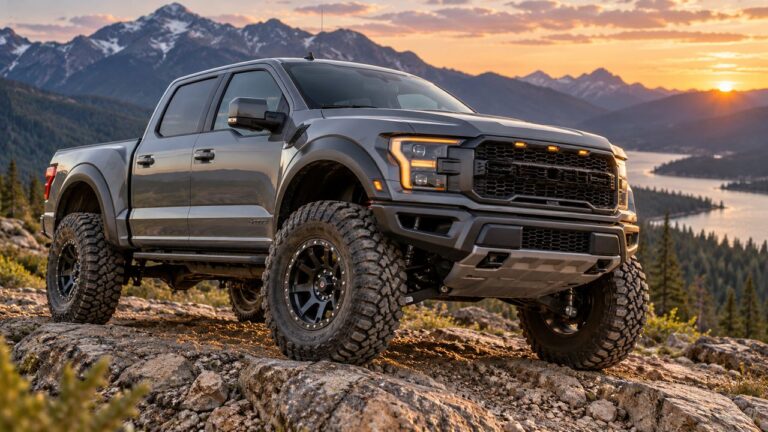
Leveling Kit vs Lift Kit: Which Is Better for Your Truck?
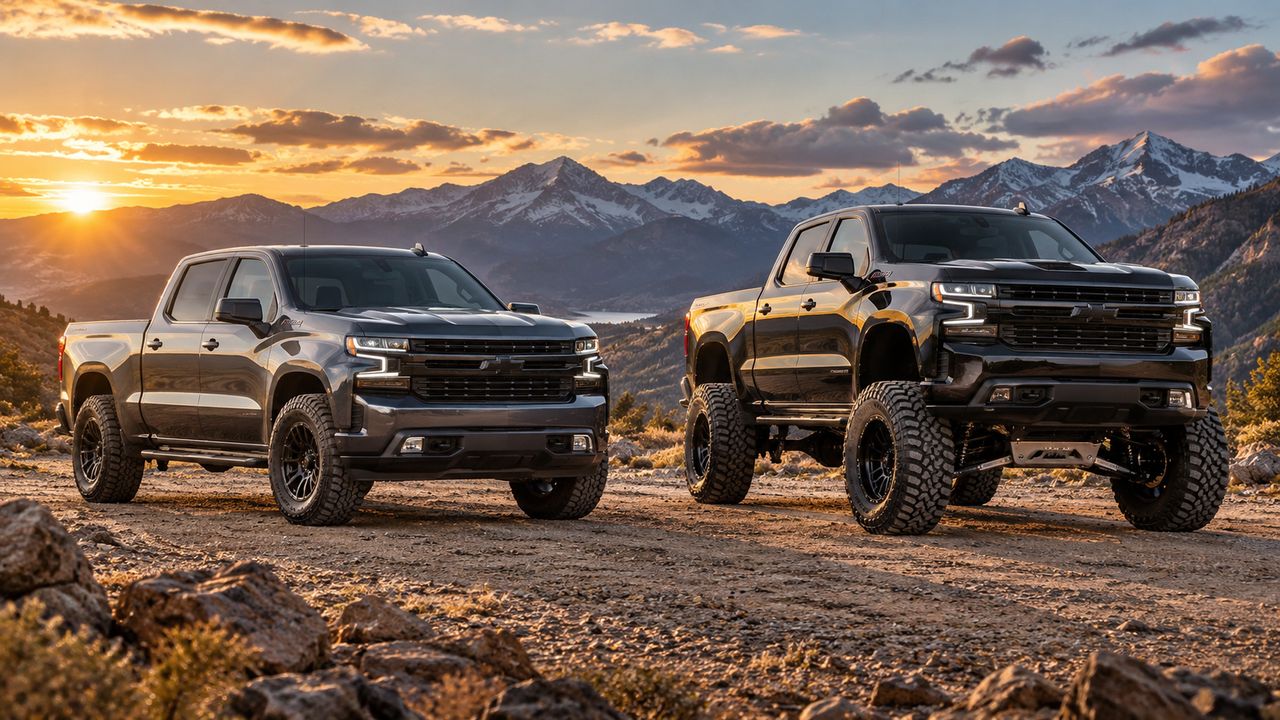
For most daily-driven trucks, a leveling kit is the better choice when you mainly want to remove factory rake and gain modest tire clearance. Choose a suspension lift kit when you want the entire truck higher, need substantially more room for larger tires, or are building for regular off-road use.
The important difference in the leveling kit vs lift kit decision is not simply how many inches each one adds. It is what part of the truck is being raised, what suspension geometry changes, how much tire clearance you actually need, and what compromises you are willing to accept in towing, ride, steering and daily use.
| Feature | Leveling kit | Suspension lift kit |
|---|---|---|
| Main purpose | Reduce factory rake | Raise overall vehicle height |
| Typical change | Front-biased height increase | Front and rear suspension changes |
| Tire clearance | Modest increase | Greater potential |
| Off-road clearance | Limited improvement | Better potential when properly designed |
| Installation | Usually simpler | Usually more involved |
| Geometry changes | Still important, especially on IFS | More extensive as lift height increases |
| Daily driving | Usually easier to live with | Depends heavily on height and kit design |
| Towing | Can reduce visible unloaded rake | Can affect hitch and driveline geometry |
| Best for | Stance, mild tire upgrade, street use | Bigger tires, clearance and off-road builds |
The Difference Between a Leveling Kit and Lift Kit
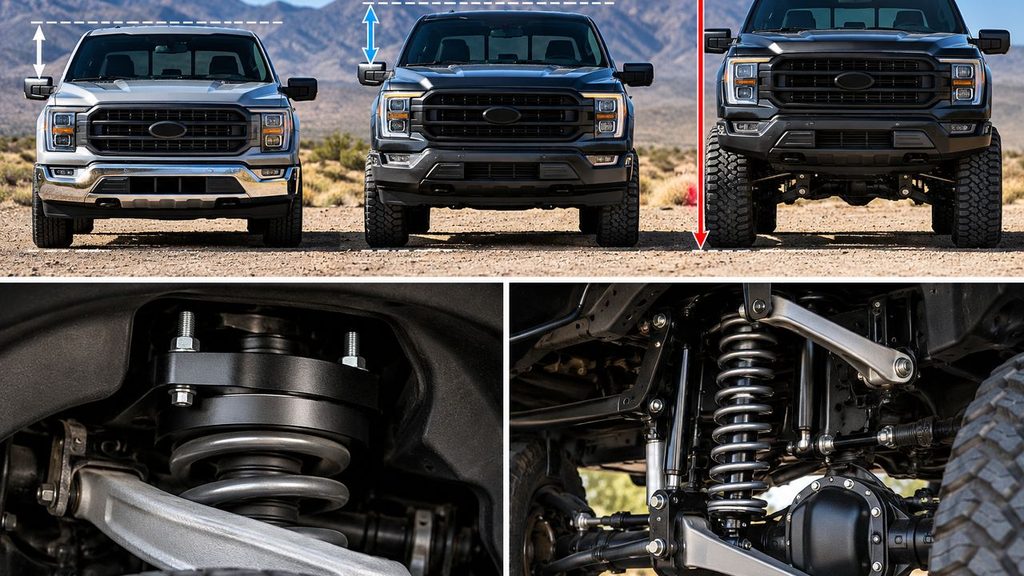
A leveling kit is designed primarily to reduce the nose-down stance found on many trucks. The rear normally sits higher than the front when unloaded, a condition known as factory rake. Raising the front closer to the rear height creates a more level appearance and may provide additional clearance around the front tires.
A suspension lift has a different goal. Instead of simply correcting rake, it raises the vehicle by modifying or repositioning suspension components at the front and usually the rear. Depending on the truck and lift height, a complete system may use springs, struts, shocks, control arms, steering knuckles, crossmembers, blocks, track bars, differential relocation hardware or other geometry corrections.
That distinction is more useful than assigning a universal number of inches. A mild suspension system may add only a few inches, while some products marketed as “leveling lifts” also include rear components. Always judge the kit by what it changes on your exact truck rather than by the product label alone.
Why Trucks Have Factory Rake
The rear of a pickup often sits higher when empty because the truck is designed to carry cargo and trailer tongue weight. As weight compresses the rear suspension, some of that rake disappears. The amount varies by model, suspension package and load.
This matters before installing a leveling kit. A truck that looks perfectly level when empty can appear rear-low once a trailer is attached or the bed is loaded. Leveling the front does not reduce the manufacturer’s payload or towing rating by itself, but it also does not increase those ratings or prevent rear suspension squat.
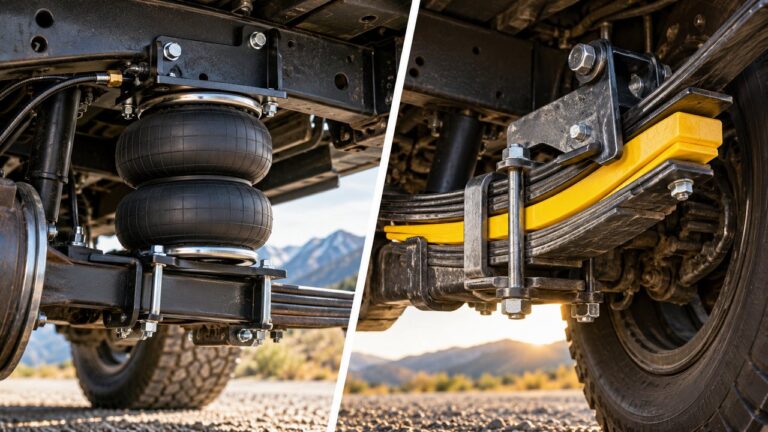
If your main problem is rear sag while towing rather than the unloaded stance, changing the front height may be solving the wrong problem. Adjustable air support and mechanical helpers serve a different purpose; our airbags vs helper springs comparison explains those options.
How Leveling Kits Raise the Front
Not every leveling kit works the same way. The hardware depends on the truck’s original front suspension.
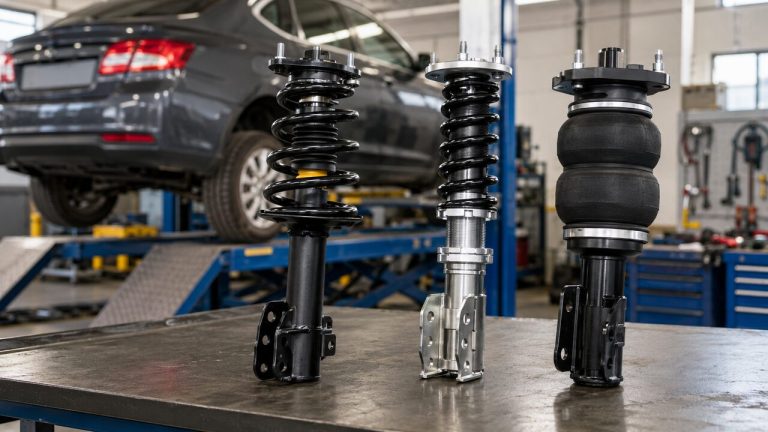
- Strut spacers change the installed position or effective length of a strut assembly.
- Preload or coil spacers alter how the spring sits or is loaded in the assembly.
- Torsion keys are used on torsion-bar front suspensions to change front ride height.
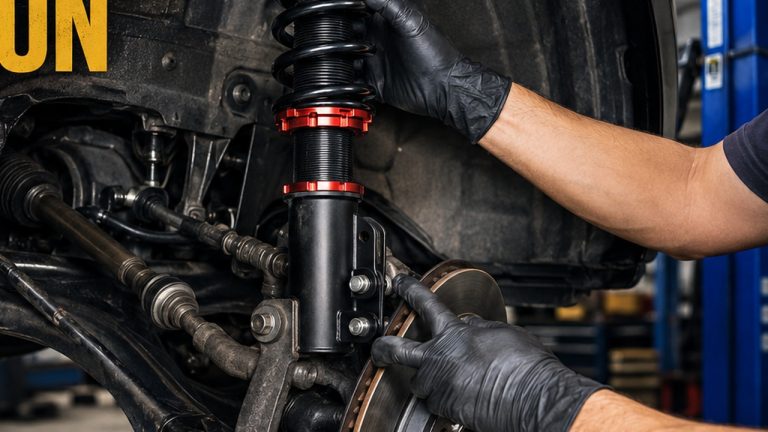
- Height-adjustable struts or coilovers can provide the desired stance while replacing the original damper or spring-and-damper assembly.
Two kits advertised with the same nominal lift can therefore affect spring preload, droop, shock position and suspension angles differently. A cheap spacer is not mechanically identical to a properly selected replacement strut or coilover just because the finished fender height looks similar.
A Suspension Lift Changes More Than Stance
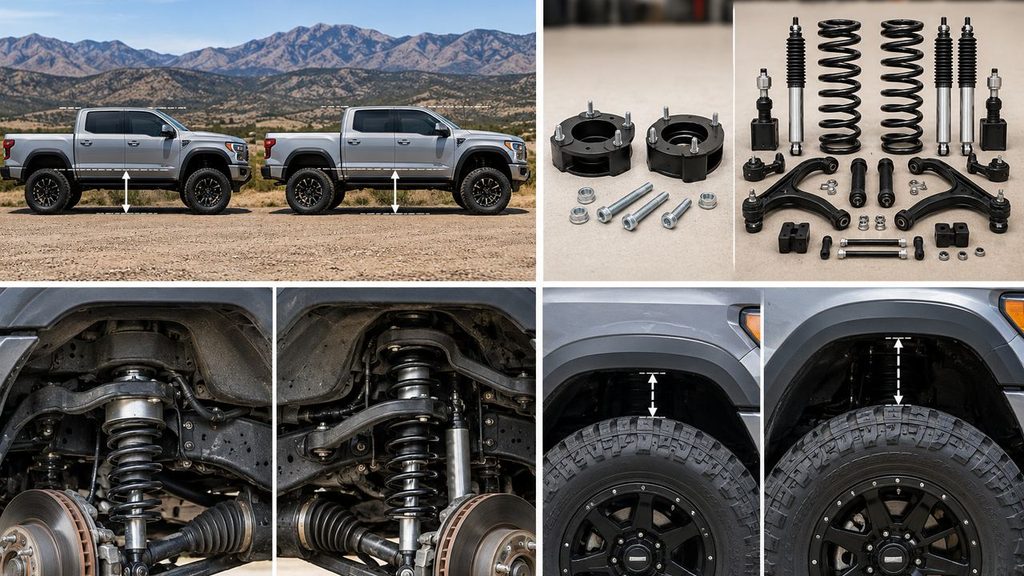
A suspension lift kit is intended to create additional overall ride height while keeping steering, suspension and driveline geometry within an acceptable range. The taller the system, the more supporting hardware it may require.
On an independent front suspension truck, that can mean correcting control-arm, ball-joint and CV axle angles with new arms, steering knuckles, crossmembers or differential relocation brackets. On a solid-axle platform, taller springs may require track-bar, steering, brake-line, driveshaft or control-arm corrections depending on the suspension design.
A larger kit is therefore not simply a taller version of a leveling spacer. The quality of the geometry corrections is often more important than the advertised lift height.
Tire Clearance: Start With the Tire, Not the Lift Number
One of the biggest mistakes in a leveling kit or lift kit purchase is assuming that a certain number of lift inches guarantees a certain tire diameter. It does not.
Tire clearance also depends on wheel width, offset, backspacing, tire width and actual measured diameter, suspension design, trim level, bodywork and whether the tire must clear at full steering lock and suspension compression.
A leveling kit can make room around the front wheel opening on many trucks, but wheel offset can create rubbing even when the tire diameter looks reasonable on paper. A suspension lift generally provides more flexibility for larger tires, although some combinations still require different wheels or trimming.
The better buying process is to decide the tire size and use case first, then choose a vehicle-specific suspension system that the manufacturer approves for that combination. If 35s are your target, see our guide to how much lift 35-inch tires actually need before choosing the kit.
Does a Lift Kit Really Increase Ground Clearance?
Yes—but the answer depends on what you mean by ground clearance.
Raising the frame and body can improve clearance at rocker panels, bumpers and other chassis points, and it can improve approach, breakover and departure capability. Larger tires can add clearance as well.
However, a suspension lift does not magically move every component farther from the ground. On a solid axle, the differential housing remains tied to the wheel centerline, so lifting the body or springs does not raise the differential relative to the tire. A taller tire is what increases clearance under that axle housing.
Independent front suspension is different again. Some larger bracket lifts reposition the differential or crossmembers to correct CV geometry, so advertised lift height and clearance at the lowest suspension component are not necessarily the same number.
Ride Quality Depends on the Kit Design
A leveling kit does not automatically preserve factory ride quality, and a lift kit does not automatically make a truck ride badly. The result depends on how the height is created and which springs, shocks, tires and geometry changes are involved.
A mild spacer setup may retain the original springs and dampers, but it still changes the suspension’s operating position and angles. A replacement strut or coilover can change spring rate and damping as well as ride height. Larger lifts may use completely different shocks and springs, so their ride can range from comfortable to very firm depending on the system.
Heavier wheels and larger all-terrain or mud-terrain tires can also change steering effort, impact harshness and noise. Do not blame every change in ride on the lift hardware when the wheel-and-tire package changed at the same time.
Lift Height Is Not the Same as Suspension Travel
More ride height does not automatically mean more usable wheel travel. Some kits mainly reposition the vehicle while preserving roughly similar suspension travel. Others use longer shocks, revised control arms or more extensive geometry changes that can increase usable movement.
This distinction matters off-road. A tall truck with poor droop, incorrect shock length or binding joints can perform worse than a lower truck with well-controlled travel. If wheel travel itself is the goal, see how a true long-travel suspension differs from simply increasing ride height.
Suspension Geometry Matters Even With a Leveling Kit
Leveling kits are simpler than most full suspension lifts, but they are not geometry-free modifications. Raising an independent front suspension changes where the control arms, ball joints, tie rods and CV axles operate.
A mild height change may remain within the adjustment and articulation range of the factory components. As front lift increases, however, upper control-arm clearance, ball-joint angle, CV angle and available caster can become more important. This is why some higher or more performance-oriented kits include corrected upper control arms or other supporting parts.
Both leveling and suspension lift installations should be followed by an alignment check once the suspension is assembled at its final ride height. Our guide to alignment after suspension work explains why camber, caster and toe can change.
Leveling Kit vs 3-Inch Lift: The Gray Area
The comparison becomes less obvious around mild lift heights. A product advertised as a 3-inch kit may be a simple front-biased system on one truck and a more complete suspension lift on another.
Instead of deciding that “3 inches equals a lift kit,” inspect what the kit actually includes. Does it raise the rear? Does it include corrected upper control arms? Does the front differential move? Are longer shocks or struts supplied? Does the manufacturer specify different wheel offset or tire clearance?
At this point, vehicle-specific geometry matters more than marketing terminology. If reaching the desired height requires several correction parts, you are effectively choosing a suspension system rather than a simple cosmetic level.
Which Is Better for Daily Driving?
For a truck that spends most of its time commuting, carrying passengers and running errands, a mild leveling kit usually creates fewer compromises than a tall lift.
The truck remains closer to stock in overall height, making entry, parking garages and bed access easier. There is also less incentive to install extremely large and heavy tires, which can affect acceleration, braking and fuel economy.
A moderate, well-engineered suspension lift can still work very well on a daily driver. The tradeoff grows with height, tire mass and wheel offset—not simply because the product is called a lift kit.
Which Is Better for Towing and Hauling?
If towing and hauling are priorities, do not choose solely by how the empty truck looks. Factory rake provides room for the rear suspension to compress under load, so eliminating all of it can make rear squat more visually obvious when a trailer is connected.
A leveling kit does not increase payload, GVWR, GAWR or towing capacity. Neither does a suspension lift. Larger tires, changes in hitch height and altered suspension geometry can also create additional setup considerations on a lifted tow vehicle.
Frequent towing therefore favors a conservative approach: preserve enough loaded attitude, use the correct hitch configuration and solve rear load support separately when required.
Which Is Better Off-Road?
A suspension lift usually offers more potential for off-road builds because it can provide greater chassis clearance and accommodate larger tires. But the word “lift” alone does not guarantee better trail performance.
Shock length, wheel travel, spring rates, control-arm geometry, axle location, steering correction, bump stops and tire choice all matter. A modest, complete suspension system can be more useful than a taller kit chosen only for appearance.
If you are building primarily for trails rather than appearance, compare complete systems in our guide to the best off-road suspension kits instead of choosing only by advertised lift height.
The Hidden Costs of Leveling and Lift Kits
The kit itself is only part of the budget. This becomes increasingly important as ride height and tire size increase.
- Alignment: Plan to measure and correct alignment after changing suspension ride height.
- Wheels and tires: Larger tires may require different wheel width, offset or backspacing.
- Trimming: Tire clearance may still require liner or body modifications on some combinations.
- Upper control arms: Some leveled or lifted IFS trucks need revised geometry or additional joint clearance.
- Driveline corrections: Taller systems can require differential, driveshaft or pinion-angle changes.
- Calibration: A substantial tire-size change may affect speedometer and transmission behavior.
- Fuel and wear: Taller, heavier tires increase rotating mass and aerodynamic drag and can increase operating costs.
- Convenience: Step-in height, garage clearance and loading height can become everyday compromises.
A premium leveling setup with quality coilovers and control arms can therefore cost more than an entry-level lift, while a complete lift build with tires, wheels and geometry corrections can cost far more than the advertised kit price.
What About a Body Lift?
A body lift is a separate modification and should not be confused with the suspension lift kit discussed above. On body-on-frame vehicles, spacers raise the body relative to the frame while the suspension remains at essentially the same height.
This can create additional body-to-tire clearance without changing suspension geometry in the same way as a suspension lift, but it does not raise the frame, axles or suspension components away from the ground. Steering shafts, bumpers, wiring, hoses and other body-to-frame connections may also require attention depending on the vehicle and lift height. For the complete comparison, see how a body lift differs from a suspension lift.
Leveling Kit or Lift Kit: Choose by Goal
| Your priority | Better starting point | Why |
|---|---|---|
| Remove factory rake | Leveling kit | Targets the front-to-rear stance directly |
| Mildly larger tires | Leveling kit | Often provides enough front clearance with fewer changes |
| Daily driving | Leveling kit | Keeps overall height and compromises closer to stock |
| Frequent towing | Depends | Preserving some rake may be useful under load |
| Much larger tires | Suspension lift | Provides greater fitment potential |
| Regular difficult trails | Suspension lift | Allows a more complete clearance-focused build |
| Maximum stance | Suspension lift | Raises the entire vehicle rather than only correcting rake |
| Lowest complexity | Leveling kit | Usually requires fewer components and less labor |
Frequently Asked Questions
Is a leveling kit the same as a lift kit?
No. A leveling kit is primarily intended to reduce front-to-rear rake, while a suspension lift is designed to increase overall vehicle height and usually changes more suspension components. Some mild products blur the terminology, so compare the actual hardware rather than the label.
Can you fit bigger tires with a leveling kit?
Often, but there is no universal tire size that fits every leveled truck. Diameter, width, wheel offset, backspacing, suspension design and body clearance all affect rubbing. Check fitment for the exact year, trim, drivetrain and wheel specification.
Does a leveling kit increase ground clearance?
It can raise some front chassis and body points, but it does not necessarily raise every low component. On a solid axle, differential clearance only increases when tire radius increases. The actual result depends on suspension architecture and the kit design.
Do leveling kits wear out ball joints or CV axles?
A leveling kit changes the operating angles of suspension and driveline components on many IFS trucks. Whether that creates a meaningful durability issue depends on the amount of height, original geometry, joint travel and kit design. Staying within the vehicle-specific manufacturer’s recommended range is more important than assuming every level is harmless or harmful.
Can you level a truck that already has a lift kit?
Only if the lift manufacturer specifically supports that combination. Stacking unrelated spacers or leveling components on top of an existing lift can create excessive joint angles, shock-length problems or alignment issues. Use parts designed to work together as a system.
Which Should You Choose for Your Truck?
Choose a leveling kit if your main goals are removing factory rake, fitting a modestly larger tire and keeping the truck close to its original height and driving behavior. It is usually the simpler answer for a street-driven truck that only needs a mild change.
Choose a suspension lift if you need the whole truck higher, want a substantially larger wheel-and-tire package or are building around regular off-road use. Focus on vehicle-specific geometry and included correction parts rather than buying the tallest kit available.
Whichever route you take, choose the tire and intended use first, verify exact fitment, budget for alignment and supporting modifications, and do not assume advertised lift height tells you everything about clearance, ride or suspension travel.