GMC Sierra 1500 Lift Kit: Best Heights, Tires & Fitment by Year
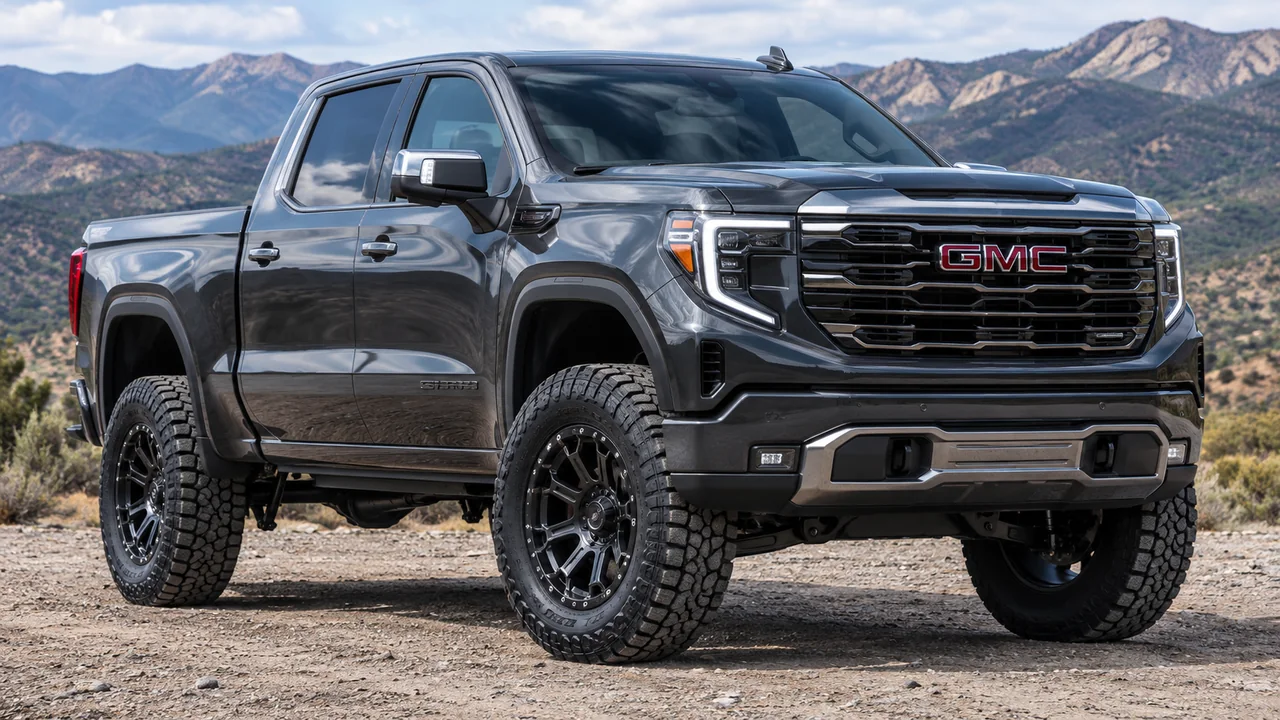
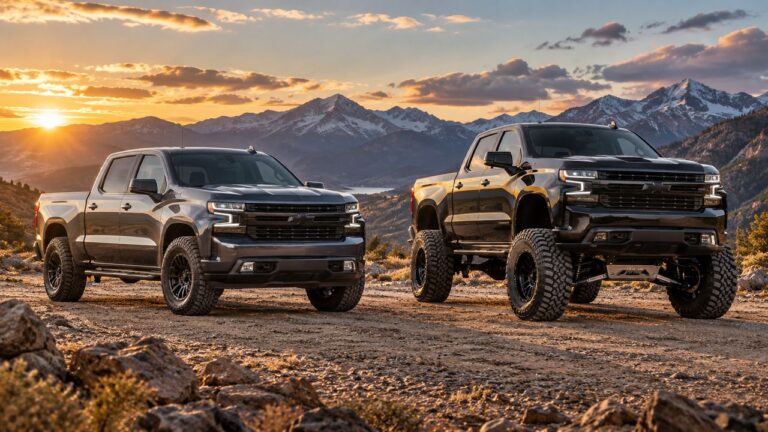
For most standard-height Sierras driven every day, the best GMC Sierra 1500 lift kit is a 2-inch front level for a modest change in stance or a matched 3–3.5-inch suspension system for more tire room. A 4- or 6-inch system becomes worth considering when the planned wheel and tire combination calls for it. On an AT4, AT4X or Denali, however, the first choice is not the height. It is the suspension application.
A 2017 Denali with MagneRide, a 2021 AT4 and a 2025 Elevation can require three entirely different kits. Even a Sierra and a Silverado using the same lift hardware may have different tire clearance at the front fenders. The guide below covers the light-duty Sierra, including older trucks, the two Limited model-year overlaps and the equipment exceptions that tend to cause expensive returns.
Which GMC Sierra 1500 Lift Kit Fits Your Truck?
Start with the factory suspension and the tire you actually want. These are buying recommendations, not guaranteed maximum tire sizes or universal kit approvals. Heights refer to the advertised aftermarket change unless otherwise noted.
| Factory configuration | Sensible starting point | What to confirm |
|---|---|---|
| Standard Sierra, mostly street use | 1.5–2 in front level | Remaining droop, alignment and loaded rake |
| Standard Sierra, larger all-terrain tires | 3–3.5 in matched system | Control arms, rear spring type and wheel dimensions |
| Standard Sierra, dedicated 35-in tire build | 4–6 in complete lift | Tested tire and wheel combination, knuckles and cutting requirements |
| 2019–2026 AT4 | AT4-specific level or lift | Existing factory lift and Sierra fender clearance |
| 2022–2026 AT4X | AT4X-specific suspension system | Multimatic DSSV damper retention and approved travel |
| 2014–2018 Denali with MagneRide | Magnetic Ride Control-compatible system | Factory control-arm type and electronic dampers |
| 2019+ Denali with Adaptive Ride Control | ARC-specific kit | Sensor and shock relocation, engine and model year |
If the truck has been modified before, the factory trim is only half the answer. A used Sierra may already have longer struts, a spacer hidden above the strut mount or a different rear block. Identify those parts before ordering another lift. Do not stack height increases to reach a number on a sales page.
Sierra 1500 Lift Kit Fitment by Year and Body Style
The year on your registration is a starting point. In GMC catalogs, Classic and Limited identify carryover trucks, and they are particularly important when shopping for a 2007, 2019 or 2022 model. The following chart separates the platforms that buyers commonly encounter.
| Model years | Platform or body style | Main fitment issue |
|---|---|---|
| 1988–1998 and applicable 1999 carryover | GMT400 / C/K-era Sierra | Old-body light-duty 2WD or 4WD front suspension |
| 1999–2006; 2007 Classic | GMT800 | Torsion-bar 4WD versus 2WD coil-spring applications; special models |
| 2007–2013 new body | GMT900 | Strut-based front suspension and drivetrain-specific hardware |
| 2014–2018; 2019 Limited | K2XX | Factory arm material, Denali MagneRide and carryover body |
| 2019–2021 new body; 2022 Limited | T1XX pre-refresh | AT4, ARC, engine and rear leaf-spring differences |
| 2022 refreshed–2024 | T1XX refresh | AT4X, Denali Ultimate and application-specific revisions |
| 2025–2026 | Later T1XX applications | Current part-number approval rather than older catalog assumptions |
| 2027 onward | Next-generation Sierra 1500 | New model-year approval; do not assume AT4X damper compatibility |
1988–1998: The Older C/K-Era Sierra
Searches for a 1995, 1996 or 1998 GMC Sierra 1500 lift kit usually lead into catalogs organized around GMC C1500 and K1500 pickups. C-series and K-series identify two-wheel-drive and four-wheel-drive applications, respectively. The front suspension and steering hardware are not interchangeable merely because both trucks wear a Sierra badge. A 1999 truck deserves particular attention because the old and new designs overlapped in that period.
Look for the old-body application, verify the actual spring arrangement and inspect the frame and suspension mounts before investing in a tall lift. Decades of repairs can leave a truck with hardware that no longer matches its original equipment. A kit cannot restore a damaged frame or worn steering linkage.
1999–2006 and 2007 Classic: Check the Front Springs First
For a 2004, 2005 or 2006 GMC Sierra 1500 lift kit, most conventional 4WD GMT800 trucks use torsion bars at the front, while typical 2WD versions use coil springs. A 4WD torsion-key kit is therefore not an answer to a search for a 2006 Sierra 1500 lift kit 2WD. Some special variants have different equipment, so inspect the front suspension rather than relying solely on the drivetrain badge.
A mild torsion-bar height change may be sufficient if the goal is to correct nose-down stance. Before buying re-indexed keys, read our torsion bar key fitment guide and have the available adjustment, ball-joint condition and suspension travel checked. An older truck already sitting high on adjusted keys may have little usable extension left. A genuine 2007 Classic still belongs to this earlier platform, not the new-body 2007 application.
2007–2013: The 2008, 2011 and 2013 Applications
The redesigned GMT900 Sierra uses a different independent front suspension with a coil-over-shock/strut-style assembly and a leaf-sprung rear axle. For a 2008 or 2011 GMC Sierra 1500 lift kit, confirm the new-body truck and drive type before comparing hardware. A 3-inch kit marketed for this generation may be a front-biased setup with modest rear changes; a 6-inch system usually takes a different approach to the steering and suspension mounting geometry.
On high-mileage trucks, ask the installer to check front hub bearings, ball joints and CV boots on 4WD versions. For AWD or unusual Denali configurations, obtain explicit application approval. A kit developed for a conventional selectable-4WD truck is not automatically approved for every AWD drivetrain.
2014–2018: Why Two Identical-Looking Trucks Need Different Parts
This range includes several of the most frequently searched years, especially 2014, 2015, 2016 and 2017. The upper control arms and related factory hardware are a frequent dividing line in K2XX lift catalogs. Cast aluminum, cast steel and stamped steel are not simply three finishes of the same part. Manufacturers can specify different knuckle or ball-joint interfaces and different kit versions.
Check the actual construction of the existing arm, especially if the truck has had collision or suspension repairs. Do not identify it solely by paint color. Then establish whether it is a Denali with Magnetic Ride Control. That can eliminate a standard 2014–2018 package even when the year, engine and drivetrain match. The electronic suspension deserves its own fitment check below.
2019 Limited vs. 2019 New Body
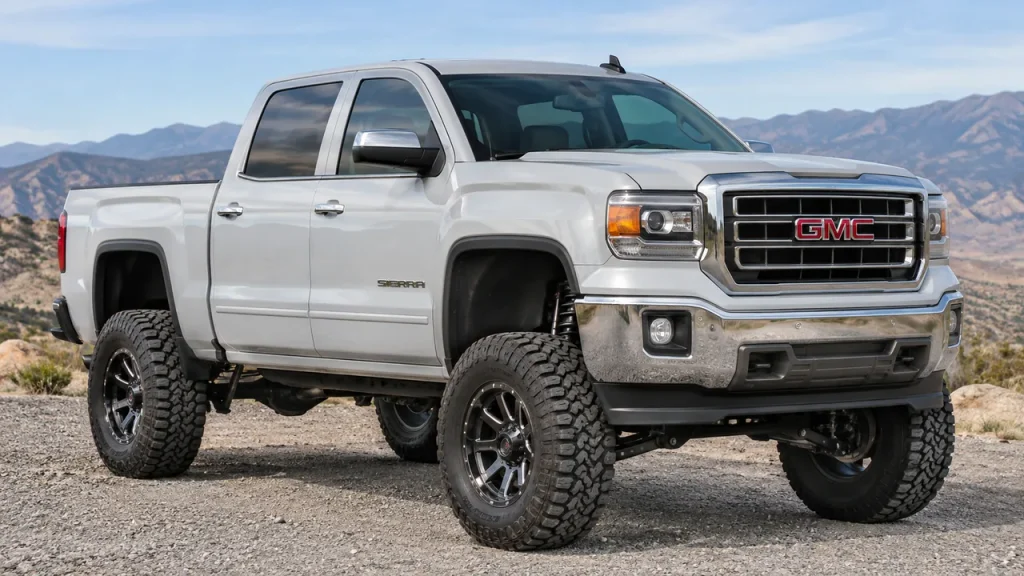
The 2019 Sierra 1500 Limited is the carryover K2XX truck; the redesigned 2019 Sierra 1500 uses T1XX hardware. This is one of the easiest mistakes to make when browsing a product titled only “2019 GMC Sierra 1500 lift kit.” Enter the full model description or ask the manufacturer to confirm the VIN and platform. If a seller uses the word Classic for the older 2019 body, check that it is referring to the Limited rather than treating Classic as the official model name.
2020–2024: The 2022 Limited and Refresh
Unlike the 2019 Limited, the 2022 Sierra 1500 Limited belongs to the newer T1 family and carries over the pre-refresh design. Some lift manufacturers include both the 2022 Limited and refreshed Sierra in one application, while others distinguish particular components or trims. A 2022 AT4X is not a 2022 Limited with a different badge. The factory dampers and off-road hardware put it into another fitment group.
Owners of an SLE, Elevation or SLT should also pay attention to the engine and the rear spring assembly. Standard-height does not mean identical suspension equipment across every cab, bed and powertrain combination.
2025, 2026 and the Next-Generation 2027 Sierra
Do not extend a 2019–2024 listing to later trucks by assumption. BDS, for instance, maintains a separate 2025–2026 GM 1500 collection for various applications, including Denali systems. Some part numbers span the earlier and later years; others do not. The current application chart is more useful than an older installation video.
GMC has also announced the next-generation 2027 Sierra 1500. Its AT4X specification introduces Multimatic Jounce Control Dampers, rather than simply carrying forward the previous AT4X damping description. ReadyLIFT has announced selected 2027 upgrades, including the 66-39151 ARC leveling application. That is evidence of specific product coverage, not blanket approval of every previous lift. Check the manufacturer’s 2027 application announcement and the latest individual product notes if you own one of these trucks.
AT4, AT4X and Denali: The Three Applications Worth Checking Twice
These trim names represent real suspension differences, not simply cosmetic packages. A retailer’s broad GMC filter may still show conventional lift systems that are unsuitable for your truck. Resolve the following questions before choosing a shock option or putting a kit in your cart.
GMC Sierra AT4 Lift Kit: How Much Higher Than Stock?
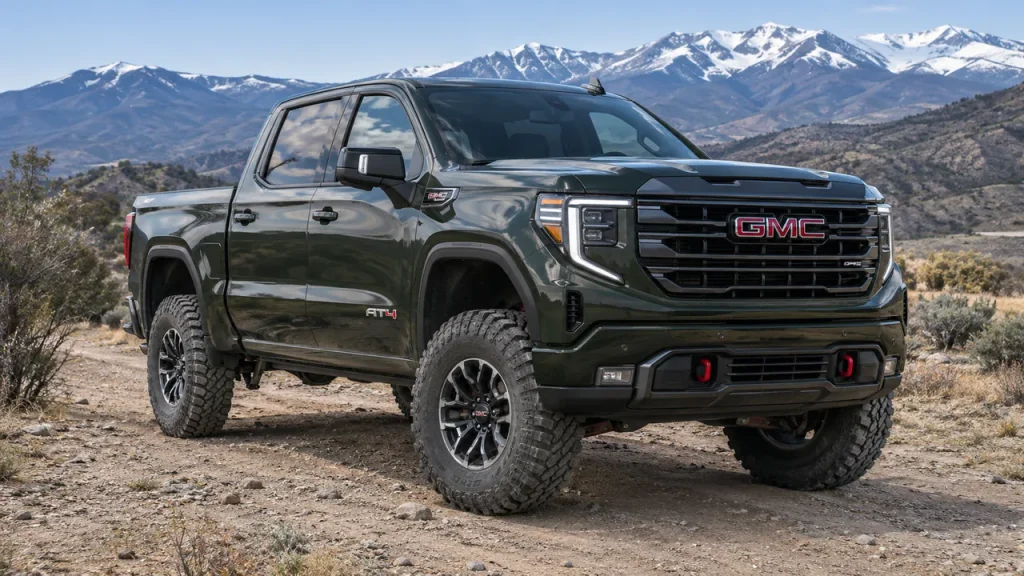
The 2019–2026 light-duty AT4 comes with a factory 2-inch suspension lift. Its front strut arrangement already starts at a different height from a standard Sierra. If you add a manufacturer-approved 1.75-inch front level intended for the AT4, you are changing the existing AT4 stance by that additional nominal amount at the front, not installing a 1.75-inch total lift relative to a base truck. Actual measurements can vary with load and spring condition.
ReadyLIFT’s 66-3921 AT4 leveling application is an unusually useful example. It includes revised upper arms and specifically excludes the AT4X. More importantly, the maker lists a 275/60R20 tire on a 20×9 zero-offset wheel for the AT4, but a 295/65R20 on the same wheel dimensions for the Trail Boss. The stated reason is the difference in the front fender openings.
That single comparison should put an end to the assumption that every Silverado tire recipe transfers to a Sierra. The two trucks share substantial mechanical hardware, but tire-to-body clearance can still differ. If you want more than a mild AT4 level, select a complete system that identifies its additional front and rear height relative to the factory AT4.
AT4X and AEV Edition: Keep the Damper System in the Plan
On 2022–2026 AT4X trucks, the Multimatic DSSV (Dynamic Suspensions Spool Valve) dampers are a central part of the off-road package. Ordinary AT4 spacers are not a substitute for an AT4X-approved system. The AEV Edition also has model-specific bumper, protection and tire equipment; confirm AEV coverage rather than relying on standard AT4X fitment alone.
A real example is the BDS1859H 4-inch AT4X diesel application. BDS describes retaining the factory Multimatic dampers with a dedicated system of suspension and driveline corrections. Its advertised 35–37-inch tire capability is conditional on the complete application and wheel choice, not a guarantee for all AT4X or AEV trucks.
If the aim is to improve ride on rough ground rather than appearance, first consider whether you need to change the factory AT4X at all. Preserving the original damping and usable suspension movement may matter more than another inch of fender height.
2014–2018 Denali MagneRide: Do Not Order by Height Alone
Magnetic Ride Control, often searched as MagneRide, varies damping electronically using magnetorheological fluid. On equipped Denali trucks, replacing the factory dampers with conventional ones can alter the suspension’s operation and produce faults unless a specifically engineered and approved conversion addresses the electronics. Retaining the original system is generally a better starting point for an owner who bought the Denali for its ride.
For a 2017 GMC Sierra 1500 Denali MagneRide lift kit, one relevant example is the Rough Country 5-inch Magnetic Ride Control application for 2014–2018 Denali. It requires the buyer to identify the original upper-arm type, requires cutting and drilling, and lists 33-inch tire options with factory 20-inch wheels. It is not a universal 5-inch kit for all 2014–2018 Sierras.
2019–2026 Denali and Denali Ultimate: Adaptive Ride Control
Do not use MagneRide and Adaptive Ride Control (ARC) as interchangeable catalog terms. On newer ARC-equipped Sierras, check the electronic dampers, sensor linkages and the manufacturer’s relocation strategy. A conventional kit may physically bolt to some suspension points without preserving the intended sensing range or damping function.
The BDS1808H gas 4WD ARC system for 2019–2024 illustrates the distinction: it specifies 4 inches at the front and 2 inches at the rear, keeps ARC in use and incorporates rear damper relocation. It also has a separate hardware requirement for mono-leaf rear springs. A 4-inch lift does not necessarily raise the rear four inches. BDS lists a separate 2025–2026 gas ARC 4-inch application and diesel-specific alternatives; order only the one approved for your truck.
On a Denali Ultimate equipped with Super Cruise, confirm compatibility with the lift manufacturer and the relevant GMC service guidance. A kit’s ability to retain ARC does not establish that every camera, radar or driver-assistance function is validated after the modification. Do not assume a dashboard without warning lights proves that those systems remain correctly calibrated.
Choosing Between a 2, 3, 4 or 6-Inch Sierra Lift
The useful question is how much more space the truck needs for its intended job. Work backward from the tires and use the following ranges to narrow the shopping list, not to bypass the fitment checks above.
2 Inches: Keep the Truck Close to Its Original Purpose
A Sierra used for commuting, boat launching or towing a camper rarely needs a full six-inch conversion just to reduce rake. A properly matched front level or adjustable-height strut may give sufficient room for a modest all-terrain tire upgrade. Retain useful rear-high stance if the truck regularly carries tongue weight or bed cargo. Compare the front-only change with a complete system in our leveling kit vs lift kit guide if you are unsure which type to buy.
3–3.5 Inches: A Useful Stance on a Standard Sierra
A GMC Sierra 1500 3-inch lift kit is a common search for owners who want a noticeable difference without a very tall truck. Check the rear height in the specification, not just the front. Rough Country’s 22630-config 3.5-inch Sierra system for 2019–2024, for example, specifies a 2.5-inch rear increase and asks for the factory rear spring type. Its exclusions include Denali, Denali Ultimate, AT4 and AT4X, while its replacement strut options exclude diesels. It does list the 2022 Limited. These distinctions are more useful than a photograph of the finished truck.
On any front lift in this range, compare ball-joint operating angles, strut travel and CV clearance rather than buying upper control arms solely because the advertised height passes a particular threshold. The correct arms depend on the whole system. A truck that aligns at ride height can still bind at full droop.
4 Inches: Compare the Actual Suspension Design
At four inches there is substantial variation between products. Some kits use a relatively compact combination of spacers and revised arms; others reposition suspension pivots and the front differential through a crossmember system. On a 4WD Sierra intended for repeated trail use, look at the front axle’s operating angles and the usable clearance under the new crossmembers. More fender height is not the same as more clearance under every component.
For a 35-inch tire goal, obtain a tested fitment combination for the exact kit. On a standard-height truck it may require different wheel backspacing than on an AT4 or ARC-equipped Denali. Four inches can be a reasonable choice, but the kit specification has to support the desired tires.
5–6 Inches: Buy the Whole System, Not Just the Stance
A 6-inch Sierra 1500 lift kit generally involves significant changes to the front geometry and rear height, particularly on 4WD trucks. Depending on the design, the package can include crossmembers, steering knuckles, differential brackets, skid plates, rear blocks, U-bolts and dampers or relocation hardware. Compare the full contents and installation instructions before comparing prices.
A five-inch Denali-specific kit and a six-inch standard Sierra kit are not alternatives simply because their heights are close. Ask whether the original wheels can be refitted, how much irreversible cutting is required, and whether the proposed tire clears at full steering lock and compression. Include alignment, calibration, labor and wheels in the budget.
7–9 Inches and Larger Show-Truck Builds
Seven-, eight- and nine-inch applications exist, particularly for older generations, but the available choices depend heavily on year and drivetrain. Treat them as complete vehicle projects. Driveshaft operation, steering, braking performance, tire weight, garage clearance and legal height restrictions become more consequential. A body lift is a separate modification; it does not correct suspension geometry or add suspension travel. Do not combine it with another lift unless the manufacturers and installer approve the complete configuration.
What Size Tires Fit a Lifted GMC Sierra 1500?
A nominal 33, 35 or 37-inch tire is not a fitment specification. Actual casing dimensions differ by brand, and the front tires sweep through the wheel opening as the steering turns. The table uses planning targets only; there is no universal maximum tire size for each lift height.
| Aftermarket lift on a standard-height Sierra | Tire size to investigate | Typical restriction |
|---|---|---|
| 1.5–2 in front level | Approximately 32–33 in | Factory wheel position and front liner clearance |
| 3–3.5 in | Approximately 33 in; select larger metric sizes | Control-arm clearance and trimming depending on wheel |
| 4 in | 33–35 in, where the kit lists it | Wheel backspacing, knuckle clearance and bumper contact |
| 5–6 in | 35 in on many approved applications | Wheel diameter and offset, cutting, drivetrain clearance |
| 7–9 in | 35–37 in or larger only with documented fitment | Full build specification, fender and steering clearance |
Do not apply this standard-truck table directly to AT4, AT4X or Denali models. Use the exact trim-specific catalog instead. For a more useful comparison, here are real published wheel-and-tire combinations from the applications discussed above. These examples are not personal road tests, and they do not override the manufacturer’s instructions.
| Specific application | Listed tire | Listed wheel | Important qualification |
|---|---|---|---|
| ReadyLIFT 66-3921 on AT4 | 275/60R20 | 20×9, 0 mm offset | AT4 only; Trail Boss has a different listed limit |
| Rough Country 22630-config on eligible 2019–2024 Sierra | 285/60R20 | Factory 20-in wheel | Standard-height application, not AT4 or Denali |
| Same Rough Country 3.5-in application | 33×12.50R20 | 20×10, −25 mm offset | Trimming required in the manufacturer’s chart |
| BDS1808H on eligible 2019–2024 gas 4WD ARC Denali | 35×12.50R20 | 20×9, 6.25 in backspacing | May require trimming; check brake clearance |
33s and 35s: Compare Actual Width and Diameter
A 275/60R20 calculates to roughly 33.0 inches in nominal diameter; a 285/60R20 is about 33.5 inches. A 295/60R20 is about 33.9 inches, but is also wider. The math does not account for tread shoulders, loaded radius or the tire maker’s measured dimensions. A narrower tire can help at the upper arm or liner even when its diameter increases, but extra height can create new contact points at the bumper or rear edge of the opening.
A 37-inch tire is a much more demanding proposal than a mild upgrade to 33s. Check the manufacturer’s permitted wheel combination, full-compression clearance, gearing, brake performance and spare-tire accommodation. A taller lift cannot guarantee that the tire clears the rear of the front wheel opening.
Factory 18-, 20- and 22-Inch Wheels
Denali owners frequently want to keep their original wheels. Check the wheel barrel and spoke profile, not merely the diameter. The BDS ARC system above, for instance, permits reinstallation of stock 20-inch wheels but excludes factory 17- and 18-inch wheels because of tie-rod interference. A replacement 22-inch wheel can also have an unsuitable spoke profile even though its diameter is generous.
Wheel width and mounting position influence whether a tire touches the upper arm or swings outward into the fender. Use our wheel offset and backspacing explanation to compare catalog specifications correctly. Avoid treating aggressive negative offset as a universal cure for rubbing; it can move the contact point and increase leverage on steering and wheel bearings.
Three Fitment Details Hidden in Sierra Catalog Filters
The remaining decisions often have nothing to do with the number of inches. Before you order, check the following equipment on the actual truck or have a shop confirm the build configuration.
Mono-Leaf vs. Multi-Leaf Rear Springs
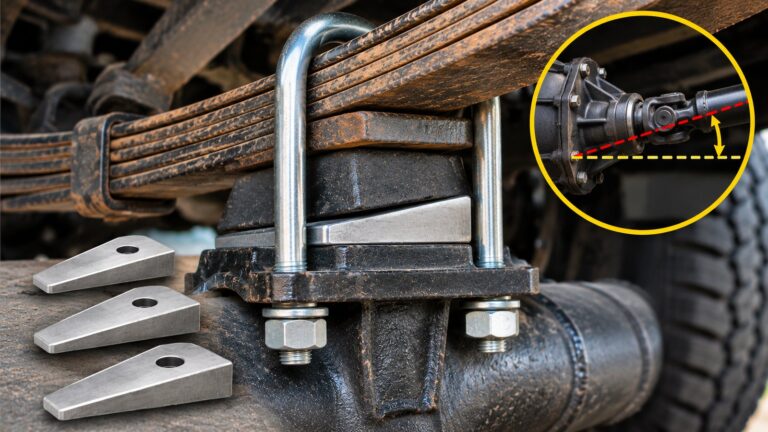
Certain recent Sierra 1500 configurations have a single main rear leaf rather than a conventional multi-leaf arrangement. The spring and axle clamping stack can require different U-bolt lengths or block hardware. That is why Rough Country asks about the factory rear spring type and BDS specifies a separate U-bolt part for some mono-leaf applications. A kit advertised for your cab and year can still need this additional selection.
Photograph the rear spring assembly and give the installer the VIN. Use the manufacturer’s approved rear block and U-bolt combination; do not stack blocks or reuse fasteners against the installation instructions. When shopping for rear dampers separately, our shock length calculator can help check the required compressed and extended lengths, but it does not establish vehicle or mount compatibility.
3.0 Duramax Diesel, 2.7 Turbo and Gas V8
A 3.0L Duramax Sierra may need different front spring or strut selection because the engine changes the load on the front axle. Do not buy a 5.3L or 6.2L V8 replacement-strut package solely because it fits the same model year. Likewise, the 2.7L turbo engine can have component clearance restrictions. Some BDS applications explicitly exclude a particular skid plate on that engine. A spacer-based option and a replacement-strut option within one product family may have different engine coverage.
Check which engine the manufacturer actually approved and whether a separate version is needed for the factory off-road suspension or electronic dampers. A diesel-specific standard-height kit is not automatically suitable for a diesel AT4X.
2WD, 4WD, Cab and Bed Length
A 2WD Sierra does not need front differential relocation, but that does not make all 4WD suspension parts compatible. The knuckle, hub, steering and front spring applications can differ, especially on older trucks. Some newer products are designed for both drivetrains; others are not. Cab and bed length can influence rear spring selection, driveline arrangements and the manufacturer’s fitment notes. If the catalog asks for those details, they are part of the application, not optional preferences.
For related GM platform information, see our Chevy Silverado 1500 lift kit guide. Use it for the shared chassis context, not to substitute Silverado fender-clearance figures or trim approvals for Sierra specifications. The Sierra 2500HD and 3500HD are also separate heavy-duty applications. Our GMC Sierra 2500HD lift kit guide covers the torsion-bar suspension and HD-specific AT4X applications.
What to Ask a Shop Before Paying for the Lift
The cheapest kit quote can become the expensive one if it leaves out wheels, alignment or equipment-specific parts. Request a written estimate based on your VIN, intended tires and existing suspension. A useful quote answers these questions before the truck goes on the lift.
- What exact kit number, revision and shock option will be installed, and which factory equipment does it retain?
- What are the expected front and rear height changes from the truck’s present stance?
- Which wheel dimensions and tire models have been approved, and what cutting, liner modification or drilling is required?
- Are alignment, headlamp aiming, tire-size calibration and applicable driver-assistance system checks included?
- Will the installation preserve brake hose and ABS wiring clearance, and will the shop check suspension and steering movement through their safe operating range?
- When should fasteners and U-bolts be inspected or re-torqued under the kit manufacturer’s instructions?
For an older Sierra, include the cost of replacing worn components if inspection finds them. For a modern Denali or AT4X, include the cost of preserving the factory damper system rather than accepting a generic quote for four conventional shocks. If the shop cannot identify your suspension configuration, resolve that before ordering parts.
After installation, verify the alignment against the applicable specifications and follow the manufacturer’s reinspection schedule. Check the tire speed and load ratings against the truck’s requirements, and confirm that any required recalibration is completed. A suspension lift does not increase the factory GVWR, axle ratings or tow rating. Large tires and a higher hitch position may actually make the truck less convenient for towing; check the finished setup with the trailer and load you use.
Frequently Asked Questions About Sierra 1500 Lift Kits
These are common questions from Sierra owners comparing kit listings, tire sizes and factory suspension packages. The answers assume the light-duty 1500, not an HD truck, and the exact manufacturer’s application notes still take priority.
What is the best lift kit for a GMC Sierra 1500 daily driver?
For a conventional standard-height Sierra, a 1.5–2-inch level is a sensible starting point for appearance and a modest tire change. A well-matched 3–3.5-inch suspension kit makes sense if the extra tire space has a purpose. On a Denali, AT4 or AT4X, select the factory-suspension-specific application first.
Can I fit 35-inch tires with a 3-inch lift on a Sierra?
Some configurations may accommodate a particular 35-inch tire with suitable wheels and body clearance work, but a three-inch lift does not guarantee it. Check the actual tire dimensions, trim, wheel width, backspacing and the kit maker’s tested fitment. A 33-inch tire is often a less demanding starting point.
Can I put a regular Sierra lift kit on an AT4?
Only if the maker explicitly includes the AT4. The 2019–2026 AT4 starts with a factory two-inch suspension lift, so the front strut, control-arm range and required corrections can differ from a standard-height truck. An AT4-approved kit is not automatically approved for the AT4X either.
Will a lift kit disable MagneRide or Adaptive Ride Control?
It does not have to. Certain kits are engineered to retain the original electronic damping and its associated hardware. Choose the exact system for Magnetic Ride Control or ARC as applicable, and confirm required sensor adjustments and diagnostics. A generic suspension replacement can compromise those functions.
Does a Silverado 1500 lift kit fit a GMC Sierra 1500?
Many manufacturers list shared GM applications, but only use a product that includes your Sierra’s year, body style, engine, drive type and suspension package. Even if the hardware is shared, the tire fitment may differ because the body openings are shaped differently.
How much does a Sierra 1500 lift kit cost installed?
There is no reliable single installed price across these trucks. For an idea of the hardware budget, a basic spacer level can cost under $100, a configurable 3.5-inch system may start around $650, and a dedicated ARC crossmember lift can exceed $2,000 before labor. Those are illustrative catalog price points, not installed quotes or permanent prices. Labor, alignment, tires, wheels, electronic suspension compatibility and required calibration can change the final bill substantially. Obtain a complete local quote rather than comparing a bare kit price with a turnkey installation.
Can I use a lift kit from a 2024 Sierra on a 2025 or 2027 model?
Only when the manufacturer explicitly approves the exact part number for the later model and its equipment. Some applications carry forward, others use revised hardware, and the 2027 generation introduces additional changes. Do not rely on appearance, bolt pattern or a seller’s broad year range as proof of compatibility.