Lowering Springs vs. Coilovers: Which Is Better?
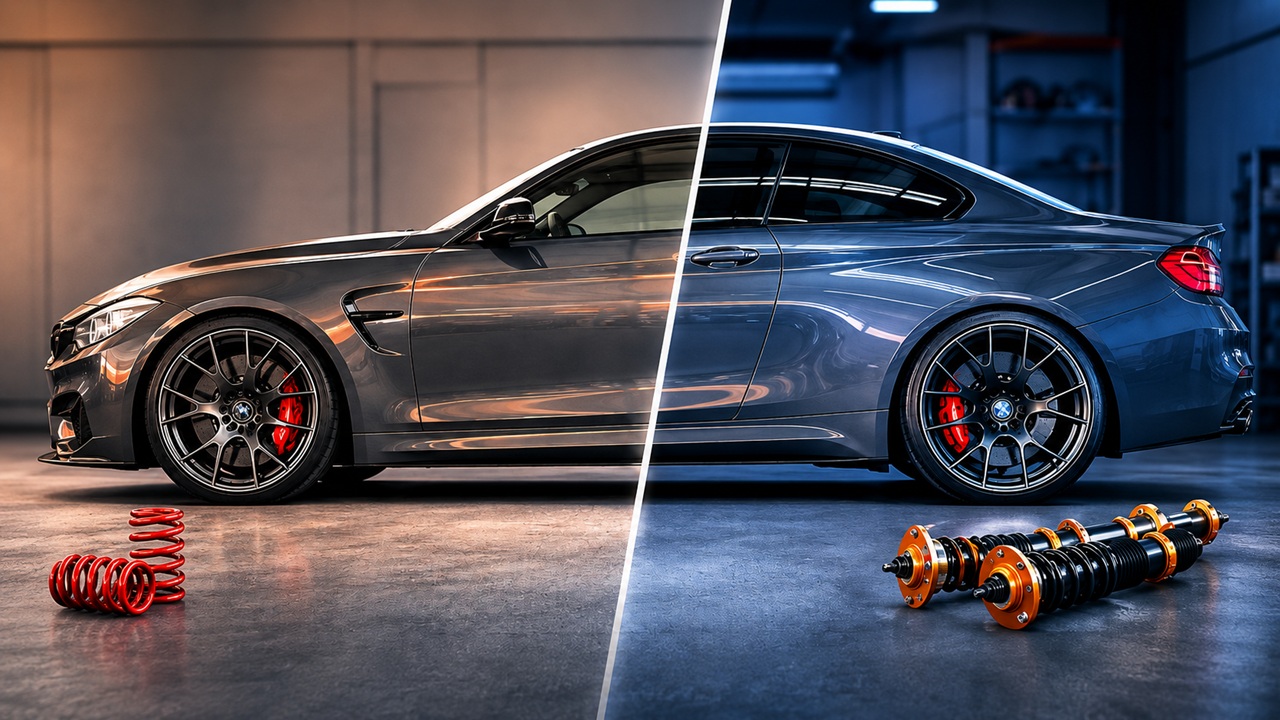
Lowering springs are usually the better choice for a daily driver when you want a moderate, fixed drop at a lower cost. Coilovers are better when you want adjustable ride height, more suspension tuning options, or a setup you can change for performance driving.
Neither option is automatically better. A quality lowering spring matched to the car can be a smarter street upgrade than a cheap coilover, while a properly engineered coilover system gives you adjustment that a conventional lowering spring simply cannot provide.
Lowering Springs vs. Coilovers at a Glance
| Feature | Lowering Springs | Coilovers |
|---|---|---|
| Ride height | Fixed drop | Usually adjustable |
| Uses existing dampers | Usually yes | No, full assemblies replace them |
| Upfront cost | Lower | Higher |
| Installation complexity | Usually simpler | Usually more involved |
| Damping adjustment | No, unless factory dampers provide it | Available on many kits |
| Daily driving | Excellent for a mild street drop | Good with a quality street-oriented kit |
| Track use | Limited tuning flexibility | Usually the stronger option |
| Future height changes | Requires different springs | Usually adjustable on the car |
| Corner balancing | Very limited | Possible with suitable coilovers |
The Main Difference Is What You Replace
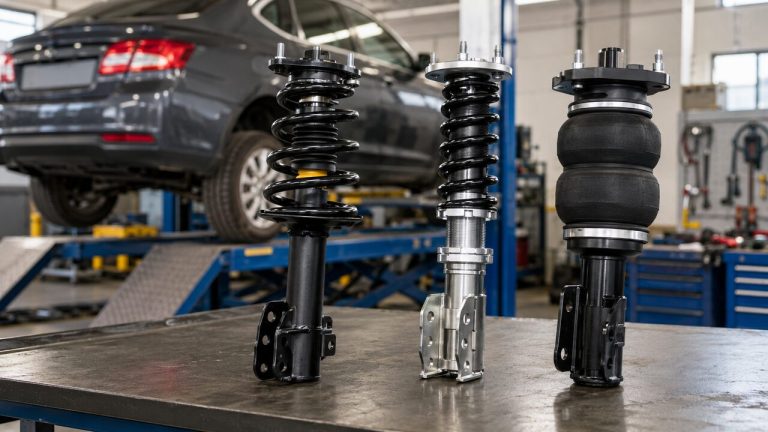
Lowering springs replace the factory coil springs with shorter springs designed to reduce ride height. The original shock absorbers or struts normally remain in place unless you choose to replace them at the same time.
A full coilover system replaces the spring and damper as a matched assembly. Most aftermarket coilovers also provide threaded ride-height adjustment, and some add adjustable damping, camber plates or other tuning features.
That distinction explains most of the differences in price, complexity and flexibility.
If you want a broader explanation of how a complete coilover differs from a conventional shock-and-spring suspension, see our coilovers vs. shocks comparison.
Lowering Springs Are Usually Better Value
If your goal is simply to close some wheel gap, lower the center of gravity and give a street car a more planted stance, lowering springs can accomplish that without replacing the entire damper assembly.
That generally makes them significantly cheaper than a quality set of coilovers.
You also avoid paying for adjustments you may never use. If you know you want roughly a one-inch drop and have no intention of changing it later, adjustable ride height has limited practical value.
But Do Lowering Springs Work With Stock Shocks?
Sometimes — and this is where blanket advice can be misleading.
Some lowering springs are specifically engineered and tested to work with the vehicle’s original dampers. A moderate street-oriented spring from a reputable manufacturer may therefore be designed around the factory shock or strut.
Other combinations are less suitable. A much shorter or significantly stiffer spring can reduce available damper travel and demand more control than the original damper was designed to provide.
The correct question is not simply “Can lowering springs use stock shocks?” It is whether the specific spring manufacturer approves that spring for use with the dampers fitted to your exact vehicle.
Old Dampers Change the Decision
A lowering spring may technically work with the factory dampers, but that does not make worn dampers new again.
If the car already has substantial mileage and the shocks or struts are weak, installing new performance springs around tired dampers can create a poor result. The car may bounce, feel underdamped or reach its bump stops too easily.
At that point, compare the cost of springs plus suitable performance dampers with the cost of a complete coilover kit. The price gap can become much smaller than it first appeared.
Coilovers Win on Ride-Height Adjustment
A lowering spring gives you the drop engineered into that spring. If the manufacturer specifies approximately 1.2 inches, you do not get a knob or threaded collar that turns it into a 0.7-inch or 1.8-inch drop.
Actual ride height can also vary somewhat because of vehicle weight, factory suspension options and existing components.
Coilovers give you substantially more control. Within the manufacturer’s approved adjustment range, you can alter ride height to suit wheel clearance, tire fitment, road conditions or your preferred stance.
That flexibility is one of the strongest reasons to pay more for coilovers.
Lowering Springs vs. Coilovers for Daily Driving
For a normal daily driver, lowering springs often make more sense when the desired drop is mild and fixed.
You get fewer adjustments to maintain, typically spend less money, and can retain much of the factory suspension architecture. A well-engineered street spring paired with suitable dampers can provide a noticeably lower stance without turning every rough road into a punishment.
Coilovers can also be excellent for daily driving. The problem is that “coilover” describes a category, not a ride-quality guarantee.
A quality street-oriented coilover with sensible spring rates and well-developed damping may ride better than a poorly matched lowering-spring setup. A cheap or track-focused coilover can be dramatically harsher.
For a commuter, choose based on engineering and intended use rather than assuming more adjustment automatically means a better suspension.
Which One Gives Better Ride Quality?
There is no universal winner.
Ride quality depends on spring rate, damping, suspension travel, bump-stop engagement, tire sidewall, ride height and road surface.
Lowering springs often retain a more factory-like character when the drop is moderate and the dampers are well matched. This makes them attractive for street cars where comfort still matters.
Quality coilovers can provide excellent body control without being excessively harsh, but aggressive spring rates, insufficient travel or poor damping can make them uncomfortable.
Do not judge a suspension solely by how stiff it feels. Excessive stiffness does not automatically mean more grip or better handling.
Which One Handles Better?
For a mild street build, quality lowering springs can reduce body movement and lower the vehicle’s center of gravity enough to make steering response feel sharper and the car feel more composed.
Coilovers have greater potential because the spring and damper are designed as a system and higher-end kits provide more tuning options.
That matters when the car is being set up for autocross, track days or other performance use where ride height, damping and weight distribution need to be refined rather than simply lowered.
But a cheap coilover does not automatically outperform a properly engineered set of lowering springs. Component quality and correct setup matter more than the word printed on the product category.
For Track Use, Coilovers Usually Make More Sense
If the car will regularly see a racetrack, coilovers generally offer the more useful platform.
Depending on the kit, you may be able to change ride height, damping and spring rates. Adjustable spring perches also make corner balancing possible on appropriate systems.
Those features allow the suspension to be tuned around tires, track conditions and driver preference in a way that a fixed lowering spring cannot match.
For an occasional spirited street drive, however, paying for extensive adjustment may offer little benefit if the settings are never changed or professionally optimized.
Lowering Springs vs. Coilovers for Stance and Wheel Fitment
Coilovers have a clear advantage when the exact wheel gap matters.
A fixed lowering spring gives you the height the manufacturer designed. That simplicity is useful if the advertised drop is exactly what you want.
With coilovers, you can usually fine-tune the ride height within an approved range to work with a particular wheel and tire combination.
That does not mean the car should be lowered until the tire nearly touches the fender. Excessive lowering can reduce suspension travel, create tire contact, alter geometry and reduce ground clearance.
What About Adaptive or Electronic Dampers?
This can completely change the calculation.
Some vehicle-specific lowering springs are developed to retain the original electronically controlled dampers. That allows the car to sit lower while preserving factory damping modes.
Replacing those components with conventional coilovers may require compatible electronic coilovers or cancellation modules to prevent warnings and lost functionality.
If keeping the factory adaptive suspension matters to you, verify compatibility before ordering either upgrade.
Do Both Need a Wheel Alignment?
Yes. Changing ride height can change wheel alignment, whether you use lowering springs or coilovers.
Toe and camber can move as the suspension settles into a different operating position, and some vehicles may also need additional adjustment hardware to reach the desired specifications.
Budget for an alignment rather than treating it as an optional extra. Our wheel alignment cost guide covers typical service pricing separately.
Cost: Springs Are Cheaper Until You Start Replacing Everything Else
Lowering springs normally have the lower entry price because you are buying four springs rather than four matched spring-and-damper assemblies.
The comparison changes when the existing shocks or struts also need replacement. Add quality performance dampers, mounts, installation and alignment to the spring package and the total can begin approaching entry-level or mid-range coilover territory.
Coilovers cost more upfront, but the purchase includes the dampers and springs as an integrated system.
If you want exact labor and setup considerations for that route, use our separate coilover installation cost guide. That cost intent is intentionally kept separate from this comparison.
When Lowering Springs Are the Better Choice
Choose lowering springs when most of these describe your build:
- You want a mild, predictable drop.
- The car is primarily a daily driver.
- You do not need adjustable ride height.
- Your budget is limited.
- Your existing dampers are healthy and approved for the chosen springs, or you plan to pair the springs with suitable dampers.
- You prefer simplicity over suspension tuning options.
For many street cars, that combination makes lowering springs the better-value modification.
Confirm exact year, make, model, suspension type and damper compatibility before ordering.
When Coilovers Are Worth the Extra Money
Coilovers become the stronger choice when you actually need what they provide:
- You want to adjust ride height rather than accept one fixed drop.
- You plan to use the car for autocross or track days.
- You want adjustable damping from a kit that provides it.
- You need precise wheel-and-tire fitment.
- You want the ability to corner balance the car.
- The existing shocks or struts already need replacement.
- You expect the suspension setup to evolve with the rest of the build.
Use only a vehicle-specific kit with verified fitment and appropriate spring rates for your intended use.
What If You Just Want a Better Street Suspension?
Lowering springs and coilovers are not the only possibilities.
A matched sport suspension package using lowering springs and dampers developed to work together can sit between the two approaches. It provides a fixed drop like lowering springs but avoids relying on dampers that were never intended for the new spring characteristics.
That can be an excellent option for someone who values predictable road handling more than adjustment.
More broadly, our stock vs. performance suspension guide explains why the right upgrade depends on what you want the car to do rather than simply how low you want it to sit.
Common Mistakes When Choosing Between Them
Buying the Cheapest Coilovers Because They Include More Parts
A complete kit is not automatically better value. Poor damping, unsuitable spring rates and limited corrosion protection can make a cheap coilover worse to drive than a quality spring-and-damper setup.
Choosing Springs Without Checking the Dampers
Verify whether the chosen springs are designed for your existing dampers. If the shocks or struts are worn or unsuitable, budget for matched replacements.
Lowering the Car as Far as Possible
Available suspension travel matters. A car sitting on its bump stops will not handle well simply because its center of gravity is lower.
Skipping the Alignment
Any meaningful ride-height change should be followed by an alignment check. A car that looks perfect but destroys the inside edges of its tires is not a successful suspension setup.
Lowering Springs or Coilovers: The Practical Answer
For a daily-driven street car that only needs a modest fixed drop, quality lowering springs are usually the smarter buy. They cost less, retain a simpler suspension and can work very well when correctly matched to the dampers.
For a performance build, changing wheel setup, track use or anyone who genuinely wants ride-height and damping adjustment, quality coilovers justify the additional cost.
The important word in both recommendations is quality. Good lowering springs are better than badly engineered coilovers, and excellent coilovers offer capabilities that lowering springs cannot reproduce. Choose the system that matches the way the car will actually be driven rather than paying for adjustability you will never use—or sacrificing adjustability that you genuinely need.